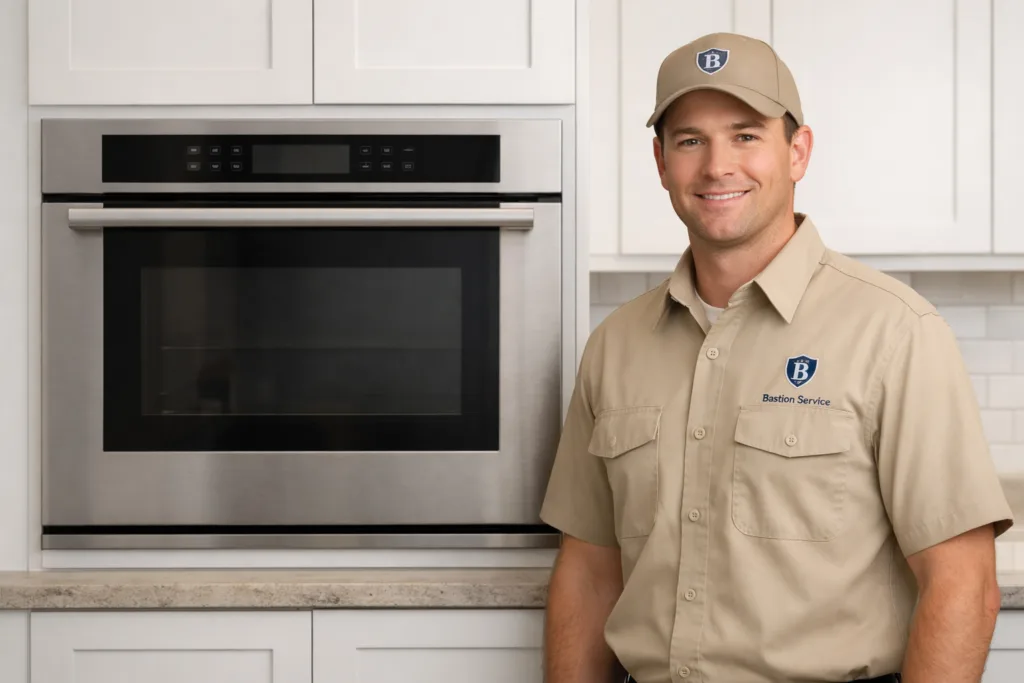
Common Dacor wall oven problems in Fairfax homes

Dacor wall ovens are built for precise cooking, so small performance changes tend to show up quickly in everyday use. A pan that browns unevenly, a roast that takes far longer than expected, or a display that behaves inconsistently can all point to a repair issue rather than simple user error. In Fairfax homes, the most useful first step is matching the symptom to the likely system involved.
Not heating at all
If the oven powers on but stays cold, the problem may involve a failed bake element, broil element, thermal fuse, sensor, relay, wiring fault, or electronic control problem. On some units, the display and lights still work normally, which makes the failure seem smaller than it is. A built-in wall oven can appear operational while still not delivering heat where it counts.
Slow preheat
When preheat times stretch longer and longer, that often signals a weak heating component, a temperature-sensing issue, or a control problem that is not sending power correctly. Slow preheat is easy to ignore at first, but it usually leads to poor cooking results and can be an early warning before a complete no-heat failure.
Uneven baking or temperature swings
Food that is overdone on one side and underdone on the other can point to inaccurate temperature regulation, inconsistent element performance, poor airflow, or a worn door seal that lets heat escape. Homeowners often notice this with baked goods first, especially when recipes that were once reliable suddenly become inconsistent.
Oven overheats or burns food unexpectedly
If the oven seems hotter than the set temperature, the sensor may be misreading cavity temperature, the control may not be cycling heat correctly, or a relay may be sticking. This type of failure matters because it affects both cooking quality and safe operation.
Display, keypad, or control faults
A blank display, flashing panel, unresponsive buttons, or repeated fault codes can all come from the interface, main control, power supply, or communication problems between components. In some cases the oven starts but stops during operation. In others, it will not begin a cycle at all.
Door and latch problems
A wall oven door that does not close firmly can lose heat and throw off cooking times. If the latch stays locked, will not engage, or triggers an error during self-clean, the issue may involve switches, the latch motor, alignment problems, or heat-related wear around the locking system.
What different symptoms usually suggest
Many oven complaints sound similar, but they do not always come from the same failed part. That is why symptom patterns matter.
- Cold oven with working display: often points to a heating or power-delivery problem.
- Long preheat with weak baking performance: may indicate an element or sensor issue.
- Temperature that seems inconsistent from one use to the next: can suggest sensor drift, relay trouble, or control instability.
- Intermittent shutoff during cooking: may involve overheating protection, loose wiring, or an electronic fault.
- Fault code after self-clean or high-heat use: often relates to latch, sensor, or control stress.
Because the same symptom can have more than one cause, replacing parts based on guesswork is rarely the best approach on a Dacor wall oven.
Why built-in Dacor wall ovens need careful troubleshooting
Wall ovens are different from freestanding ranges in both design and service access. A heating complaint may involve the element itself, but it can also come from a control issue, a failed sensor circuit, or wiring that is not delivering full power under load. Since these ovens are installed into cabinetry, repair planning also depends on access, fit, and how the unit behaves once it has been running for a while.
Dacor models often include more advanced controls and cooking modes, which means electronic faults can mimic simpler heating failures. A proper diagnosis helps narrow down whether the repair is likely to be straightforward or whether the problem involves multiple components.
Signs it is time to schedule service
If the oven is no longer dependable for normal cooking, service is usually worth scheduling sooner rather than later. Problems with heat, controls, or door operation tend to worsen with continued use.
- Preheat is noticeably slower than it used to be
- The set temperature does not match actual cooking results
- The oven shuts off before the cycle is complete
- Error codes keep returning after resetting power
- The keypad responds only some of the time
- The door will not seal, close, or unlock correctly
Waiting can turn an isolated failure into a broader repair, especially if overheating, arcing, or control instability is involved.
Repair or replacement: what usually makes sense?
For many Fairfax homeowners, repair is still a sensible option when the failure is limited to a specific part such as a sensor, heating element, latch component, or identifiable control-related issue. When the oven has multiple active problems, repeated electronic failures, or heavy wear across several systems, replacement may be worth weighing more seriously.
With a built-in appliance, replacement is not always the easier decision. Cabinet dimensions, trim fit, electrical requirements, and installation work all affect the overall cost and disruption. That is why a practical repair plan based on the actual failure is usually the best place to start.
What to note before a service visit
A few details can make troubleshooting faster and more accurate. It helps to note:
- Whether the problem happens in bake, broil, convection, or every mode
- Whether the issue started suddenly or developed gradually
- Any error code shown on the display
- Whether the oven runs too hot, too cool, or shuts off mid-cycle
- If the problem appears only after the oven has been on for a while
Those patterns often reveal whether the likely issue is related to heating, sensing, controls, or door and latch operation.
Focused help for household cooking problems
When a Dacor wall oven stops performing the way it should, the goal is to restore normal cooking without unnecessary parts replacement or confusion about the next step. For homeowners in Fairfax, that means looking closely at the symptom, identifying the failed system, and deciding whether the repair is practical based on the oven’s overall condition and expected repair path.