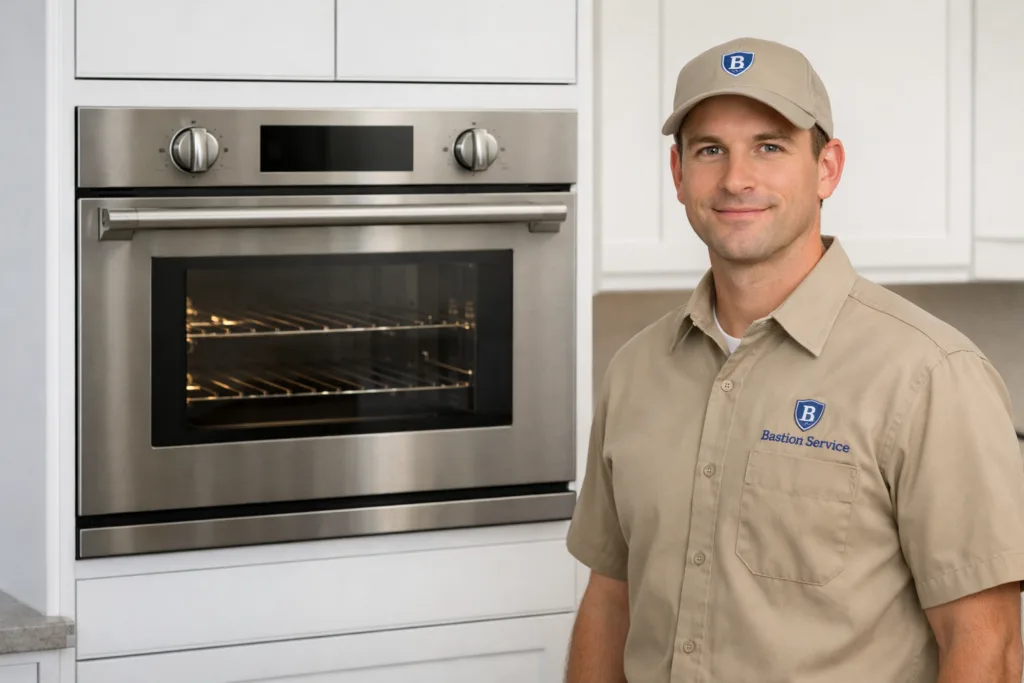
A Wolf wall oven that heats unevenly, stops mid-cycle, or shows an error can disrupt dinner plans fast. In Fairfax homes, the smartest next step is to identify the actual fault before deciding on a repair, because the same symptom can come from very different causes, including a failed heating element, a temperature sensor issue, a control fault, or a door problem that lets heat escape.
Why symptom patterns matter with a Wolf wall oven
Built-in ovens rely on a combination of heating components, sensors, electronic controls, airflow, and door sealing. When one part falls out of spec, the result is often more noticeable in everyday cooking than homeowners expect. A small temperature-reading error can turn into slow preheat, undercooked casseroles, scorched baking sheets, or a cycle that never seems to finish correctly.
That is why diagnosis matters more than replacing parts by guesswork. An oven that appears dead may still have display power but lack proper heating output. An oven that runs hot may have a sensor or relay problem rather than a simple calibration issue. In Fairfax kitchens where the wall oven is used regularly for weeknight meals, baking, or holiday cooking, identifying the cause early can prevent a minor problem from becoming a bigger one.
Common Wolf wall oven symptoms and what they can indicate
Not heating at all
If the oven will not heat in bake or broil mode, possible causes include a failed heating element, a thermal safety issue, a relay or control board failure, or a power supply problem. On some installations, the display and lights may still work even though the oven cannot produce heat, which can make the issue seem confusing at first.
When this happens repeatedly, the concern is not only inconvenience. Continued attempts to start the oven can sometimes worsen an electrical fault or mask the original symptom.
Slow preheat
Slow preheat is one of the most common complaints with wall ovens. It may point to a weak bake element, a broil element that is not assisting properly during preheat, inaccurate sensor feedback, or a control issue affecting how the oven cycles heat. Homeowners often notice this first when meals take longer than expected or recipes that used to work no longer finish on time.
If preheat gradually becomes slower over weeks or months, that trend can be a useful clue. It often suggests a component weakening rather than a sudden complete failure.
Uneven baking or inconsistent cooking
When one rack browns faster than another, cookies come out uneven, or dishes need to be rotated constantly, the oven may have a heat distribution problem. Common causes include sensor drift, a weak heating circuit, convection fan trouble, or a door gasket that no longer seals tightly.
Even minor heat loss can affect results in a built-in oven. If the symptom shows up across different recipes and cookware, the appliance itself is more likely the issue than the food or pan placement.
Temperature swings or overheating
An oven that runs too hot, burns food unexpectedly, or seems unable to hold a steady temperature may have a faulty sensor, control board problem, or relay that is not cycling correctly. While some temperature fluctuation is normal during operation, noticeable swings that affect cooking results are not.
This type of issue is worth addressing quickly because overheating can damage interior components and lead to repeated meal failures.
Shuts off during cooking
If the oven starts normally and then turns off mid-cycle, the problem may involve overheating protection, an electronic control fault, a cooling fan issue, or an intermittent power connection. This symptom often becomes more common as the oven stays hot longer, which helps separate it from a simple startup problem.
Unexpected shutdowns are especially frustrating because they can leave food half-cooked and make the appliance feel unreliable even when it occasionally works again.
Error codes, beeping, or unresponsive controls
Recurring fault codes, frozen touch controls, a display that resets, or controls that respond inconsistently can point to electronic issues rather than heating issues alone. In some cases, a code is only the starting point and not the full answer. The underlying cause may involve communication faults, overheating in the control area, or a failing board.
If the controls are intermittent, try to note when the problem appears, such as during preheat, after self-clean use, or only once the oven has been running for a while. That pattern can help narrow down the repair path.
Door not closing, locking, or sealing properly
Door issues can affect more than convenience. A misaligned or loose door can let heat escape, lengthen cook times, and force heating components to work harder. Problems with hinges, latches, switches, or the door gasket can also interfere with normal operation and, on some models, prevent certain cycles from working correctly.
If a self-clean cycle has recently been used and the door will not unlock or close normally afterward, forcing the mechanism is usually not a good idea. Lock assemblies and related parts often need proper service to avoid causing additional damage.
Signs the problem may be getting worse
Some wall oven issues stay stable for a while, but others tend to progress. A slow preheat can turn into no heat. A temperature offset can become severe enough to ruin baking results. An intermittent control problem can become a full no-start condition. Watching for progression helps homeowners decide when to stop working around the issue and schedule service.
- Preheat takes longer each week
- The oven misses the set temperature more often
- Error codes are becoming more frequent
- The display flickers, resets, or loses response
- The door feels loose or no longer seals evenly
- The oven shuts off after running for a short time
When to stop using the oven
It is usually best to stop using the oven if it trips breakers, produces a burning smell beyond normal cooking residue, shows visible sparking, loses power during operation, or overheats badly enough to scorch food at normal settings. These symptoms can indicate electrical or control problems that should not be ignored.
If there is a strong or persistent gas smell anywhere around a cooking appliance setup, do not continue troubleshooting the oven yourself. Leave the area if needed and contact the gas utility or emergency service first before arranging appliance repair.
Repair or replacement: what usually makes sense
Many Wolf wall oven problems are repairable, especially when the issue is limited to a sensor, heating element, latch assembly, fan-related component, or an identifiable control failure. Repair often makes sense when the oven is otherwise in good condition, fits the kitchen well, and the fault is isolated.
Replacement becomes more likely when there are multiple major failures, recurring electronic problems, heavy wear, or costs that no longer make sense for the age and condition of the appliance. Because wall ovens are built into cabinetry, replacement decisions also involve fit, installation planning, and disruption to the kitchen. For many Fairfax homeowners, that makes an informed repair decision especially valuable.
What helps speed up diagnosis
Before service, it can help to note a few details about how the oven is acting. You do not need to troubleshoot deeply, but a simple symptom history can make the issue easier to identify.
- Whether the problem affects bake, broil, convection, or all modes
- If the oven eventually heats or never heats at all
- Any error codes shown on the display
- Whether the issue began suddenly or developed over time
- If shutdowns happen only after the oven gets hot
- Whether the door closes and seals normally
Those details can help separate a heating failure from a sensor problem, a control issue, or a door-related heat loss problem.
What homeowners in Fairfax usually want to know
Most people are not looking for a technical explanation alone. They want to know what is causing the symptom, whether the oven is safe to keep using, and whether the repair is worth doing. A service visit is most helpful when it answers those practical questions in plain terms and points to a realistic next step.
For households in Fairfax, wall oven service is ultimately about getting the kitchen back to normal without unnecessary guesswork. Whether the symptom is no heat, uneven baking, slow preheat, control trouble, or a door that no longer works correctly, the right repair starts with understanding how the failure is showing up in daily use.