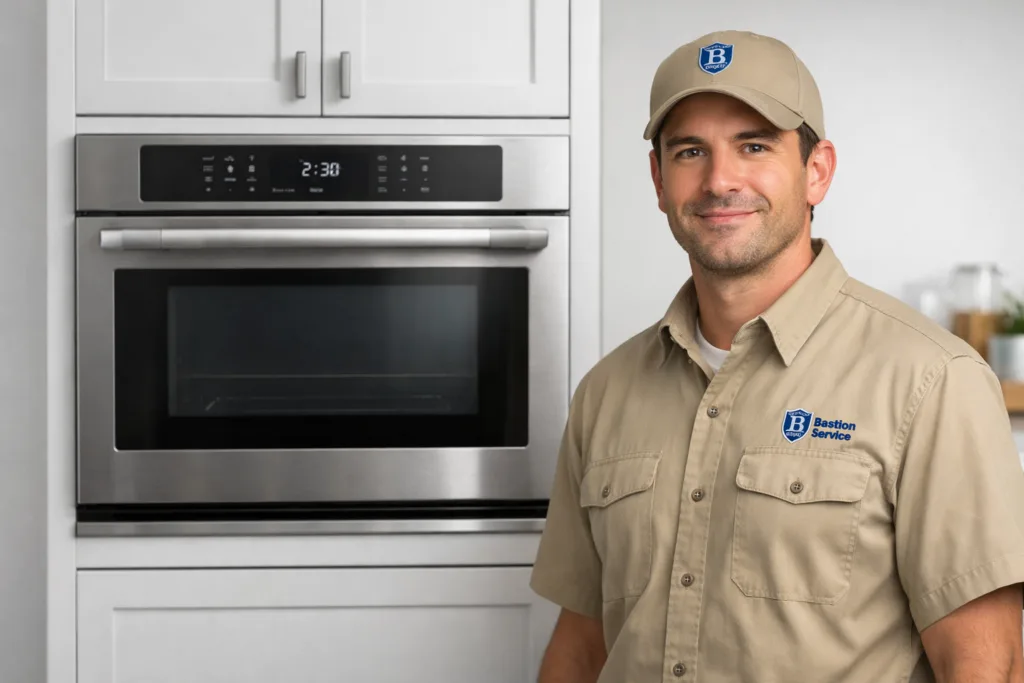
Common Frigidaire wall oven symptoms in Fairfax homes

A built-in oven can fail in ways that seem obvious at first but actually point to several different components. With Frigidaire wall ovens, the same complaint can come from an element that is not cycling correctly, a sensor sending the wrong temperature reading, a wiring issue, or a control problem. Looking at the exact symptom pattern usually tells you whether the issue is minor, urgent, or a sign of a larger electrical fault.
Not heating at all
If the display powers on but the oven stays cold, the cause may be a failed bake element, a broil element problem, a blown thermal protection component, a wiring fault, or an electronic control that is not sending power where it should. In some cases, the oven may appear to start normally but never move past preheat because it cannot generate enough heat to reach target temperature.
This symptom matters because homeowners sometimes assume the issue is only with one cooking mode. On many wall ovens, both the bake and broil systems affect how the appliance reaches and maintains temperature. When one part fails, the overall heating pattern can become unpredictable.
Slow preheat
Slow preheat often starts gradually. Meals take longer, recipes that used to be routine begin running behind, and the oven seems to need extra time before food can go in. A weakening element, sensor drift, relay trouble on the control board, or uneven power delivery can all create this complaint.
If preheat has become noticeably slower than normal, it is usually worth having the oven checked before the problem turns into no-heat service. Components that are failing intermittently often place extra strain on related parts.
Uneven baking and hot spots
When cookies brown on one side first, casseroles cook unevenly, or one rack performs differently than another, the oven may not be regulating heat properly. Temperature sensors, control calibration, weak heating elements, and airflow-related issues can all contribute to inconsistent baking.
Homeowners in Fairfax often notice this problem first with familiar recipes. If the same dishes suddenly need rotation, extra time, or come out overdone in spots and underdone in others, the oven is no longer maintaining heat the way it should.
Temperature swings
Some variation is normal during heating cycles, but wide swings are not. If the oven overheats, then seems to cool too much before reheating, food quality drops quickly. Roasts can dry out, baked goods can collapse, and dishes that depend on steady heat become hard to manage.
This can point to a faulty sensor, a control board issue, or a relay that is sticking or not closing consistently. If the oven is running hotter than the set temperature, it is best not to ignore it.
Error codes, beeping, or dead controls
A flashing display, repeated beeping, or buttons that stop responding usually means the problem is electronic rather than mechanical. Frigidaire wall ovens may develop keypad failures, control communication faults, or moisture and heat damage around the console area.
Intermittent operation is especially important. If the oven works one day and fails the next, that often suggests a component that is breaking down rather than a one-time reset issue.
Door latch and self-clean problems
Door problems can make the oven hard to use even if the heating system still works. A latch that will not release, a door that will not close fully, or self-clean that leaves the oven locked can involve the latch motor, switches, hinges, or the control system.
Forcing the door, slamming it shut, or repeatedly trying to restart a self-clean cycle can turn a smaller repair into a larger one. Built-in units also leave less room for access, so careful service matters.
Signs the oven should be turned off right away
Some symptoms go beyond inconvenience and point to a condition that should not be ignored. Stop using the oven and arrange service if you notice:
- A burning electrical smell
- Breaker trips when the oven starts heating
- Sparking, buzzing, or visible arcing
- The oven overheating far above the set temperature
- The unit shutting off unexpectedly during cooking
- A control panel that flickers, resets, or goes blank during use
These problems can damage wiring, controls, or surrounding components if the appliance continues to run. Even when the oven starts working again afterward, the underlying issue is still likely present.
What different symptom patterns usually suggest
Useful diagnosis is not just about naming a bad part. It is about matching the behavior of the appliance to the most likely repair path.
If the oven heats, but never correctly
That usually points to regulation rather than complete heating failure. The sensor, control board, element cycling, or calibration may be involved. This is the type of issue that shows up as uneven baking, overcooked edges, or recipes that need repeated adjustment.
If the oven does not start a cycle at all
Look for signs of control or power-related failure. A dead interface, latch problem, internal fuse issue, or control board fault may prevent the appliance from entering bake or broil mode even though the clock or display still appears normal.
If the problem is intermittent
Intermittent faults often involve electronics, relays, loose connections, or heat-sensitive components that fail once the oven warms up. These can be more frustrating than complete failure because the unit may behave normally during one use and fail during the next.
If the issue appeared after self-clean
High heat during self-clean can expose weak components, especially door latch parts, thermal protection devices, and electronic controls. If a Frigidaire wall oven began showing errors, locking up, or failing to heat after a cleaning cycle, that timing is useful and should be mentioned when service is scheduled.
Repair or replace?
Many wall oven problems are repairable, especially when the issue is limited to a heating element, temperature sensor, latch assembly, switch, or a single control-related component. Replacement becomes more likely when the oven has multiple major faults, a history of repeat electronic problems, or repair costs that no longer make sense for the age and condition of the appliance.
A reasonable decision usually comes down to:
- The confirmed failed part or parts
- The overall condition of the oven
- Whether the problem is isolated or recurring
- The age of the appliance
- How important reliable daily cooking is for the household
For many Fairfax homeowners, the deciding factor is not just price. It is whether the repair restores normal cooking performance with confidence, especially in a built-in appliance that is already fitted to the kitchen.
What to have ready before scheduling service
A few details can make the visit more productive. If possible, note whether the oven fails in bake, broil, or both modes, whether it shows an error code, how long preheat takes, and whether the issue is constant or intermittent. It also helps to mention if the problem started after a power interruption, after self-clean, or after the appliance began tripping the breaker.
If you have noticed a pattern such as food browning too fast on top, the oven shutting off after reaching temperature, or the display going blank when the door is opened, those details help narrow the likely cause.
Why built-in wall oven issues need careful handling
Wall ovens are different from freestanding ranges because access, mounting, and electrical setup all matter during service. A repair is not just about replacing a part. It also involves checking how the oven is receiving power, whether the installation is affecting heat or fit, and whether removal and reinstallation can be done without creating new problems.
That is one reason symptom-based troubleshooting is so helpful. It reduces guesswork, keeps the repair focused, and helps determine whether the appliance is a good candidate for repair before unnecessary parts are installed.
Choosing the right next step
If your Frigidaire wall oven is showing no heat, poor temperature control, a locked door, or repeated control problems, the safest approach is to stop guessing and have the fault identified based on what the oven is actually doing. Bastion Service helps homeowners in Fairfax evaluate whether the issue is straightforward, whether continued use could make it worse, and whether repair is the right investment for the appliance you already have.