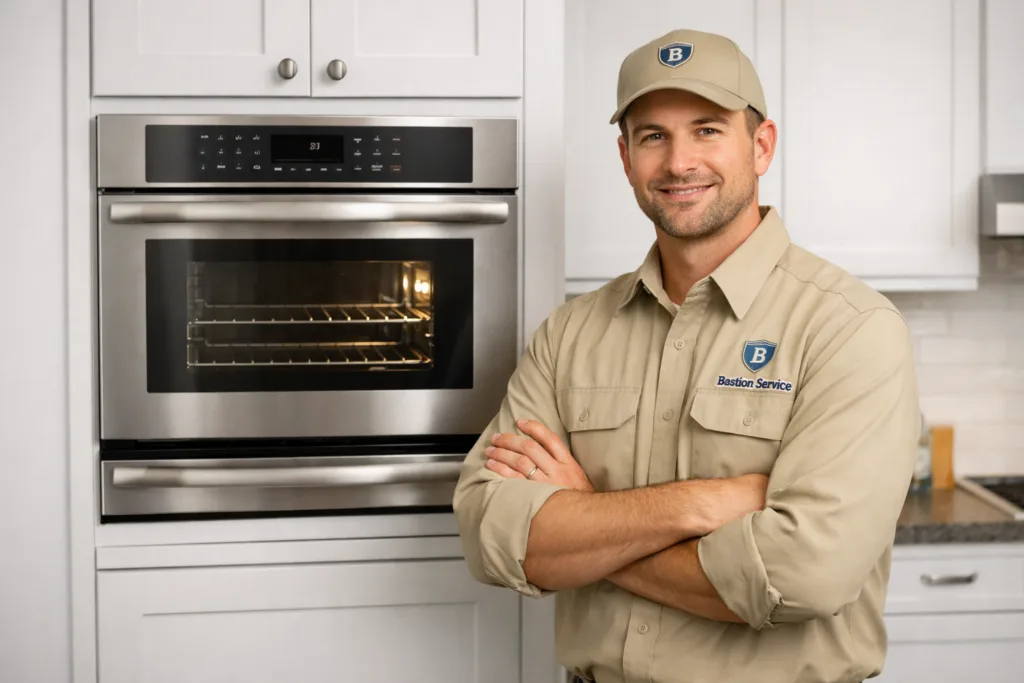
Built-in ovens tend to fail in ways that look similar at first, so the details matter. A unit that seems slow to preheat may have a weak bake element, a drifting temperature sensor, a relay problem, or a door that is leaking heat. A model that appears dead may still have display power while the heating circuit is interrupted. Looking at the full symptom pattern helps narrow the repair path before any parts are considered.
What common GE wall oven symptoms usually point to
Not heating at all
If the cavity stays cool in bake or broil mode, the problem can involve the heating element, sensor, control board, wiring, or incoming power. On some GE wall ovens, homeowners notice that the clock and keypad still work even though the oven never gets hot. That often means the issue is not a total power loss, but a failure somewhere in the heating circuit.
This is a good time to stop guessing. Replacing an element without confirming voltage and control output can miss the real cause and add cost without solving the problem.
Slow preheat
When preheat times stretch longer than normal, the oven may still be producing heat, just not enough of it. Common causes include a weak element, temperature sensor error, control trouble, or a convection-related issue on models equipped with fan-assisted cooking. Slow preheat often shows up gradually, which is why many households first notice it through longer meal prep and inconsistent results rather than a complete failure.
Uneven baking or temperature swings
If cookies brown on one side, casseroles need extra time, or familiar recipes stop turning out right, the oven may not be regulating temperature accurately. Sensor drift, intermittent element operation, fan problems, and poor door sealing can all create hot spots or cycling problems. These issues are frustrating because the oven still appears to work, but the cooking results become unreliable.
Error codes, keypad issues, or a blank display
Electronic control problems can show up as unresponsive buttons, flashing codes, random beeping, or a display that cuts in and out. In some cases the fault is on the interface side; in others, the main control, harness, or connection points are involved. Because modern GE wall ovens depend heavily on electronic communication between components, a control fault can mimic a heating problem.
Door, lock, and self-clean problems
If the door will not shut properly, stays locked, or starts acting up after a self-clean cycle, heat-stressed parts are often involved. Hinges, latch assemblies, lock motors, switches, and controls can all be affected by repeated high-temperature use. If the door is forced open or the latch is manually pushed, the repair can become more complicated than the original issue.
Signs the oven should not keep being used
Some problems are mostly about convenience. Others raise safety and damage concerns. It makes sense to stop using the oven if you notice:
- burning smells that do not fade quickly
- breaker trips during preheat or cooking
- visible sparking
- overheating or scorching outside normal cooking behavior
- unexpected shutoffs in the middle of a cycle
- a locked door that will not release after the cycle ends
Continued use under those conditions can damage wiring, controls, and nearby components. Even when the symptom seems minor, repeated attempts to run the oven can turn a smaller failure into a broader repair.
Why temperature problems are often misread
A lot of oven complaints sound the same from the kitchen: food is underdone, preheat takes too long, or one dish burns while another stays pale. But several different parts can create those same results. That is why temperature-related problems need more than a visual check.
For example, a failing sensor may tell the control the oven is hotter than it really is. A weak element may glow but not produce enough heat output. A failing relay may work intermittently, which creates inconsistent results that are hard to predict from one meal to the next. In Fairfax homes where the wall oven is used several times a week, these smaller accuracy issues usually become more noticeable over time.
Repair or replace: how homeowners usually decide
In many cases, repair is still the sensible option. If the failure is limited to a sensor, element, latch component, fan motor, or a specific electronic part, restoring the oven can be more practical than replacing a built-in unit. That is especially true when the appliance is otherwise in solid condition and the cabinet opening is already fitted for the existing oven.
Replacement becomes more likely when the wall oven has repeated control failures, significant heat damage, multiple failing components at once, or parts that are difficult to source on older models. Cost matters, but so does confidence in the repair outcome. A homeowner usually wants to know not only whether the oven can be fixed, but whether it is likely to return to normal daily use without ongoing trouble.
What to notice before scheduling service
If you are deciding whether to have a GE wall oven checked in Fairfax, a few observations can make the next step easier:
- Does bake fail, broil fail, or both?
- Is the issue constant, or does it happen only sometimes?
- Did the problem begin after a self-clean cycle or power interruption?
- Are there any error codes on the display?
- Is the door closing and sealing normally?
- Does the breaker trip only when heat starts?
Those details help separate a heating issue from a control issue, and a single failed part from a broader electrical problem.
How wall oven problems affect daily cooking
Unlike a freestanding range, a wall oven is often central to the kitchen routine. When it becomes unreliable, the disruption shows up quickly in weeknight meals, baking, and holiday cooking. Small changes such as needing extra bake time or rotating dishes more often may not seem urgent at first, but they usually point to an issue that is not correcting itself.
Addressing the problem early often gives homeowners a better chance of a simpler repair path. It also reduces the chances of wasted food, repeated resets, and extra stress on components that are already beginning to fail.
What matters most for a lasting fix
The goal is not just to get the oven heating again for one cycle. The better outcome is identifying why the symptom started and whether any related components have been affected. That matters with GE wall ovens because heating, sensing, airflow, door function, and electronic controls all work together. When one part fails, the symptoms can spread across multiple cooking functions.
For homeowners in Fairfax, the most useful next step is a diagnosis based on how the oven is actually failing in the home: not heating, baking unevenly, overheating, showing errors, or locking unexpectedly. Once that is clear, it becomes much easier to decide whether the repair is straightforward, whether more than one part is involved, and whether the appliance is worth restoring.