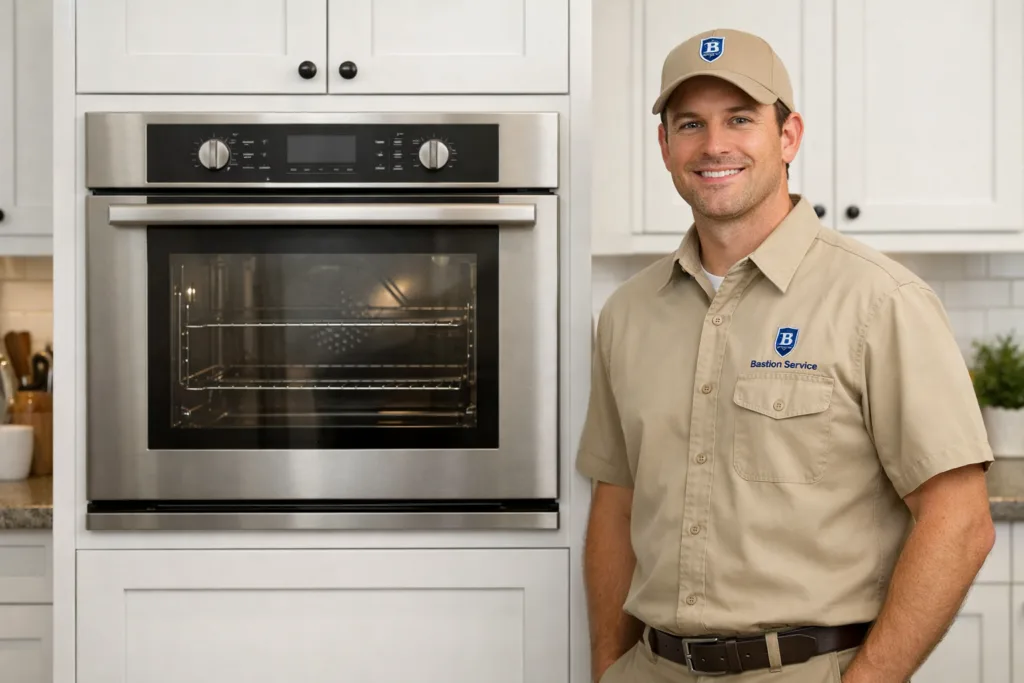
Wall oven problems often start with a simple complaint—food taking too long to cook, preheat dragging on, or one rack browning much faster than another—but the cause is not always obvious. In a built-in appliance, heating components, temperature sensing, controls, and door sealing all work together, so one weak part can affect the whole cooking cycle.
Common wall oven symptoms and what they may mean
One of the most frequent issues is an oven that powers on but does not heat properly. In electric models, that can point to a failed bake element, a damaged broil element that is no longer assisting preheat, a faulty temperature sensor, wiring damage, or a control that is not sending power where it should. If the oven heats only partway and then stalls, the problem may be less obvious than a fully broken element.
Slow preheat is another common household complaint. Many homeowners notice it first when weeknight meals suddenly take longer or baked goods no longer finish on schedule. A weak heating element, inaccurate sensor readings, control board trouble, or heat loss from a worn gasket can all cause delayed preheating. In kitchens where the surface unit is separate from the oven cavity, related issues may sometimes be better matched to Cooktop Repair in Fairfax rather than a built-in wall oven repair.
Uneven baking is also worth taking seriously. If cookies brown on one side, casseroles stay cool in the middle, or the top of a dish finishes long before the bottom, the oven may be cycling temperature poorly. That can come from calibration drift, sensor inaccuracies, airflow disruption, or a door that is not sealing tightly enough to retain heat.
Signs the problem may be electrical or control-related
A wall oven that trips the breaker, shuts off during use, flashes error codes, or has a dead or partially responsive display may have a deeper electrical fault. Possible causes include a failing relay, damaged wiring, a shorted heating component, a blown thermal safety device, or an electronic control problem. If the display works but the oven does not follow commands correctly, the issue may be in the user interface rather than the heating system itself.
Burning smells, sparking, or repeated shutdowns should not be ignored. Those symptoms can indicate overheating insulation, damaged connectors, or a component drawing power abnormally. In those cases, continued use can make the repair more involved and may create a safety concern in the kitchen.
Why accurate diagnosis matters
Many oven symptoms overlap. A homeowner may assume the bake element has failed because the oven is not reaching temperature, but the true cause could be a misreading sensor, a control relay that is sticking, or a door issue allowing too much heat to escape. Replacing parts based on guesswork can lead to extra cost without solving the actual problem.
That is also why it helps to distinguish between equipment types. A built-in unit may have symptoms that sound similar to a standard household oven, but the installation and component layout are different. In some cases, the better fit may be Oven Repair in Fairfax when the appliance is not a wall-mounted built-in model.
When to stop using the wall oven
Some problems are inconvenient but not urgent, such as minor temperature drift that only shows up in baking. Others call for stopping use until the appliance is checked. It is smart to leave the oven off if it trips the breaker, will not turn off reliably, produces a strong electrical or burning smell, sparks inside the cavity, or displays persistent error codes tied to overheating or sensor failure.
If the oven door will not close correctly, heat can escape continuously and force the appliance to run harder than normal. That can affect cooking results, increase wear on heating components, and put extra strain on controls trying to maintain the selected temperature.
Repair or replace?
Not every wall oven failure means replacement. A failed sensor, heating element, latch assembly, or igniter-related component in the right unit can make repair a practical choice. The decision usually depends on the age of the appliance, overall condition, repair history, and whether the fault is isolated or part of wider wear.
Replacement becomes a bigger consideration when the oven has repeated electrical issues, major control failure, poor parts availability, or several worn systems at once. Because wall ovens are built into cabinetry, replacement can also involve fit concerns, trim compatibility, and electrical requirements, which is why many Fairfax homeowners explore repair first.
Built-in cooking setups can complicate diagnosis
Some kitchens have a wall oven plus a separate cooktop, while others rely on a combined cooking appliance. If the issue involves both oven performance and top burners in one unit, the problem may align more closely with Range Repair in Fairfax than a dedicated wall oven call. The exact appliance type matters because controls, power routing, and repair access can differ significantly.
What a useful service visit should focus on
A productive wall oven service appointment should center on the real operating complaint: not heating, slow preheat, uneven cooking, shutdowns, control problems, or a door that will not seal correctly. That means checking temperature behavior, heating response, sensor readings, visible component condition, control communication, and power-related faults rather than jumping straight to the most common replacement part.
Homeowners also benefit from a clear explanation of whether the oven should remain off, whether the issue appears isolated, and what repair path makes the most sense for regular household cooking. In Fairfax, that practical clarity matters because wall ovens are often used heavily for daily meals, batch cooking, and family gatherings.
If the appliance in question turns out to be a freestanding unit rather than a built-in wall model, the symptoms may be better addressed through Stove Repair in Fairfax. Making that distinction early helps avoid confusion and keeps the repair focused on the right equipment.