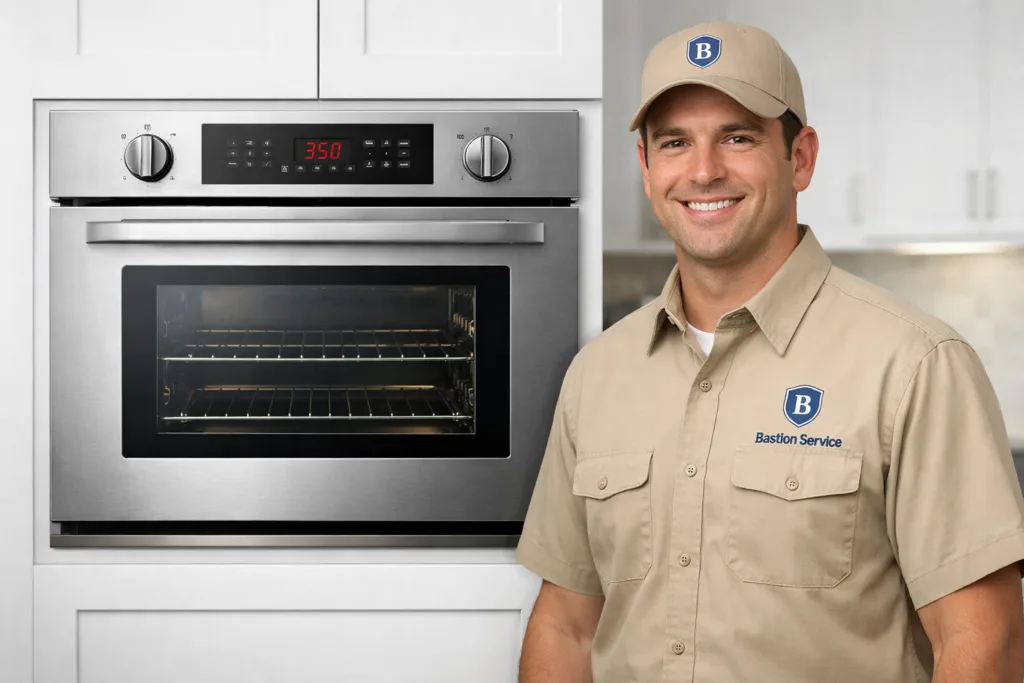
A Summit oven that suddenly bakes unevenly, struggles to preheat, or stops responding can throw off everyday cooking quickly. The most useful first step is to match the symptom to the most likely failure point, because similar complaints can come from very different causes. A heating problem may trace back to an element, sensor, igniter, relay, wiring issue, or electronic control fault, and each repair path is different.
Start with what the oven is doing differently
Homeowners often notice a problem through cooking results before they notice an obvious part failure. Cookies brown on one side, casseroles need extra time, broil seems weak, or the display works while the oven cavity stays cool. Those patterns matter because they help separate a temperature regulation issue from a true no-heat failure.
On Summit ovens, it is helpful to pay attention to whether the problem affects bake, broil, or both. If bake is weak but broil still works, that can point in one direction. If neither function heats properly, the issue may involve power supply, controls, or a shared component. If the oven reaches temperature once but cannot maintain it, the sensor or control cycling may be the better place to look.
Common Summit oven problems and what they may mean
Oven will not heat at all
If the oven powers on but never starts heating, possible causes include a failed bake element, a bad igniter on gas models, a faulty temperature sensor, a damaged relay, or a control board problem. In some cases, lights and the display still operate normally, which can make the issue seem smaller than it is.
This symptom is usually more than a convenience problem. Repeated attempts to start a non-heating oven can add wear to controls and delay a needed repair.
Slow preheating
When preheat takes noticeably longer than it used to, the oven may still be heating, just not efficiently. A weakened element, tired igniter, drifting sensor, or control issue can all cause a Summit oven to reach temperature too slowly. Many households first notice this when routine meals start taking longer even though cooking habits have not changed.
Uneven baking
Uneven baking often shows up as overdone edges, pale centers, or one rack cooking differently from another. While pan placement and cookware can affect results, ongoing inconsistency usually points to uneven heat distribution, poor cycling, or a temperature reading problem. If the same recipes used to come out reliably and now do not, the oven itself is worth checking.
Temperature swings or overheating
An oven that runs too hot, burns food unexpectedly, or seems to fluctuate widely around the selected setting may have a sensor problem or an electronic control issue. Temperature inaccuracy is not just frustrating. It can make daily cooking unreliable and may place extra strain on heating components over time.
Control panel responds, but cooking functions do not
If the display lights up and buttons beep, but bake or broil will not actually start, the fault may be deeper than the user interface. Electronic controls, wiring connections, relays, and model-specific safety circuits can all interrupt normal operation. This is one reason part replacement based only on the front-panel symptom can miss the real cause.
Oven shuts off during cooking
Intermittent shutdowns can be tied to overheating protection, unstable connections, failing controls, or sensor feedback problems. If the oven cuts out mid-cycle, it is usually best to stop relying on it for normal meals until the issue is checked. Intermittent faults tend to become more frequent, not less.
Signs the problem may be getting worse
Some oven issues start subtly and become more obvious over time. Watch for patterns such as:
- preheat times increasing from week to week
- recipes needing repeated temperature adjustments
- food coming out undercooked in the center but dark on top
- broil performance changing along with bake performance
- the oven restarting, beeping, or shutting down on its own
- burning smells, overheating smells, or signs of electrical stress
These symptoms usually mean the problem is no longer a one-time glitch. Continued use can turn a limited repair into a broader one if surrounding parts are affected.
When to stop using the oven
It is smart to pause use and schedule service if the oven trips power, overheats, will not regulate temperature, or gives off unusual electrical or insulation-like odors. The same goes for units that heat unpredictably or shut off during baking. A household oven should work consistently enough that you do not have to guess whether dinner will cook properly or safely.
For families in Fairfax, this is especially important when the oven is used frequently for everyday meals. A small temperature problem can become a larger reliability issue faster than expected.
Repair or replace?
Many Summit oven problems are repairable, especially when the rest of the appliance is in good condition. Elements, sensors, igniters, some wiring issues, and certain control-related failures can often be addressed without replacing the entire unit. Replacement becomes more worth considering when there are multiple major faults, the oven has had repeated recent breakdowns, or the cost of repair approaches the value of the appliance.
A reasonable decision usually depends on four things:
- which component has actually failed
- the overall condition of the oven
- the age of the unit
- whether parts support is still realistic for the model
That is where a clear diagnosis is most useful, because it turns a vague problem into a specific repair decision.
What a focused service visit should accomplish
Good Summit oven repair in Fairfax should answer a few straightforward questions. Is the problem in the heating system, the temperature sensing circuit, the control board, the power supply, or a connection between them? Is the issue isolated to one cooking mode or affecting the full oven? Is continued use safe, and is the repair sensible for the condition of the appliance?
When those questions are answered clearly, homeowners can decide on the next step without guessing, replacing parts at random, or waiting for a complete failure. That keeps the process simpler and helps restore normal kitchen use with less disruption.