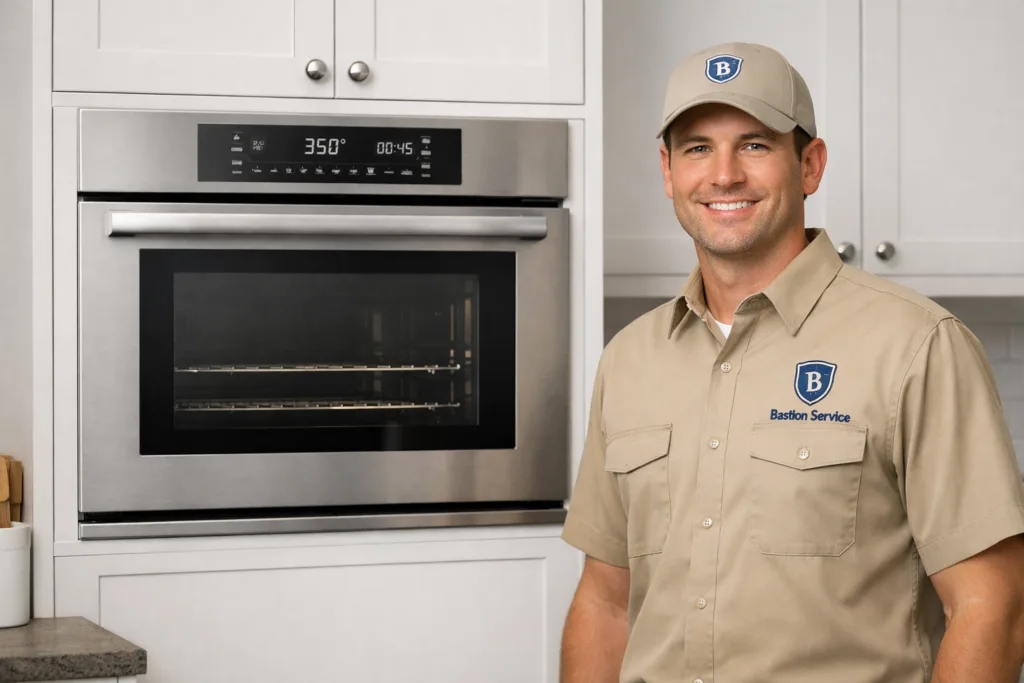
Wall oven problems are often frustrating because the symptom you notice is not always the part that has failed. A Summit wall oven may light up, beep normally, and still struggle to bake correctly. In other cases, it may appear completely dead even though the issue starts with power delivery, a safety circuit, or a control fault. For homeowners in Culver City, the best next step is usually to match the pattern of symptoms to the most likely repair path.
What usually causes Summit wall oven problems
Most Summit wall oven issues fall into a few main categories: heating failures, temperature sensing problems, control and display faults, door or latch issues, and electrical supply concerns. Because wall ovens are built into cabinetry and depend on stable household power, even a small electrical or control problem can affect performance in noticeable ways.
A unit that will not preheat, for example, may have a weak bake element, a sensor reading out of range, a failed relay on the control, or a wiring problem that interrupts heat under load. Similar symptoms can come from different causes, which is why guessing based on one visible sign often leads to wasted time and unnecessary parts.
Common Summit wall oven symptoms and what they may mean
Oven turns on but does not heat
If the display responds and the oven seems to start, but the cavity never gets hot, the problem may involve the bake element, broil element, temperature sensor, electronic control, or incoming power. Some ovens can still power the clock and panel while lacking the full voltage needed for proper heating.
This symptom is especially important to note if it happens in bake but not broil, or in both modes. That distinction can help narrow down whether the fault is in a specific heating circuit or in a broader control or power issue.
Uneven baking or unreliable temperatures
When one tray browns too quickly, the center stays underdone, or recipes suddenly need extra time, the oven may be cycling incorrectly. Possible causes include a drifting temperature sensor, weak heating performance, calibration problems, or poor heat retention from a door seal issue.
Homeowners sometimes adapt by rotating pans more often or raising the set temperature. That can keep meals moving in the short term, but it does not correct the underlying problem and can make temperature-related wear harder to spot until it becomes more obvious.
Slow preheating
A Summit wall oven that takes much longer than normal to reach temperature may be dealing with a partially failing element, sensor inaccuracy, or a control that is not energizing heat correctly. Slow preheat can start subtly, then gradually worsen over time.
If preheat eventually finishes but cooking still seems sluggish, that often points to a component that works inconsistently rather than a total failure. Those cases can be misleading because the oven appears usable while results continue to decline.
Error codes, beeping, or touchpad issues
Random beeping, flashing displays, unresponsive buttons, or fault codes usually indicate that the control system has detected an abnormal reading or communication problem. In some cases the source is the sensor circuit. In others, it can involve the user interface, main board, latch assembly, or wiring harness.
If the code appears only during high heat or self-clean functions, that timing can be useful. Heat-related control issues often become more noticeable after the oven has been running for a while.
Door problems and lock issues
A wall oven door that will not close properly can affect cooking performance more than many people expect. Heat escaping around the seal can lead to longer bake times, inconsistent browning, and temperature swings. If the door will not lock or unlock, the problem may involve the latch motor, switches, alignment, or control logic tied to the locking system.
Signs the oven should not keep being used
Some issues are inconvenient but manageable for a short time. Others are a reason to stop using the appliance until it is checked. If a Summit wall oven is tripping the breaker, producing a burning smell, shutting off during use, overheating, or showing signs of electrical stress, continued operation can lead to additional damage.
- Breaker trips when bake or broil starts
- Burning odor from the control area or oven cavity
- Visible sparking or signs of heat damage
- Display resets during operation
- Door remains locked unexpectedly after a cycle
These symptoms can point to wiring problems, failing components under load, or control failures that should be addressed before the oven is used again.
How symptom timing helps narrow the diagnosis
The timing of the problem often matters as much as the symptom itself. An oven that fails immediately after you press start may suggest a different cause than one that runs for twenty minutes and then stops heating. A fault that appears only during preheat can point in one direction, while an issue that shows up once the oven is hot can point in another.
Before scheduling service, it helps to note a few details:
- Whether the issue affects bake, broil, or both
- Whether preheat completes or stalls
- If the display stays on when heating stops
- Any error code shown on the panel
- Whether the problem started suddenly or gradually
- If the breaker has tripped or the unit has shut off mid-cycle
Those observations can make the repair recommendation more accurate and can help determine whether the issue is isolated or part of a larger reliability concern.
Repair or replacement for a built-in wall oven
Many Summit wall oven problems are worth repairing when the issue is limited to one main system, such as a heating element, sensor, latch component, switch, or control-related part. Repair is often the practical choice when the oven is otherwise in good condition and fits the kitchen well.
Replacement may deserve a closer look when the appliance has repeated failures, multiple systems acting up at once, or visible deterioration that affects safe operation. Built-in units also add cabinet-fit considerations. In many kitchens, replacing a wall oven is not as simple as swapping one freestanding appliance for another, so a proper diagnosis helps homeowners compare the real cost and disruption of both options.
What homeowners in Culver City can do before service
There is not much do-it-yourself work that makes sense on a wall oven beyond basic observation, especially because these appliances involve high voltage and built-in installation. What is helpful is confirming the exact symptom, checking whether the issue happens every time, and avoiding continued use if the oven shows overheating or electrical warning signs.
If cooking results have changed but the oven still operates, try one simple test recipe or oven thermometer check instead of making repeated guesses with different settings. A consistent pattern is more useful than several one-off adjustments that can blur the real symptom.
Summit wall oven service focused on the actual fault
Summit Wall Oven Repair in Culver City is most effective when the visit is centered on how the oven behaves in real use, not just on the headline symptom. Not heating, uneven baking, slow preheat, temperature swings, and control problems can all stem from different failures, and the right fix depends on identifying which system is actually responsible.
For households in Culver City, that means looking at whether the problem is isolated and repairable, whether the appliance is showing broader wear, and whether continued use risks making the damage worse. When the symptom pattern is understood clearly, it becomes much easier to decide whether repair is the right move now or whether replacement should be considered instead.