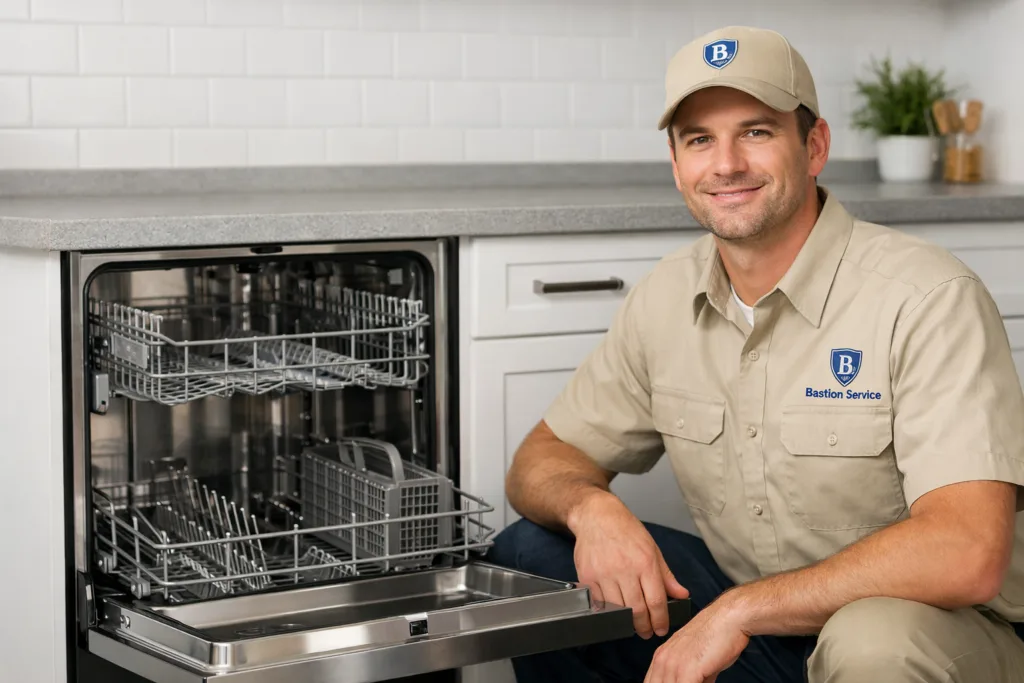
Common Summit dishwasher problems in Culver City homes

Dishwasher trouble usually follows a pattern. Looking at the exact symptom helps narrow down whether the issue is related to draining, filling, circulation, heating, the door system, or the controls. That matters because two dishwashers can look like they have the same problem while failing for very different reasons.
Standing water after the cycle
If water is still sitting in the tub after a wash, the problem may involve the filter area, drain hose path, drain pump, or a restriction that slows water movement. Sometimes the dishwasher seems to complete the cycle, yet the tub stays partially full or drains only after a delay.
Recurring standing water should not be ignored. It can leave odors inside the machine, allow debris to recirculate, and put extra strain on the drain system if cycles keep getting restarted.
Cloudy glasses or food left on dishes
Poor wash results often point to weak spray action, blocked spray arms, low water fill, filtration problems, or a wash motor issue. It can also show up as detergent not dissolving well or upper-rack items coming out noticeably dirtier than items below.
When a Summit dishwasher is not cleaning properly, the key question is whether the unit is filling with enough water and circulating it with normal pressure. A single failed part can affect the entire wash pattern.
Leaks under or around the door
Leaks can come from a worn door gasket, a lower door seal problem, a cracked hose, an overfill condition, or a pump-related issue underneath the unit. In some cases, a dishwasher only leaks during one part of the cycle, which can make the source harder to spot without inspection.
Even a small leak deserves attention. Moisture can damage nearby flooring, cabinet edges, and the area beneath the dishwasher long before the leak becomes obvious.
Won’t start or stops mid-cycle
If the dishwasher does not start at all, possible causes include latch trouble, a control problem, user interface failure, or power-related interruption. If it starts and then pauses or shuts down, the issue may be tied to draining, heating, or electronic communication inside the machine.
Mid-cycle stopping is especially frustrating because it often leaves dishes dirty and water trapped inside. When that happens more than once, trial-and-error part replacement usually wastes time and money.
Low rinse temperature or drying problems
When dishes come out wet, cool, or still coated with residue after the final rinse, the problem may involve the heating system, temperature sensing, or a cycle that is not advancing correctly. Plastic items may still hold some moisture, but a broader loss of heat usually points to a repair issue rather than normal dishwasher behavior.
Low rinse temperature can also affect sanitation and overall cleaning performance, especially if greasy residue remains on dishes after a full cycle.
Buzzing, grinding, or unusual noise
A new or harsher sound often suggests something has changed in the pump, motor, spray arm path, or filter area. A small object may be interfering with moving parts, or a component may be wearing out and struggling under load.
Noises that get louder over time are worth addressing early. What begins as a manageable pump or circulation problem can develop into a larger failure if the unit keeps running that way.
Why symptom-based diagnosis matters
Dishwashers are one of those appliances where the visible symptom can be misleading. A machine that seems to have a drain issue may actually be stopping early because of a control fault. Poor cleaning may look like a detergent problem when the real cause is weak wash circulation. In Culver City homes, diagnosis is most useful when it separates the surface symptom from the actual failed part or system.
That approach also helps with the repair decision. If the problem is isolated to a pump, valve, latch, seal, or heating-related component, repair is often reasonable. If the dishwasher has multiple failures at once, repeated leaks, or broader control trouble on an older unit, replacement may make more sense.
Signs you should stop using the dishwasher
Some dishwasher problems can wait briefly for service, but others should be treated as immediate stop-use issues. Continuing to run the appliance can increase the chance of water damage or turn a smaller repair into a more expensive one.
- Water is leaking onto the floor or from beneath the unit
- The dishwasher repeatedly fails to drain
- The door will not latch or stay closed securely
- The unit shuts off unpredictably or behaves erratically
- You hear grinding, burning-type, or unusually loud motor noise
- The dishwasher leaves a hot electrical smell
When repair is usually practical
Many Summit dishwasher issues are worth repairing when the rest of the appliance is still in solid condition. That is often the case when a dishwasher has been working normally and then develops one specific problem, such as leaking, weak washing, incomplete draining, or failure to finish a cycle.
Repair is generally more favorable when:
- The issue appeared recently rather than gradually worsening over years
- The cabinet and racks are still in decent shape
- There is no major rust, structural damage, or chronic leaking history
- The problem appears tied to one system instead of several at once
When replacement may be the better option
Replacement enters the conversation when repair needs begin to stack up. If a dishwasher has chronic performance complaints, multiple worn components, or control problems combined with leak concerns, the total repair path may not restore confidence in everyday use.
Homeowners in Culver City often lean toward replacement when the dishwasher has a history of repeated service needs, visible internal deterioration, or signs that more than one major system is failing. The right choice depends on whether the repair solves the current symptom cleanly or only postpones the next issue.
Helpful details to note before service
A few observations can make troubleshooting faster and more accurate. Before service, it helps to note what the dishwasher does at the beginning, middle, and end of the cycle rather than simply describing it as “not working.”
- Whether the dishwasher fills with water
- Whether you can hear spray action during washing
- Whether the problem happens on every cycle or only certain settings
- Whether any lights blink, flash, or remain stuck
- Whether the issue began suddenly or worsened over time
- Whether there is leaking, odor, or unusual noise
Those details often help identify whether the fault is related to drainage, circulation, heating, the latch, or the controls.
What homeowners in Culver City can expect from a repair decision
The goal of Summit dishwasher repair in Culver City is not just to get the machine running for one more cycle. It is to determine why it is failing, whether the repair path is sensible, and whether the appliance can return to normal daily use without ongoing frustration.
For households dealing with poor wash results, drain problems, leaks, low rinse temperature, pump trouble, or cycle failures, the most useful next step is to match the symptom pattern to the actual cause and decide from there whether repair is the right investment.