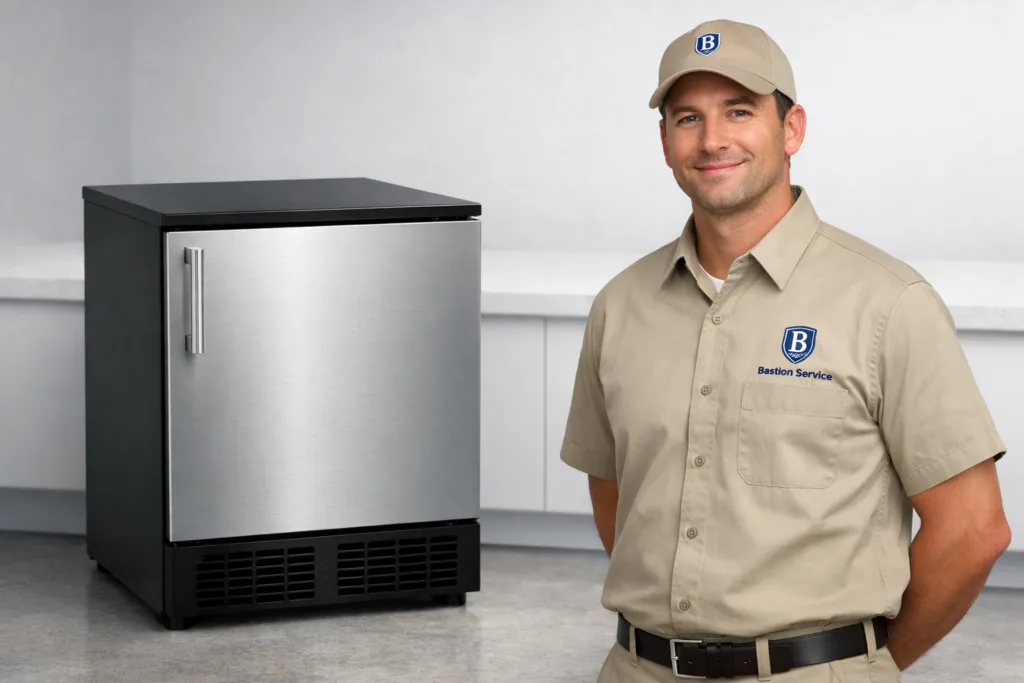
Ice maker failures often look simple from the outside, but the underlying cause can vary quite a bit. A unit that stops producing ice may have a water supply problem, a temperature problem, a sensor issue, or a fault in the harvest cycle. A machine that leaks may be overfilling, draining poorly, or building frost that later melts. Sorting out the symptom pattern first helps homeowners in Culver City avoid guesswork and understand what repair path makes sense.
Common Summit ice maker problems in Culver City homes
Most service calls start with one of a few recognizable symptom groups. While the symptoms may seem straightforward, similar results can come from very different failures.
No ice production
If a Summit ice maker is running but not making any ice, the issue may involve a restricted water line, low incoming water pressure, a failing inlet valve, or a control problem that keeps the unit from completing the fill or harvest cycle. In other cases, the compartment is cooling, but not reaching the temperature needed for reliable ice formation. This is one reason a proper check matters before replacing parts.
Slow ice production
When ice output gradually drops, the problem may be related to weak airflow, dust buildup around cooling components, a door that is not sealing well, or an early refrigeration issue that reduces freezing efficiency. Slow production can also happen when scale or partial blockage affects how much water enters each cycle. Homeowners usually notice this first when the bin never seems to fill the way it used to.
Small, hollow, or misshapen cubes
Odd cube shape usually points to a fill issue rather than a complete shutdown. If the mold is not receiving the right amount of water, cubes may come out undersized, hollow, or inconsistent from batch to batch. Mineral buildup, a weak valve, inconsistent pressure, or a partial restriction in the water path are all possible causes.
Clumped ice in the bin
Clumped ice can mean the cubes are melting slightly and refreezing together. That may happen when warm air is getting into the compartment, when temperature control is inconsistent, or when a defrost or sealing issue is affecting the interior environment. It can also happen if water is dripping into the bin at the wrong time during the cycle.
Leaks, pooling water, or excess frost
Water around the appliance should not be ignored. A Summit ice maker may leak because of overfilling, a drain problem, poor leveling, damaged sealing surfaces, or frost buildup that later melts. If the problem continues, moisture can affect nearby flooring or cabinetry and can make internal ice buildup worse.
Unusual noises
Buzzing, clicking, grinding, or repeated cycling noises can help narrow down the source of trouble. Depending on when the sound happens, it may point to the inlet valve, fan movement, the harvest mechanism, or another component involved in the ice-making cycle. Noise alone does not confirm the failed part, but it becomes useful when paired with symptoms like no ice or leaking.
Why the same symptom can have different causes
Two ice makers can show the same outward problem and need completely different repairs. No ice may be caused by a bad valve, weak cooling, a blocked line, or a control fault. Slow output may be tied to warm air intrusion, dirty airflow paths, or trouble with the freezing cycle itself. Water in the bin might come from overfill, frost melt, or drainage issues.
That is why the most helpful first step is a clear diagnosis and a practical repair plan based on the exact symptom pattern. It helps answer the questions homeowners actually care about: what failed, whether the fix is likely to hold, and whether continued use could cause a larger problem.
Signs the problem is getting worse
Some Summit ice maker issues start small and become more expensive if they are left alone. Watch for warning signs such as:
- Longer gaps between batches of ice
- Cubes changing size or shape over time
- Frost building up faster than usual
- Water appearing under the appliance or inside the cabinet area
- The machine running more often without filling the bin
- Intermittent operation that comes and goes
Intermittent faults are especially worth checking early. Once a part fails completely, the original symptom pattern can change and make the root cause less obvious.
When to schedule service
It makes sense to schedule service when the unit has stopped making ice, production is noticeably lower, cubes are coming out irregularly, or the appliance is leaking or making new noises. Prompt service is also a good idea if the machine seems to be running constantly without normal results.
If leaking or heavy frost is present, avoiding extended use is usually wise. Those symptoms can move beyond simple ice-making trouble and affect surrounding materials or the cooling side of the appliance.
Repair or replacement: how homeowners usually evaluate it
Many Summit ice maker problems are repairable, especially when the issue involves water supply, fill control, drainage, sensors, or individual ice-making components. Replacement becomes more worth considering when the appliance has a long repair history, significant corrosion, major cooling-system trouble, or overall wear that makes another repair hard to justify.
The decision usually comes down to a few practical factors:
- The confirmed cause of failure
- The age and overall condition of the unit
- Whether one repair is likely to restore normal operation
- Whether the current problem has already caused secondary damage
What to note before a service visit
A few observations from the household can make troubleshooting faster. It helps to note whether the unit stopped suddenly or declined over time, whether it is making any ice at all, whether the cubes changed shape, and whether you have seen leaking, frost, or clumping. If the noise happens only during filling or only during harvest, that detail can also be useful.
For homeowners in Culver City, the goal is not just to restore ice production for the moment. It is to identify the actual fault, reduce the chance of repeat issues, and decide whether repair is the sensible next step for the Summit unit in the home.