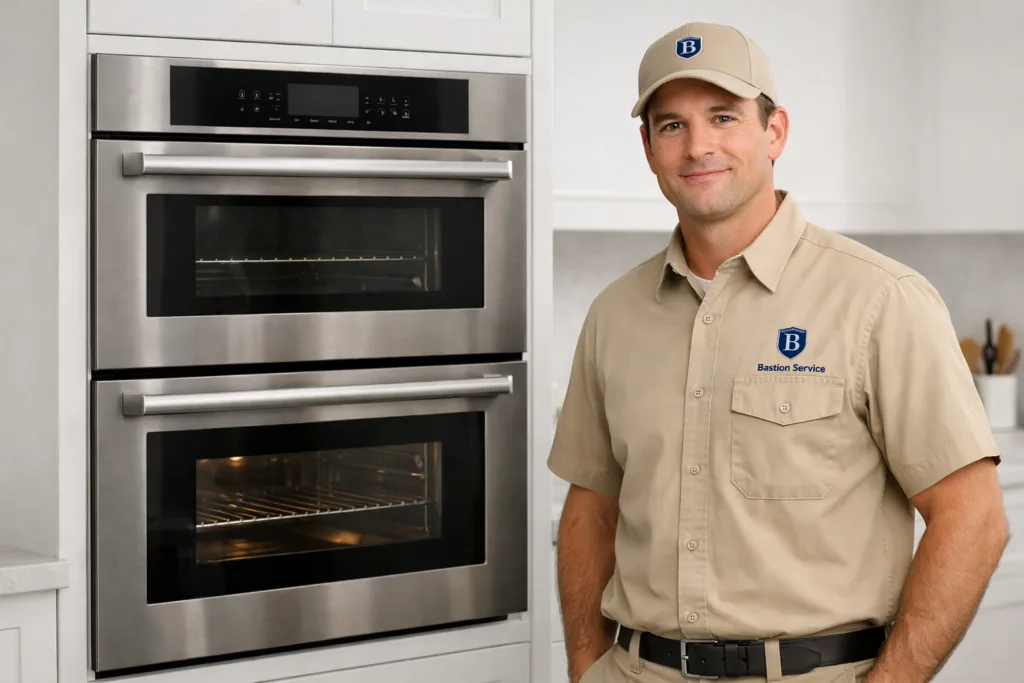
Wall oven problems tend to show up in daily cooking first: casseroles that need extra time, cookies that brown unevenly, a preheat that seems to drag on, or a display that suddenly stops cooperating. With JennAir models, the same basic complaint can come from several different components, so the symptom pattern matters more than the guess.
How JennAir wall oven problems usually show up
A wall oven rarely goes from perfect to completely unusable without warning. In many Culver City homes, the first signs are subtle. Food may come out done on top but pale underneath, the oven may reach temperature and then drift, or one cooking mode may work better than another. Those differences help narrow down whether the issue is related to heating, sensing, airflow, controls, or power supply.
Built-in ovens also add another layer to diagnosis. Access can be tighter, installation details matter, and the repair path may depend on how the unit is mounted and how the failure affects surrounding components.
Common symptom patterns
- Not heating at all: often tied to a failed bake or broil element, a temperature sensor problem, a control fault, or an electrical supply issue.
- Slow preheat: may point to a weakened element, improper cycling, or a control that is not driving heat correctly.
- Uneven baking: can be caused by partial element failure, convection fan trouble, sensor drift, or door-seal heat loss.
- Temperature swings: sometimes come from a sensor reading inaccurately, calibration problems, or erratic control behavior.
- Shutting off during use: may involve overheating protection, loose connections, or a failing electronic control.
Not heating, underheating, or overheating
If a JennAir wall oven does not heat at all, the failure may be straightforward, but underheating and overheating can be harder to sort out. An oven that reaches only part of the set temperature may still light up, preheat, and seem normal at first. That often leads homeowners to assume the problem is minor when it actually affects every cooking cycle.
Overheating is different but equally disruptive. If dishes burn faster than expected, the cavity feels excessively hot, or the temperature seems well above the setting, the oven may be sensing temperature incorrectly or failing to regulate heat. In that situation, continued use can damage cookware, ruin meals, and place extra stress on internal parts.
Clues that help separate one heat problem from another
- Bake fails but broil works: this often suggests a bake-side heating issue rather than a total power problem.
- Broil works weakly and bake is slow: that can indicate a broader control or supply problem.
- Preheat completes, but cooking is still off: sensor accuracy or cycling may be the issue.
- The oven gets too hot regardless of setting: temperature regulation is more likely than simple element weakness.
Uneven baking and slow preheat on convection and standard models
Uneven cooking does not always mean the entire oven is failing. In some JennAir wall ovens, one rack may brown differently because heat is not circulating as intended or one heating component is no longer performing fully. Convection models can add another variable if the fan runs inconsistently or airflow is reduced.
Slow preheat is also worth paying attention to. Many households adapt by waiting longer, but a preheat time that keeps increasing usually means something is degrading. What starts as an inconvenience can turn into a full no-heat complaint later.
For homeowners in Culver City who cook often, these symptoms are usually most noticeable with baked goods, roasting, and recipes that depend on stable temperatures over time.
Display, keypad, and control issues
Some service calls start with the oven still heating but the controls acting unpredictably. A flickering display, touchpad buttons that only respond sometimes, random resets, or repeated error messages can all point to an electronic control issue. In wall ovens, these problems may interrupt cooking even when the heating system itself is still partly functional.
Control-related faults are especially frustrating because they can appear intermittent. The oven may work one day and fail the next, or it may cancel a cycle halfway through. When symptoms come and go, details like the exact error code, the time in the cycle when the problem occurs, and whether the unit resets on its own can be very helpful.
Common electronic warning signs
- The display is blank or dims unexpectedly
- Buttons respond inconsistently
- Error codes return after being cleared
- The clock resets or the unit loses settings
- The oven starts, stops, or beeps without clear reason
Door, latch, and self-clean problems
A wall oven door that does not close properly can affect more than convenience. Heat escaping around the seal can cause longer cook times, uneven browning, and temperature instability. Hinges, seals, and latch components all matter to normal performance.
Self-clean cycles can bring out existing weaknesses as well. If the door locks and will not release, the oven shows a latch-related error, or the controls become erratic after self-clean, forcing the door or repeatedly cycling power can make matters worse. On an oven already showing control or temperature issues, it is usually best to avoid running self-clean until the original problem is addressed.
When to stop using the oven
Some issues are inconvenient but manageable for a short time. Others should not be ignored. If the oven is tripping the breaker, producing a strong burning smell, sparking, failing to shut off, or overheating far beyond the set temperature, stopping use is the safer choice until the unit is checked.
Even less dramatic symptoms can worsen with repeated operation. A weak element can fail completely, and a drifting sensor can lead to larger control problems. Early attention often keeps a smaller repair from becoming a broader one.
Repair or replacement for a built-in JennAir wall oven
Repair is often the sensible option when the issue is limited to one or two serviceable components and the oven is otherwise in good shape. That is especially true with built-in models, where replacement may involve cabinet fit, finish alignment, and added kitchen disruption.
Replacement becomes more reasonable when there are multiple major faults at once, recurring electronic failures, severe wiring damage, or structural issues with the door or cavity. The real decision is not just whether a repair can be done, but whether it makes sense based on the condition of the appliance and the likely result after service.
A simple way to think about the decision
- If the problem appears isolated, repair is usually worth considering first.
- If the oven has had repeated major breakdowns, replacement may be the better long-term choice.
- If diagnosis finds several costly issues at once, compare total repair scope with the value of keeping the current unit.
- If the built-in installation makes replacement more involved, repair often remains attractive when the rest of the oven is solid.
What to note before scheduling service
A few observations can make a service visit more productive. Try to note whether the oven fails during preheat or after reaching temperature, whether bake and broil behave differently, whether convection changes the result, and whether the problem is consistent or intermittent. If an error code appears, writing it down exactly as shown is helpful.
It also helps to remember how the issue started. A sudden failure may suggest one type of component breakdown, while a gradual decline often points to a part that has been weakening over time.
Focused help for JennAir wall oven issues in Culver City
JennAir wall ovens combine built-in design, electronic controls, and model-specific parts, so symptom-based troubleshooting matters. For homeowners in Culver City, the most useful next step is service that explains what the oven is actually doing, what the symptoms suggest, and whether repair is likely to restore safe, consistent cooking without unnecessary work.