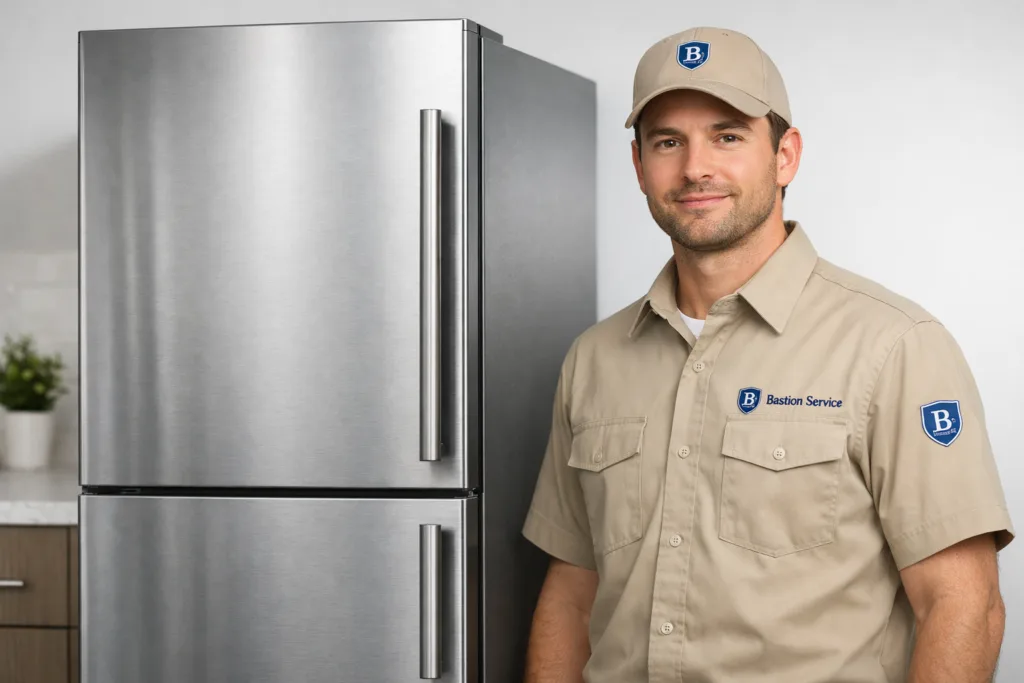
A Summit refrigerator that runs warm, leaks, or starts making new noises can disrupt everyday kitchen use quickly. The most useful first step is identifying which part of the cooling process has actually failed, because similar symptoms often point to very different repairs. A temperature problem, for example, might come from blocked airflow, a defrost issue, a fan problem, a control fault, a worn door gasket, or a more serious sealed-system concern.
Start with the symptom pattern
When a Summit refrigerator begins acting differently, the details matter. Whether the freezer is still cold, whether frost is building on the back panel, whether the compressor is running constantly, and whether the doors are sealing properly can all change the repair path. Looking at the full symptom pattern helps avoid replacing parts based on guesswork and gives a better sense of whether the problem is minor, moderate, or more extensive.
Fresh food section is warm
If the refrigerator compartment is warming up while the freezer still seems cold, poor airflow is often part of the problem. Frost around the evaporator area, a failing evaporator fan, blocked vents, or a defrost issue can all prevent cold air from reaching the fresh food section evenly. Homeowners may notice milk spoiling early, produce softening, or shelves near the top feeling warmer than drawers below.
In some cases, the refrigerator may cool normally for part of the day and then drift out of range. That can point to a cycling problem, a control issue, or an intermittent fan failure rather than a complete loss of refrigeration.
Freezer is softening frozen food
A freezer that no longer keeps food solid can indicate a more serious cooling problem, but not always. Dirty condenser conditions, a weak start device, a struggling compressor, temperature sensor faults, or airflow restrictions can all reduce freezing performance. If ice cream is soft, frozen items are clumping together, or the freezer takes longer than usual to recover after the door is opened, service is worth scheduling before food loss gets worse.
Water under or inside the refrigerator
Leaks are commonly tied to a blocked defrost drain, condensation problems, a door that is not sealing tightly, or an issue with an ice maker water line on equipped models. Water may appear under crispers, along the bottom of the cabinet, or on the floor in front of the unit. Even a small recurring leak should be addressed, since it can damage flooring and lead to hidden ice buildup inside the compartment.
New clicking, buzzing, rattling, or fan noise
Not every refrigerator sound means something is wrong, but a noticeable change in sound usually deserves attention. Repetitive clicking with poor cooling can suggest compressor start trouble. A loud whirring or scraping sound may come from a fan blade hitting ice or a failing fan motor. Rattling can sometimes be as simple as vibration from a loose panel or uneven placement, but if the noise appears with temperature changes, it may be part of a larger refrigeration issue.
Frost buildup and blocked vents
Heavy frost on the freezer’s back wall, ice around vents, or uneven temperatures from shelf to shelf often point to a defrost-related problem. When frost builds where it should not, airflow drops and the refrigerator section may warm even while parts of the freezer still feel cold. A worn gasket can make this worse by allowing humid air into the cabinet during normal use.
Signs the problem should not wait
Some refrigerator issues can become more expensive if the unit keeps running in a stressed condition. It is smart to schedule service when temperatures are no longer stable, the compressor seems to run almost constantly, water leaks keep returning, or the refrigerator struggles to restart after cycling off.
- Food is no longer staying safely cold
- The freezer is thawing or only partially freezing
- There is visible frost behind interior panels
- The unit clicks repeatedly without cooling properly
- Leaks are reaching the floor
- Noise has changed sharply from normal operation
These symptoms usually mean the refrigerator is doing more work than it should, and waiting can put added strain on fans, controls, or the compressor.
What can often be repaired
Many Summit refrigerator problems involve components that are more straightforward to service, including fan motors, defrost parts, thermostats, sensors, switches, drains, door gaskets, and certain electrical starting components. When the fault is limited to one of these areas, repair is often the practical option for a household refrigerator in otherwise decent condition.
By contrast, if the unit has repeated cooling failures, multiple systems acting up at once, or signs of sealed-system trouble, the decision may be less simple. In those cases, the overall condition of the refrigerator matters just as much as the single symptom that first got your attention.
Repair or replace: how to think about it
Replacement becomes a stronger consideration when the refrigerator has a major cooling failure, a long history of recurring problems, or repair needs that stack up across several systems. A newer or otherwise well-kept unit may still be worth repairing even when the symptom feels serious. An older refrigerator with declining performance, repeated frost issues, and uneven temperatures may be harder to justify.
For many Culver City homeowners, the best decision comes down to three things: the exact cause of failure, the expected repair scope, and how reliably the refrigerator has been working before this issue started. That is where a clear diagnosis and a practical repair plan are most helpful.
What to check before service
A few observations can make diagnosis faster and more accurate. Before the appointment, it helps to note what the refrigerator is doing right now rather than what it did several days ago.
- Is the freezer still cold, or is everything warming up?
- Are the interior lights working?
- Do you hear fans running?
- Is there frost on the back freezer panel?
- Are the doors closing and sealing firmly?
- Does leaking happen all the time or only occasionally?
- Has the refrigerator become louder or started clicking?
Those details can help narrow down whether the issue is related to airflow, defrost, controls, drainage, door sealing, or the cooling system itself.
Household impact in Culver City
In a busy home, refrigerator trouble is not just an appliance issue. It affects groceries, meal planning, food safety, and daily routine. When a Summit refrigerator starts showing temperature swings, frost buildup, or moisture problems, addressing the cause early can help prevent spoiled food, unnecessary energy use, and avoidable wear on major components.
For households in Culver City, the most useful approach is to focus on the exact symptom, how long it has been happening, and whether the refrigerator is still holding safe temperatures. That makes it easier to decide whether prompt repair is the right next step or whether replacement should be considered.