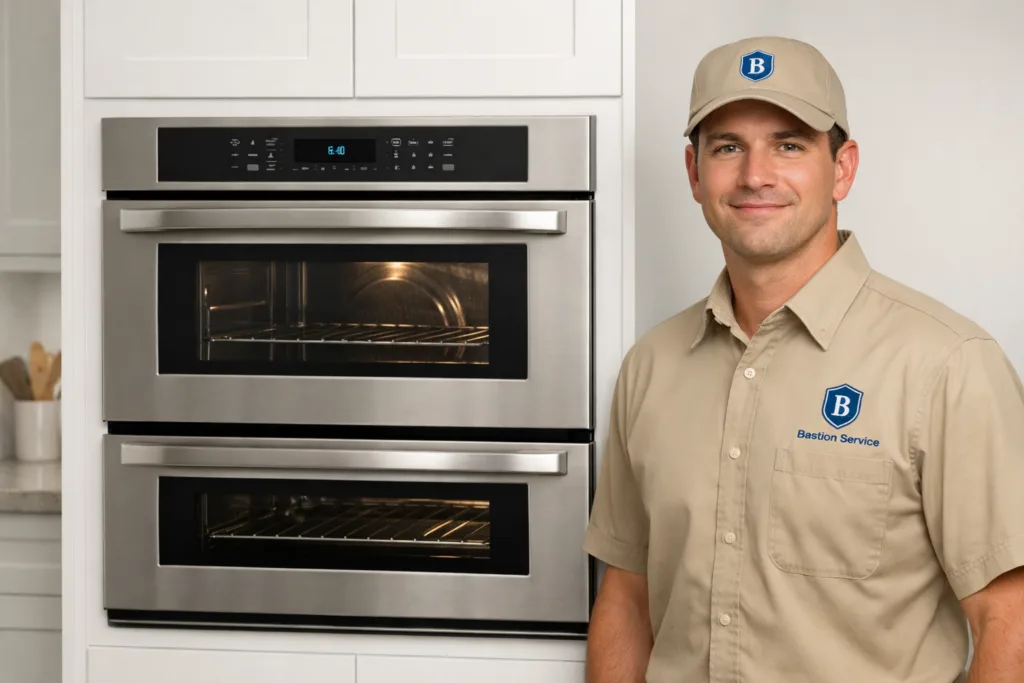
How Frigidaire wall oven problems usually show up

Wall oven issues rarely feel minor for long. A unit that once preheated normally may start taking much longer, run hotter than the display says, or leave food undercooked in the center while browning too fast at the edges. In Culver City homes, those changes often point to a heating, sensing, or control problem rather than a simple cooking adjustment.
What makes these symptoms tricky is that different failures can look similar at first. An oven that will not reach temperature might have a weakened bake element, a sensor sending inaccurate readings, a relay that is not cycling correctly, or a power-related fault affecting performance. Looking at the full pattern of behavior is the best way to sort out what is actually failing.
Common Frigidaire wall oven symptoms and what they can mean
Oven not heating at all
If the display appears normal but the oven cavity stays cold, the problem may involve the bake element, broil element, wiring, thermal protection components, or the electronic control. If the oven is completely unresponsive, power supply issues, a failed control, or a more significant electrical interruption may be involved.
It also helps to notice whether any function still works. For example, if broil operates but bake does not, that narrows the likely fault considerably.
Slow preheating
Slow preheat is one of the most common complaints with built-in ovens. Sometimes the cause is a heating element that still works but no longer performs at full strength. In other cases, the oven is receiving inaccurate temperature feedback, so the control system is not energizing components the way it should.
If preheat times have gradually increased instead of changing overnight, that can be an especially useful clue when diagnosing the issue.
Uneven baking or temperature swings
Cookies finishing unevenly, casseroles taking longer than expected, or one rack cooking faster than another can all suggest temperature regulation problems. Likely causes include:
- Temperature sensor drift
- Intermittent heating element operation
- Control board relay issues
- Door gasket wear that allows heat to escape
- Calibration problems masking a developing part failure
If food quality has become inconsistent across several recipes, the oven is usually giving a stronger warning than it first appears.
Error codes, beeping, or unresponsive controls
Frigidaire wall ovens can also fail at the control level. You might see flashing codes, buttons that do not respond consistently, settings that reset, or a cycle that starts and then shuts off early. These symptoms often point to communication faults, failing touch controls, wiring issues, or trouble within the main electronic control board.
Intermittent operation matters too. A wall oven that works one day and fails the next is often dealing with an electrical or control problem rather than a simple temperature calibration issue.
Door, latch, and self-clean problems
High-heat self-clean cycles can expose weak parts in the door lock or latch system. Afterward, some ovens refuse to unlock, think the door is still open, or will not begin a cooking cycle because the lock status is incorrect. A door that does not close squarely or seal well can also affect temperature stability and cooking times.
If the problem began right after self-clean, that timing is worth mentioning because it can help narrow the repair path.
Signs the oven should not keep being used
Some symptoms are mainly inconvenient. Others are a sign to stop using the appliance until it has been checked. Continued operation is not a good idea if the oven:
- Trips the breaker
- Produces a burning or overheating smell
- Shows repeated electrical error codes
- Will not regulate temperature at all
- Has a door or latch issue that affects safe operation
Using the oven under those conditions can increase damage to controls, wiring, or heating components and may turn a more limited repair into a larger one.
Repair or replacement for a built-in wall oven
For many Culver City homeowners, repair is still a sensible option when the failure is limited to a heating element, sensor, latch assembly, or another clearly defined component. Built-in wall ovens are not as simple to replace as freestanding appliances, since cabinet fit, trim alignment, and installation details all affect the decision.
Replacement becomes more worth discussing when the oven has multiple major faults, recurring control failures, or signs that several components are aging at the same time. The most balanced decision usually comes from comparing the exact fault, overall appliance condition, and the likelihood of stable performance after repair.
What to note before scheduling service
A few details can make diagnosis faster and more accurate. Before service, try to note:
- Whether the problem happens during preheat, baking, or broiling
- Whether the broil function still works
- Any error codes shown on the display
- Whether the issue began suddenly or gradually
- Whether the problem started after self-clean or a power interruption
These observations help separate heating faults from sensor issues, control problems, and power-related failures.
Why symptom-based diagnosis matters
Wall ovens often present similar symptoms for very different reasons, so replacing parts based on guesswork can waste time and money. A useful service visit focuses on how the oven behaves across multiple cycles, which functions still work, and whether the failure is isolated or part of a broader reliability problem.
For households in Culver City, that approach makes it easier to decide whether the best next step is repair, adjustment, or a more serious replacement discussion. When the problem is identified correctly, the path forward becomes much clearer.