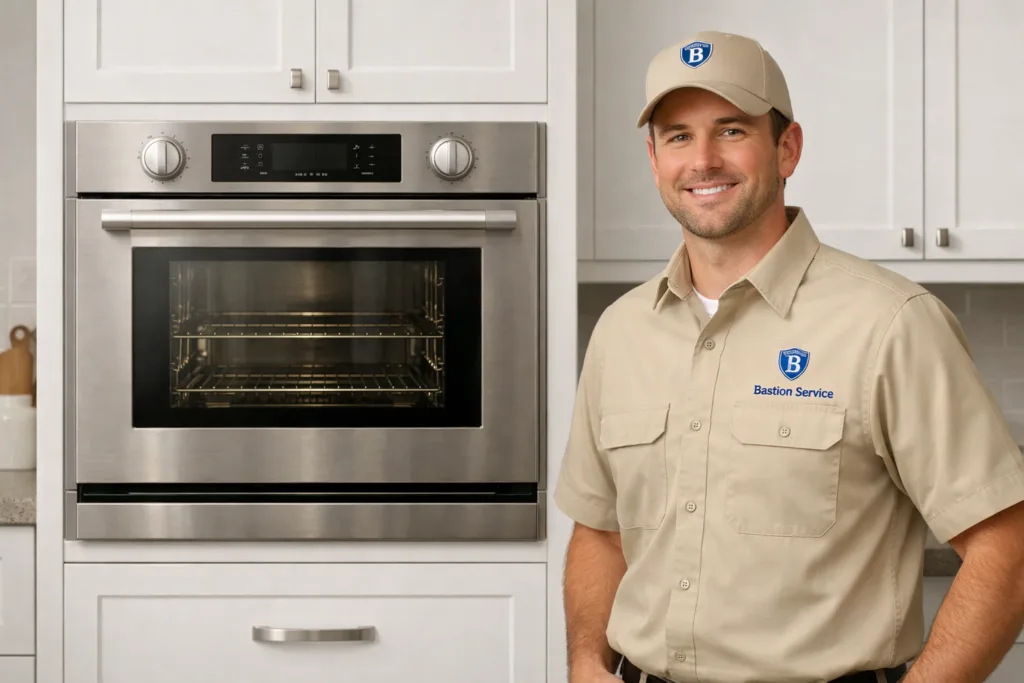
Built-in wall ovens tend to show trouble in ways that are easy to misread. A unit may light up normally yet fail to heat, preheat slowly, or drift away from the selected temperature once cooking begins. With Thermador models, the symptom usually needs to be matched to the heating circuit, sensor readings, airflow, door seal, or control response before the repair path is clear.
What homeowners in Culver City usually notice first
Many service calls begin with a cooking result rather than an obvious part failure. Cookies brown unevenly, casseroles take much longer than expected, or the oven beeps and stops mid-cycle. In other homes, the display works but bake or broil will not engage properly, which can make the problem seem smaller than it is.
Early symptoms often include:
- Longer-than-normal preheat times
- Food cooking unevenly from front to back or rack to rack
- Temperature overshooting, then dropping too low
- Broil not activating or working weakly
- Error codes that return after being cleared
- Controls that freeze, blink, or shut off during use
Because these issues can worsen gradually, continuing to use the oven without checking the cause may lead to more disruption during daily meals and holiday cooking.
Common Thermador wall oven symptoms and what they can point to
Not heating at all
If the oven powers on but produces no heat, the fault may involve the bake element, broil element, thermal protection, wiring, relay function, or the electronic control. In some cases, the oven appears to start normally but never moves into an actual heating cycle. That difference matters because a display problem and a heat-production problem are not diagnosed the same way.
Slow preheat or failure to reach set temperature
A wall oven that eventually warms up but takes far too long often has a weak heating component, inaccurate sensor feedback, or a control issue affecting how the preheat cycle is managed. Some Thermador units rely on more than one heat source during preheat, so a partially failed system can still heat, just poorly.
Uneven baking and unreliable cooking results
When one side of a dish finishes faster, the top browns too early, or the center remains undercooked, the issue may be related to temperature sensing, convection fan performance, calibration drift, or inconsistent element operation. This is one of the most frustrating categories because the oven still feels usable, but the results become hard to trust.
Temperature swings during cooking
All ovens cycle on and off to hold temperature, but large swings can create obvious cooking problems. If roasting times change from week to week or familiar recipes suddenly fail, the sensor, control board, or heating response may not be tracking correctly. A unit that runs too hot can also stress door seals and nearby components over time.
Display issues, shutdowns, and fault codes
A flashing panel, repeated error message, or oven that shuts off during baking often points to an electronic or electrical fault rather than a simple heating problem. That can include communication failures, overheating protection, unstable connections, or board-related issues. Repeated resets may temporarily restore operation, but they usually do not address the source of the failure.
Door problems and heat loss
If the door does not close evenly or the gasket no longer seals well, heat can escape and change cooking performance. Hinges, latches, and seals all affect how the oven holds temperature. On self-cleaning models, high heat can also expose weakness in door-related parts that seemed acceptable during normal baking.
Signs the oven should not keep being used
Some symptoms are more than an inconvenience. It is smart to stop using the oven and schedule service if you notice any of the following:
- The oven trips power or shuts off repeatedly
- There is a burning smell that does not fade quickly
- The control panel goes blank during operation
- The oven overheats or scorches food at normal settings
- The door will not close securely
- An error code returns every time the unit is used
In a built-in appliance, continued use after these warning signs can make the final repair more involved, especially if excess heat or electrical stress starts affecting nearby components.
When repair is usually worth considering
Thermador wall ovens are often worth repairing when the issue is limited to a heating element, sensor, fan motor, door hardware, latch assembly, or a specific control-related failure. Many problems that interrupt daily cooking are isolated enough that repair remains practical, particularly when the oven is otherwise in solid condition.
Replacement becomes a bigger consideration when there are multiple major failures at once, the overall condition has declined, or the cost of restoring dependable operation no longer makes sense. For homeowners in Culver City, the real question is whether the repair is likely to return the oven to stable everyday use rather than just getting it to turn on again.
What a useful service visit should evaluate
A proper assessment should do more than confirm the complaint. It should compare the symptom to actual oven behavior under operation, including how the unit starts, how heat builds, whether temperature tracks correctly, and whether controls respond consistently. On a wall oven, the diagnosis may also need to account for door seal condition, airflow, and how the appliance behaves once fully heated.
That approach helps separate look-alike problems. For example, slow preheat can come from a weak element, a sensor issue, a relay problem, or poor airflow. Uneven baking may seem like calibration drift but actually be tied to fan performance or heat distribution. Replacing the first suspected part without confirming the cause can waste time and money.
How symptom patterns help narrow the repair path
The timing of the problem often tells a lot. If the oven fails immediately at startup, the issue may be different from one that appears only after 20 minutes of baking. If the display works but heat cuts out halfway through a cycle, that points in a different direction than an oven that never begins heating at all.
Helpful details to note before service include:
- Whether bake, broil, or convection fails the same way
- How long preheat now takes compared with normal use
- Whether the fault happens every cycle or only sometimes
- If the issue began after self-cleaning or a power interruption
- Whether the oven runs hot, cool, or alternates between both
Those details can make diagnosis faster and can help determine whether the problem is a single failed part or a broader control issue.
Residential wall oven repair focused on everyday cooking
For most households, a wall oven problem becomes urgent when it starts affecting dinner routines, baking reliability, and meal planning. The goal is not just to restore power to the display, but to restore consistent cooking performance. Bastion Service helps Culver City homeowners with practical repair guidance based on the exact symptom, the condition of the oven, and the most sensible next step.
If your Thermador wall oven has become unreliable, acting early is often the best way to prevent a smaller heating or control issue from turning into a bigger interruption.