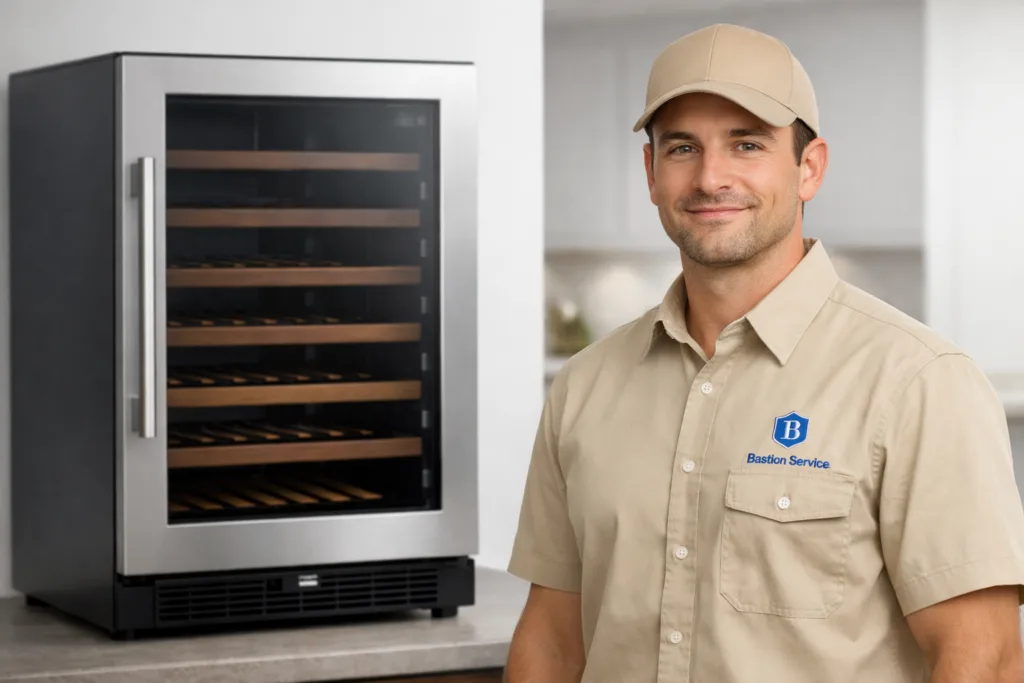
Stable temperature matters in a wine cooler more than in many other kitchen appliances. Even small swings can affect storage conditions, and problems that seem minor at first, such as extra fan noise or light condensation, can point to a larger issue inside the unit. With a Summit wine cooler, the best next step is to match the symptom to the most likely cause before deciding on repair.
What different symptoms usually mean
A Summit wine cooler can fail in several ways, and the visible symptom does not always identify the bad part. Two units may both be running warm, for example, while one has an airflow problem and the other has a control or sensor fault. Looking at the full pattern of behavior helps narrow the cause.
Running warm or not holding temperature
If the cabinet no longer reaches the selected setting, possible causes include blocked airflow, a dirty condenser area, a weak or failed fan motor, sensor problems, control issues, or a door gasket that is allowing warm air in. In some cases, the compressor may still be running, but the cooler cannot move air or regulate temperature correctly, so the interior never stabilizes.
This symptom is especially important when the unit seems to run for long periods without catching up. That can increase wear on cooling components and leave bottles exposed to inconsistent storage conditions.
Too cold inside or partial freezing
Overcooling is often traced to a sensor, thermostat, or electronic control problem. Instead of cycling off at the right time, the cooler continues running and drives temperatures below the set point. Frost near the back wall, very cold lower shelves, or bottles feeling much colder than expected are all signs that regulation may be failing rather than normal cooling simply working harder.
Condensation, moisture, or leaking
Water inside or around the unit may come from a clogged drain path, a sealing issue at the door, or a defrost-related problem. Moisture on the glass can also appear when humid air is entering the cabinet more than it should. In a Culver City home, even a slow leak from a built-in wine cooler can affect nearby cabinetry, flooring, or trim if it continues unnoticed.
Buzzing, rattling, or louder fan noise
Not every sound means failure, but a change in sound pattern is worth attention. Rattling can come from vibration or leveling issues. Buzzing may point to compressor strain. Clicking can be related to starting problems or control faults. A scraping or loud whirring sound often suggests a fan blade obstruction, ice interference, or a worn fan motor.
Display or control panel problems
If the controls are blank, flashing, inaccurate, or unresponsive, the cooler may not be managing temperature properly even when it still appears to run. Summit wine coolers depend on sensors and electronic controls to maintain stable conditions, so a bad reading at the interface can be more than a cosmetic issue.
Why guessing can lead to the wrong repair
Wine coolers are compact appliances, and several systems work together in a small cabinet. A warm interior does not automatically mean a sealed-system problem. Frost does not always mean the same thing as a leak. Replacing parts based only on the most obvious symptom can add cost without solving the issue.
That is why service should focus on actual operation: whether fans are moving air correctly, whether the control is reading temperature accurately, whether the gasket is sealing, and whether the unit is cycling as it should. A symptom-based explanation usually tells the homeowner much more than a quick assumption.
Signs you should stop adjusting settings and schedule service
- The temperature keeps drifting even after you reset the controls.
- The unit runs constantly or short cycles throughout the day.
- There is new frost buildup where it did not appear before.
- You notice water under the appliance or repeated condensation inside.
- The cooler becomes noticeably louder than normal.
- The display shows incorrect readings or stops responding.
Repeated setting changes rarely fix a failing sensor, fan, control board, or door seal. In many cases, they only delay the real repair while the cooler continues operating under strain.
When continued use can make the problem worse
A wine cooler that struggles to cool may force the compressor and fans to run longer than intended. A leaking unit can damage surrounding surfaces. Frost buildup can restrict airflow and create even bigger temperature swings. If the door gasket is worn, the appliance may pull in warm room air continuously, which increases both energy use and component wear.
If your Summit unit is clearly warming, overcooling, or leaking, limiting use until it can be inspected is often the safer choice for both the appliance and the contents inside.
Common repair paths for Summit wine coolers
The right repair depends on the source of the fault, but common serviceable issues include fan motor replacement, sensor or thermostat replacement, door gasket correction, drain cleaning, control-related repair, and correction of airflow problems caused by dirt buildup or installation conditions. Some problems are relatively contained and practical to fix when the cabinet and main cooling system are otherwise in good condition.
More serious cases, such as repeated breakdowns or advanced sealed-system trouble, may change the value of continued repair. The condition of the appliance, its age, and the exact failure all matter when weighing the next step.
Repair or replacement: how homeowners usually decide
For many households in Culver City, the decision comes down to four questions:
- Is the problem limited to a part that can be replaced without major rebuild work?
- Has the cooler been reliable up to this point, or has it had recurring issues?
- Is the cabinet still in good physical condition?
- Does the repair cost make sense compared with the age and overall condition of the unit?
If the issue is isolated and the appliance is otherwise sound, repair is often reasonable. If there are multiple faults, heavy wear, or a major cooling-system problem on an older unit, replacement may deserve stronger consideration.
What matters most in a home wine cooler service visit
Most homeowners want a straightforward answer: what is failing, whether it is harming performance or storage conditions, and whether the fix is worth doing. For Summit Wine Cooler Repair in Culver City, that usually means inspecting the actual symptom pattern rather than treating every warm cabinet or noisy fan as the same problem. Once the fault is identified, the repair decision becomes much easier and much more practical.