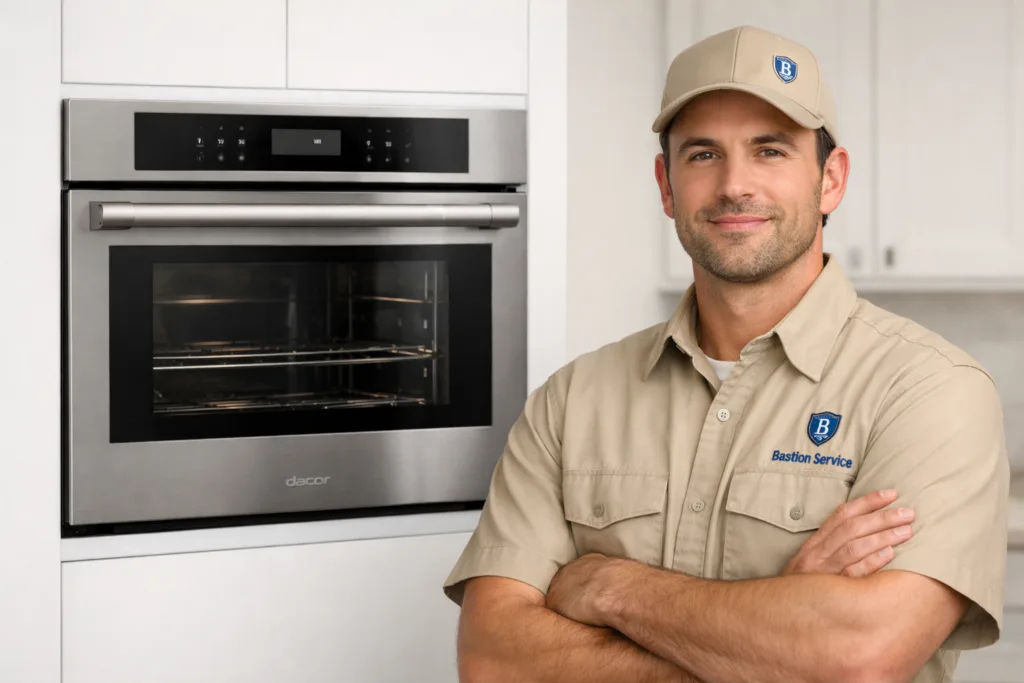
Wall oven problems rarely stay minor for long. If a Dacor unit begins preheating slowly, cooking unevenly, shutting off mid-cycle, or showing repeated control issues, the symptom pattern usually points to a specific heating, sensing, door, or electronic fault. Identifying that pattern early helps prevent wasted time, ruined meals, and unnecessary part replacement.
Why Dacor wall oven issues need symptom-based troubleshooting
Dacor wall ovens are built with tightly integrated controls, heating components, and built-in installation requirements. Because of that, the same complaint can have several different causes. An oven that seems “not hot enough” may have a failing bake element, a drifting temperature sensor, a relay problem on the control, or a door that is not sealing correctly.
That is why the right approach is to verify how the oven heats, whether the temperature matches the setting, how the controls respond during a cycle, and whether the problem affects every cooking mode or only one. For homeowners in Culver City, this usually makes the repair decision much easier and more accurate.
Common Dacor wall oven symptoms and what they may mean
Oven is not heating
If the display works but the cavity stays cold, the cause may be a failed bake element, a broil element problem that affects preheat, a sensor fault, a control board issue, or a power supply problem. Some ovens appear to start normally but never energize the heating circuit correctly.
In a double wall oven, one cavity working while the other does not can narrow the issue to a component inside the affected section rather than a full power loss to the appliance.
Slow preheat
Slow preheat often develops gradually. Homeowners may first notice that dishes take longer than expected or that the oven claims it is ready before it is actually hot enough. This can happen when an element is heating weakly, a sensor is reading inaccurately, or the control is not cycling heat the way it should.
On convection models, airflow-related issues can also affect how quickly the oven stabilizes.
Uneven baking
Food that browns too much on one side, burns on the bottom, or bakes inconsistently from rack to rack usually points to temperature regulation problems rather than a recipe issue. Possible causes include:
- Sensor drift
- Weak or partially failed heating elements
- Convection fan or convection system faults
- Door seal wear or closure issues
- Control calibration problems
Uneven baking is especially frustrating because the oven may seem usable while still delivering unreliable results every time it is used.
Temperature swings during cooking
All ovens cycle heat, but large swings can cause undercooked centers, scorched edges, and unpredictable baking times. If a Dacor wall oven overheats, runs too cool, or cannot hold a steady temperature during longer cycles, the issue may be tied to the sensor circuit, relay behavior, or control logic.
These symptoms are often more noticeable during roasting, baking, and dishes that need stable heat over time.
Display works but the oven will not start
A lit control panel does not always mean the oven is fully functional. If commands are accepted but bake does not begin, possible causes include interface faults, door latch problems, safety lock issues, control board failure, or incomplete voltage delivery to the heating system.
This is a common point of confusion because the appliance looks alive even though the critical cooking functions are not operating.
Error codes, beeping, or mid-cycle shutdowns
Error codes can be useful, but they are not a complete diagnosis by themselves. They may relate to temperature readings, communication faults, latch problems, overheating conditions, or electronic control failures. An oven that shuts down during use or starts beeping without a clear reason should not be ignored, especially if the problem repeats.
Intermittent shutdowns can lead to bigger failures if electrical components are overheating or relays are sticking.
Door, hinge, and self-clean problems
If the door will not close securely, heat can escape and cooking performance can drop. A bad seal, hinge wear, or latch issue may also affect preheat time and temperature consistency. On self-clean cycles, lock and latch problems are common failure points, especially if the oven will not start the cycle, will not unlock afterward, or shows an error tied to the door system.
Signs the oven should not keep being used
Some wall oven symptoms are more than an inconvenience. It is best to stop using the appliance and schedule service if you notice:
- Burning electrical smells
- Breaker trips during preheat or baking
- The oven overheating badly enough to scorch food quickly
- The unit shutting off in the middle of cooking
- Visible sparking, arcing, or damaged wiring signs
- A door that will not close or latch properly
Continuing to use the oven in these conditions can increase part damage and make the eventual repair more extensive.
What makes built-in wall oven repair different
Built-in units add a layer of complexity that freestanding ranges do not have. Access can be tighter, electrical connections may need to be checked carefully, and installation fit matters when parts are tested or replaced. In some cases, what appears to be a control or heating failure may also involve wiring stress, ventilation issues, or installation-related access concerns.
That is one reason a proper evaluation matters before deciding whether to repair or replace the unit.
Repair or replace a Dacor wall oven?
Repair is often a sensible option when the problem is limited to a heating element, sensor, latch assembly, fan motor, or a specific electrical component. If the oven fits the kitchen well, matches surrounding appliances, and has otherwise been reliable, repairing a single defined failure can be worthwhile.
Replacement becomes more likely when there are multiple major failures, recurring electronic issues, severe interior wear, or parts availability concerns. Age alone does not decide it. What matters more is the total condition of the oven, the exact failed components, and whether the repair path solves the issue without creating a cycle of repeat problems.
What homeowners in Culver City should expect from service
Good service should explain the problem in plain language, not just name a part. That means checking the heating behavior, confirming whether the temperature is accurate, reviewing any stored fault behavior when relevant, and identifying whether the issue is isolated or part of a larger control problem.
For households in Culver City, the goal is simple: understand why the Dacor wall oven is failing, what the repair involves, and whether moving forward makes sense for the appliance as it sits today.
When to schedule service
If your Dacor wall oven is not heating, preheats too slowly, bakes unevenly, swings in temperature, shows repeated error codes, or stops responding during normal use, it is time to have it checked. These symptoms usually do not correct themselves, and waiting often turns a manageable repair into a broader electrical or control issue.
When a wall oven is central to daily cooking, early attention is usually the fastest way to get back to predictable performance.