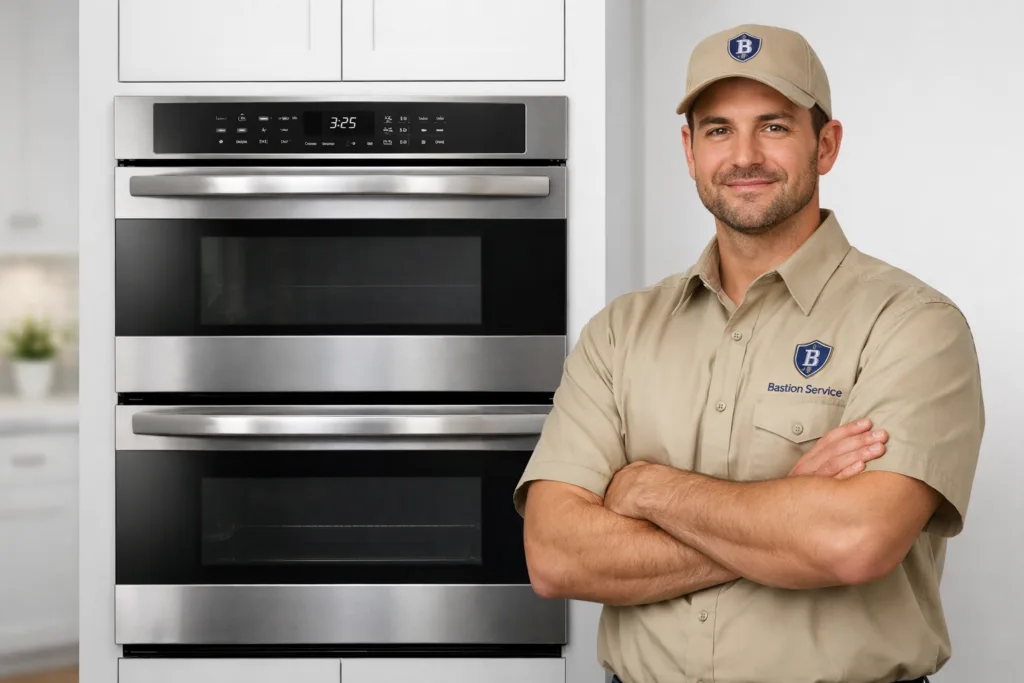
Wall ovens tend to fail in ways that look simple from the outside but are not always simple once the unit is opened up. A GE wall oven that seems to be “just running cold” might actually have a weak heating circuit, a drifting sensor, a relay problem, or a door-related safety issue that prevents normal operation.
Because these ovens are built into cabinetry and rely on stable power, controls, and airflow, the best repair path usually starts with the exact behavior of the appliance. Does it fail during preheat, lose temperature after reaching the set point, work in broil but not bake, or stop responding after self-clean? Those details matter.
Common GE wall oven symptoms and what they can mean
Not heating at all
If the display powers on but the oven cavity stays cold, the issue may involve a failed bake element, broil element, control relay, sensor circuit, thermal protection component, or incoming power problem. In some cases, one section of the oven appears normal while the heating side never actually energizes.
This symptom is especially important to check properly because a built-in oven can seem operational even when a key part of the heating system has failed.
Slow preheating
A GE wall oven that takes much longer than normal to preheat often points to an element not pulling full heat, a sensor reading that is out of range, or a control problem that is not cycling heat correctly. Homeowners often notice this first when weeknight meals suddenly take longer or baked foods need extra time every time.
Slow preheat is easy to dismiss at first, but it often signals a part that is weakening rather than fully failed.
Uneven baking
When cookies brown heavily on one side, casseroles stay cool in the center, or dishes cook inconsistently from rack to rack, the oven may have a temperature regulation problem. Possible causes include sensor inaccuracy, weak element performance, poor convection fan operation on applicable models, or heat loss from a worn door gasket.
Uneven results are often more noticeable than a complete breakdown because the oven still works, just not reliably.
Temperature swings or inaccurate temperature
If the oven overshoots, runs cooler than the set temperature, or cycles in a way that produces inconsistent results, the problem may be in the sensor, control calibration, relay operation, or heat distribution. Some owners notice this after rotating pans more often than usual or finding that trusted recipes suddenly stop working the way they used to.
Display works, but bake or broil will not start
When the control panel responds normally but a cooking mode does not engage, the fault may be tied to the electronic control, touch interface, door-lock circuit, or a wiring issue inside the unit. This is one of the more frustrating symptom patterns because the oven appears ready to use while one or more functions remain unavailable.
Unit shuts off during cooking or trips the breaker
If the oven cuts out mid-cycle, resets, or trips electrical protection during use, it is best to stop using it until the cause is identified. Faulty elements, wiring damage, failing controls, and power-related issues can all create this symptom. Repeated use may make the repair larger and can create avoidable stress on other components.
Door, latch, or self-clean problems
A door that will not close correctly, a lock that will not release, or an oven that starts acting up after self-clean often points to latch assemblies, switches, control faults, or heat-stressed internal parts. Self-clean cycles place heavy demand on components, so they often expose weaknesses that were already developing.
What homeowners can notice before scheduling service
Specific details help narrow down the fault faster. Before service, it helps to note:
- Whether the problem affects bake, broil, convection, or all modes
- Whether the oven reaches temperature and then drops off
- If an error code appears, and whether it returns after power is reset
- Whether the issue started suddenly or got worse over time
- Any burning smell, unusual clicking, or breaker trips during operation
- Whether the problem began after self-clean or a recent power interruption
That symptom pattern often tells more than the label of the part a homeowner suspects is bad.
When to stop using the wall oven
Some problems are mainly inconvenient, while others should be treated as urgent. It is wise to stop using the oven if it trips the breaker, smells like overheated wiring, shows repeated error codes, overheats food unexpectedly, shuts off mid-cycle, or has a door that will not close or unlock properly.
In a built-in appliance, electrical and heat-related issues can spread to adjacent components more easily when the unit keeps being run through repeated cycles.
Repair or replace: what usually makes sense
Many GE wall oven issues are worth repairing, especially when the problem is limited to a heating element, temperature sensor, fan motor, latch assembly, switch, or a specific control-related component. Repair often makes good sense when the oven fits the kitchen well, matches other appliances, and has otherwise been performing normally.
Replacement becomes more likely when the oven has multiple active failures, major control damage, repeated electrical issues, or age-related part availability concerns. The deciding factor is usually not the symptom alone, but the combination of the failed component, overall condition of the appliance, and expected repair path.
Why built-in GE wall oven repairs need a focused approach
Wall ovens are different from freestanding ranges because access, installation, and cabinet fit all affect the repair. Proper service has to account for the built-in setup, the power configuration, and how the oven’s controls, heating system, and door functions interact under load.
That is why replacing parts based on guesswork can turn into repeat visits without solving the actual problem. A useful diagnosis identifies whether the fault is in heat production, temperature sensing, control output, airflow, or the safety and latch system.
Signs it is time to schedule service
- The oven does not heat at all
- Preheat takes noticeably longer than before
- Food bakes unevenly or temperatures feel inconsistent
- The display works but cooking modes do not start
- The oven shuts off during use
- The unit trips the breaker
- Error codes keep returning
- The door will not close, lock, or unlock correctly
- Problems started after a self-clean cycle
GE wall oven repair for homes in Culver City
For households in Culver City, the most helpful next step is usually service when the symptom is repeatable rather than waiting for a complete no-heat failure. Whether the issue is slow preheat, uneven baking, control trouble, or a door-lock problem, a practical repair plan starts with how the oven is actually behaving in the home.
When a GE wall oven is still in otherwise solid condition, timely repair can often restore normal cooking performance and help avoid a more disruptive breakdown later.