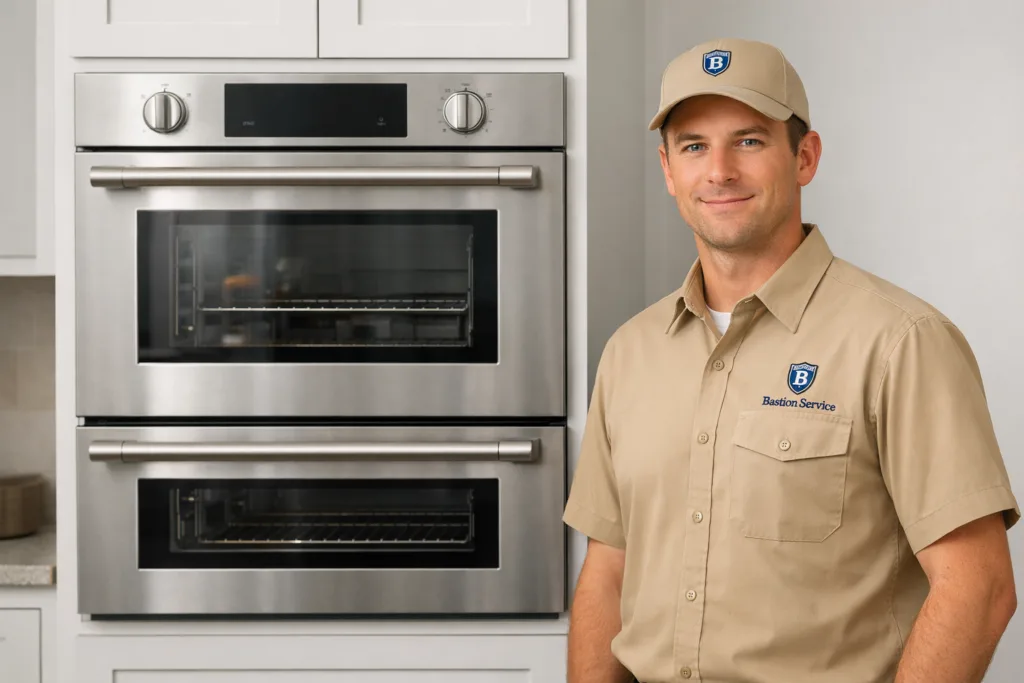
Built-in wall ovens tend to show trouble in patterns. One household notices a long preheat that keeps getting worse. Another sees cookies burning on the back edge while the center stays pale. In other homes, the display works but the cavity never gets hot enough to finish a meal on time. With a Thermador unit, those symptoms can trace back to heating components, sensor feedback, control issues, cooling problems, or wiring faults that only appear once the oven is under load.
Because the appliance is installed into cabinetry, it also makes sense to treat changes in performance early. A wall oven that runs too hot, shuts off mid-cycle, or struggles to regulate temperature can affect both cooking results and the condition of surrounding components. For homeowners in Palms, the most useful repair visit is one that identifies the failed part, explains why the symptom is happening, and outlines whether the repair path is straightforward or more involved.
Problems homeowners notice first
Many service calls begin with a few consistent complaints rather than a complete failure. The oven may still turn on, light up, and respond to settings, but daily use becomes unreliable.
- Preheat takes far longer than normal
- The oven says it reached temperature, but food is still undercooked
- Baking results vary from one rack to another
- The display flashes, beeps, or shows an error code
- The unit shuts off unexpectedly during use
- The door will not close correctly or the latch will not release
- The cabinet area feels hotter than it should
These symptoms matter because they often point to different failures even when the result looks similar from the outside. An oven that is “not heating right” may have a weak bake circuit, a sensor reading problem, a relay issue on the control, or airflow trouble that causes unstable temperatures.
What slow preheating usually suggests
Slow preheat is one of the more common complaints with wall ovens. In some cases, the appliance does heat, but it takes so long that weeknight cooking becomes difficult. This can happen when a heating element is failing to deliver full output, when a sensor is sending inaccurate information to the control, or when the broil and bake functions are not cycling the way they should during the warm-up phase.
If preheat has become gradually slower instead of stopping all at once, that often points to a component weakening over time rather than a total electrical loss. It is also worth paying attention to whether the oven eventually reaches temperature or stalls well below the set point. That difference can help narrow the problem during diagnosis.
Uneven baking and temperature swings
Uneven baking can show up in small but frustrating ways. One corner of a casserole finishes early. Roasted vegetables brown on the top rack but lag underneath. Cakes rise unevenly, and familiar recipes no longer behave the same way. In a Thermador wall oven, that can indicate sensor drift, weak heat output, control regulation problems, or airflow issues inside the cavity.
Temperature swings are especially noticeable when the oven alternates between overcooking and undercooking during the same week. Homeowners sometimes assume this is just normal oven behavior, but large swings usually mean the appliance is no longer regulating heat correctly. When that pattern continues, it tends to get worse rather than correct itself.
When the oven is on but not actually cooking properly
A wall oven can appear functional while still failing in a way that affects meal results. The clock works, the keypad responds, and the fan may run, yet the actual heat is weak or inconsistent. That often leads to repeated restarts, longer bake times, or constant checking of dishes that used to cook on schedule.
This is an important point for households deciding whether to keep using the oven until it fails completely. Partial operation does not always mean safe or reliable operation. If the unit overheats one day and underheats the next, or if it shuts off during normal cooking, continued use can put extra strain on controls, relays, and wiring.
Error codes, beeping, and control issues
Electronic problems can be straightforward or misleading. A display may flash an error code that points in the right direction, but the code alone does not always identify the failed part. Thermador wall ovens can show symptoms such as random beeping, a frozen panel, buttons that respond inconsistently, or a display that resets after power cycling only to fail again later.
Control issues may come from the interface itself, but they can also be triggered by sensor faults, latch problems, overheating around electronics, or unstable communication between components. That is why trial-and-error parts replacement often wastes time and money on built-in appliances.
Door and latch problems should not be ignored
If the door does not close squarely, heat can escape and cooking performance can suffer even when the heating system is working. Hinges, door alignment, gasket wear, and latch components can all affect how the oven seals. Homeowners may first notice this as longer cook times, heat escaping into the kitchen, or a door that needs to be pushed firmly to stay shut.
Latch problems often show up after self-clean use or after the oven has experienced repeated high-heat cycles. A door that will not unlock, a lock that will not engage properly, or a control that keeps reporting a latch fault can interrupt normal use and, in some cases, prevent the oven from starting at all.
Signs the repair should be scheduled promptly
Some issues can wait a short time if the oven is still usable. Others should be checked before the appliance is used again. Scheduling service sooner is the better choice when you notice:
- Breaker trips during preheat or cooking
- A burning smell that suggests overheated wiring or insulation
- The oven shuts off in the middle of use
- Repeated fault codes after resetting power
- Cabinet surfaces becoming unusually hot
- The door failing to lock or unlock correctly
- Major differences between set temperature and actual cooking results
For homeowners in Palms, these symptoms are a good reason to stop guessing and have the appliance evaluated before a smaller fault becomes a larger electrical or control failure.
Repair or replace: how the decision usually works
Repair is often the sensible option when the problem is tied to one serviceable component and the rest of the oven is in good condition. Heating elements, sensors, certain latch assemblies, fan-related issues, and many control-related faults can be worth repairing when testing points to a specific cause.
Replacement becomes more likely when there are multiple major failures, signs of long-term overheating, repeated breakdowns affecting different systems, or repair costs that no longer match the condition of the appliance. With a built-in wall oven, the decision is not just about one part price. Cabinet fit, installation complexity, and the effort involved in removing and replacing the unit all matter.
That is why many households benefit from symptom-based repair guidance before making a final call. A reliable diagnosis can show whether the issue is a contained repair or part of a bigger decline in the oven’s overall condition.
What to do before a service visit
A few simple observations can make the appointment more productive. If possible, note whether the problem happens in bake, broil, convection, or all modes. Write down any error code exactly as it appears. Pay attention to whether the failure occurs during preheat, after the oven has been running for a while, or only during high-temperature use.
It also helps to notice whether the issue began suddenly or developed over time. An oven that stopped heating overnight may point to a different failure pattern than one that has gradually become less accurate over several months. If the door, latch, or controls changed behavior after a self-clean cycle, that detail is useful too.
Thermador wall oven repair in Palms with a household focus
Most homeowners are not looking for a technical lecture. They want to know why dinner prep has become unpredictable, whether the oven is safe to keep using, and whether repair is practical. Thermador Wall Oven Repair in Palms is most helpful when it addresses those real-life questions directly: what failed, how serious it is, and what the next step should be for the home.
When a built-in oven is central to everyday cooking, the goal is not just getting the display to turn back on. It is restoring stable heat, reliable performance, and confidence that the appliance will handle normal use without more surprises.