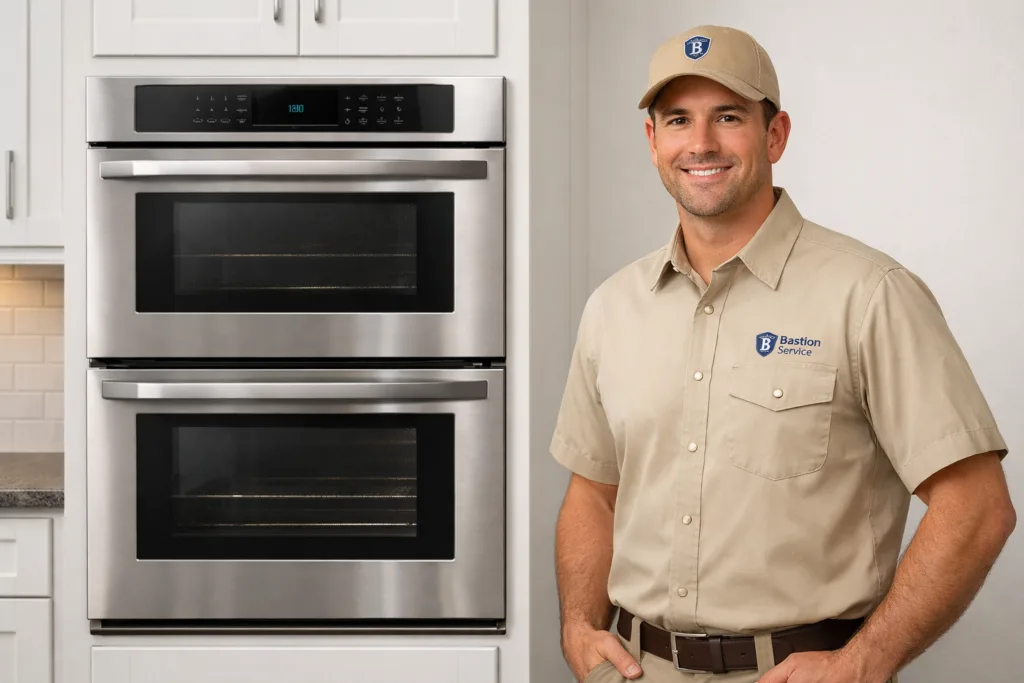
Common Frigidaire wall oven problems in Palms homes

Wall oven problems usually follow a few recognizable symptom patterns. The useful part is matching the symptom to the likely system involved, because a temperature issue, power issue, and control issue can look similar at first even when the repair path is very different.
Oven not heating at all
If the oven powers on but never begins heating, the cause may be a failed bake element, broil element, igniter on gas-equipped models, temperature sensor, relay, wiring connection, or main control fault. In some cases, the display still looks normal, which makes the problem easy to misread as a minor glitch. A wall oven that stays cold should not be forced through repeated start attempts, especially if the same cycle fails every time.
Slow preheat
When preheat becomes noticeably slower, one heating component may be weak rather than fully failed. That can leave the oven reaching temperature eventually, but not on a normal schedule. Homeowners often notice this first through longer dinner prep, recipes that suddenly need more time, or an oven that says it is ready before the cavity is truly hot enough. Slow preheat is often an early sign worth checking before it develops into a no-heat condition.
Uneven baking or temperature swings
If one rack bakes faster than another, the back of a dish browns too quickly, or cookies come out inconsistent from batch to batch, the oven may not be regulating heat correctly. Common causes include a drifting sensor, element cycling problems, a damaged door gasket, or a control issue affecting temperature response. These problems are frustrating because the oven still works, just not predictably.
Control panel problems and error codes
Frigidaire wall ovens can show fault codes, repeated beeping, frozen controls, canceled cycles, or touchpad commands that do not respond. Those symptoms can point to communication faults, overheating, door lock problems, or failing electronic controls. Error codes are useful, but they are only one part of the picture. The timing of the code and what the oven does before or after it appears often matter just as much.
Door latch and self-clean issues
A door that will not unlock, will not close tightly, or feels out of alignment can affect both safety and cooking performance. This often shows up after a self-clean cycle, when heat stress exposes a weak latch assembly, hinge issue, or control problem tied to the locking mechanism. If the seal is not tight, the oven can lose heat and struggle to maintain an even temperature.
Oven shuts off during cooking
If a cycle starts normally and then stops midway, the problem may involve overheating protection, unstable power delivery, a failing control board, or a sensor reading that causes the oven to cancel the cycle. Intermittent shutdowns can be especially difficult to pin down without testing because the appliance may restart later and seem normal for a short time.
What these symptoms often mean
One reason wall oven repair can be tricky is that several different parts can create nearly identical results. An oven that bakes cold might have a bad sensor, a failing element, a relay problem, or a door that is not sealing well. An oven that will not start might have a control problem, but it could also be related to a door lock fault or power issue.
That is why diagnosis matters before parts are replaced. It helps determine whether the problem is isolated to a single failed component or whether multiple issues are developing at once. For homeowners in Palms, that distinction makes a big difference in both cost and confidence about moving forward with a repair.
Signs you should stop using the oven and schedule service
Some problems are inconvenient but manageable for a short time. Others are signs that continued use is a bad idea. It makes sense to stop using the wall oven if you notice any of the following:
- The oven trips the breaker during preheat or baking
- There is sparking, arcing, or visible element damage
- You smell burning from the appliance or control area
- The oven overheats and burns food unexpectedly
- The door will not lock or unlock properly
- The display shows recurring fault codes and cancels cycles
- The oven shuts off on its own during normal cooking
These symptoms can point to electrical faults, overheating components, or latch and control failures that should not be ignored.
How homeowners can help narrow down the problem
Before service is scheduled, it helps to note the exact pattern of the failure. Small details often shorten the troubleshooting process and make the next step more straightforward.
- Did the issue begin suddenly or get worse over time?
- Does the oven fail in bake, broil, or both?
- Is preheat slow every time or only on certain settings?
- Did the problem start after a self-clean cycle?
- Does a code appear, and if so, when?
- Does the oven lose power completely or just stop heating?
Even simple observations like whether the interior light works, whether the fan runs, or whether the door feels fully closed can help separate a control issue from a heating or latch issue.
Repair versus replacement for a Frigidaire wall oven
Many wall oven repairs are worthwhile when the issue is limited to a sensor, heating element, igniter, latch assembly, or another single component and the rest of the appliance is in solid condition. Built-in units are also different from freestanding ranges because replacement usually involves fit, cabinet opening dimensions, and installation timing, not just appliance cost.
Replacement becomes more likely when the oven has repeated electronic failures, significant cavity wear, multiple unresolved symptoms, or repair costs that start approaching the value of the unit. A proper diagnosis helps clarify whether the problem is a focused repair or a sign that the oven is nearing the end of a practical service life.
What to expect from Frigidaire wall oven repair in Palms
The most effective service visit starts with the symptom you are actually seeing at home, not a guess based on one part name. If the oven is slow to preheat, baking unevenly, showing control errors, or not turning on at all, the goal is to confirm which system is failing and whether the repair is sensible for the appliance’s condition.
For households in Palms that rely on a built-in oven for daily cooking, a targeted repair plan is usually the fastest way back to normal use. When the problem is caught early, it is often easier to prevent added strain on controls, heating parts, and door components that might otherwise turn one fault into several.