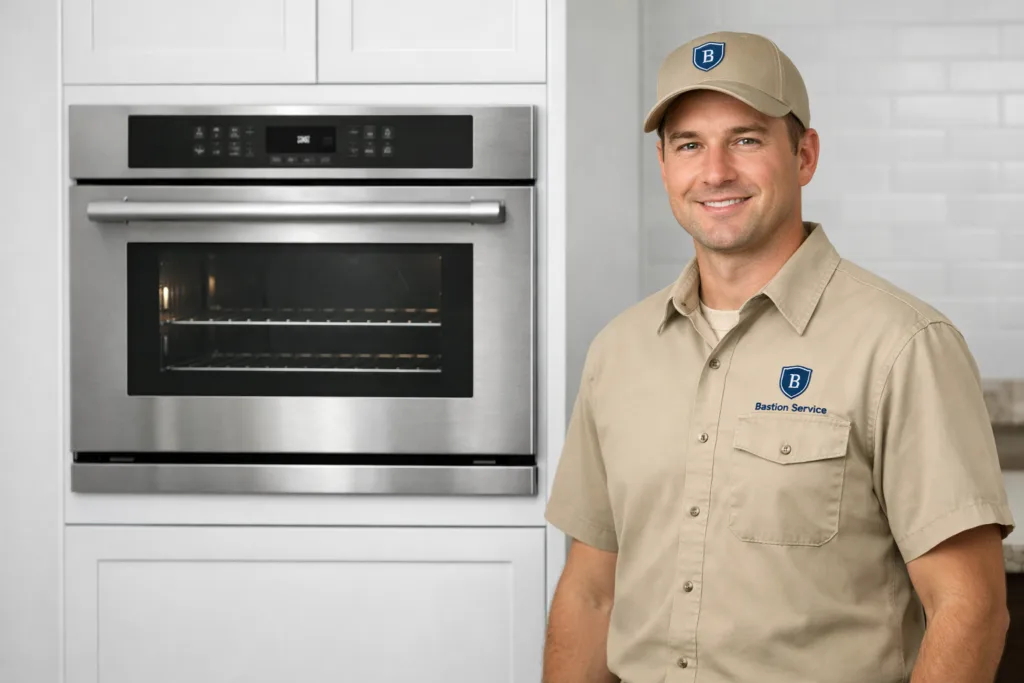
Cooking problems often start subtly with a built-in oven. Preheat takes longer than usual, a dish bakes unevenly, or the display begins acting unpredictably. On a Monogram wall oven, those symptoms can come from different component failures, so the most useful next step is to match the pattern of the problem to the likely system involved.
Common Monogram wall oven symptoms in Palms homes
Most service calls fall into a few symptom groups. Knowing which one best matches your oven can help you decide when the issue is minor, when it needs prompt attention, and when to stop using the appliance until it is checked.
Not heating, underheating, or slow preheat
If the oven turns on but does not heat normally, the cause may involve the bake element, broil element, temperature sensor, control board, relay, or a wiring problem inside the unit. In some cases, the oven still warms up but cannot reach the selected temperature in a reasonable time. That usually shows up as longer meal prep, undercooked food, or recipes that need far more time than expected.
A weak heating complaint is not always caused by the most obvious part. An oven can seem like it has a bad element when the real issue is inaccurate temperature feedback or an electrical supply problem inside the appliance.
Uneven baking and temperature swings
When one rack cooks faster than another, cookies brown unevenly, or casseroles come out overdone at the edges and cool in the center, the oven may be struggling to regulate heat consistently. Convection fan issues, sensor drift, door gasket wear, and control faults can all contribute to unstable temperatures.
This kind of problem tends to frustrate homeowners because the oven still appears usable, but results become unreliable. If familiar recipes no longer behave the same way, the oven may be cycling incorrectly rather than simply needing a calibration adjustment.
Controls, display, and error code problems
Touch controls that stop responding, random beeping, flashing displays, or repeated fault codes usually point to an electronic issue. Depending on the model, that could involve the user interface, main control, temperature circuit, latch system, or internal communication between components.
Intermittent behavior matters here. If the oven resets itself, shuts off during cooking, or works normally one day and fails the next, that inconsistency is useful diagnostic information. Electronic faults often worsen with continued use and heat exposure.
Door and latch issues
A door that does not close tightly can affect cooking performance just as much as a heating fault. Heat may escape, preheat may drag out, and temperature stability may suffer. If the door stays locked, will not latch, or creates trouble after a self-clean cycle, the issue may involve hinges, switches, the lock motor, or control logic.
It is best not to force the door or repeatedly trigger cleaning or reset cycles in hopes that the problem clears on its own. That can turn a contained repair into a more involved one.
What different symptoms can suggest
Similar complaints do not always mean the same failed part. A careful diagnosis is especially important on a premium built-in oven because several systems work together to manage heat, safety, and control response.
- Oven will not heat at all: possible element, control, relay, sensor, or wiring fault
- Oven heats but never reaches set temperature: possible sensor inaccuracy, weak element performance, or control issue
- Food cooks unevenly: possible convection, seal, sensor, or cycling problem
- Error code appears during preheat or cleaning: possible latch, sensor, or control fault
- Unit shuts off mid-cycle: possible overheating protection, control failure, or intermittent electrical problem
That is why part-swapping based only on the symptom name can become expensive. The goal is to identify what failed, why it failed, and whether the repair is likely to restore normal performance without chasing repeat issues.
When a wall oven problem becomes urgent
Some oven issues are inconvenient but manageable for a short time. Others should be treated as a reason to stop using the appliance until it is inspected.
Schedule service promptly if your Monogram wall oven:
- will not preheat or takes much longer than normal
- cannot hold temperature during baking
- shuts off before cooking is finished
- shows persistent error codes
- has a locked door that will not release
- has controls that do not respond consistently
Stop using the oven and arrange service as soon as possible if you notice burning odors, visible sparking, repeated breaker trips, unusual heat around the control area, or signs that wiring insulation may be overheating. Those are not symptoms to watch casually over time.
Repair or replace?
Many Monogram wall oven problems are worth repairing, especially when the fault is limited to a sensor, element, fan component, latch assembly, or a specific electronic part. Built-in units are often kept in service successfully when the diagnosis points to one contained failure in an otherwise solid oven.
Replacement becomes a more serious consideration when there are multiple major faults, repeated control failures, extensive heat damage, or repair cost that approaches the value of keeping the appliance in use. Age alone does not decide it. Condition, repair history, and the exact failed system matter more than a simple year count.
For households in Palms, the practical question is whether the recommended repair solves the actual cause of the complaint or only addresses one visible symptom while larger issues remain.
Helpful details to note before service
A few observations from normal use can make diagnosis faster and more accurate. Try to note what the oven does, when it happens, and whether the behavior is consistent.
- Does the problem happen in bake, broil, convection, or all modes?
- Does the failure appear during preheat or after the oven has been running for a while?
- Is the temperature issue sudden, or has it been getting worse gradually?
- Does an error code appear every time or only occasionally?
- Did the problem begin after a self-clean cycle or power interruption?
Those details can separate a heating problem from a control issue, and a latch fault from a sensor fault, before testing even begins.
Why built-in wall oven service should be symptom-led
A Monogram wall oven is not just a heating box behind a cabinet face. It is a built-in cooking appliance with safety systems, electronic controls, temperature feedback, and model-specific components that need to work together. When one part of that system stops performing correctly, the visible symptom may only tell part of the story.
Symptom-led service helps homeowners in Palms make better decisions. If the issue is isolated, repair is often straightforward. If the oven has broader electrical or heat-related damage, it is better to know that early instead of investing in a fix that does not last.
What homeowners in Palms can expect from a sensible repair approach
The best repair path is one that explains the symptom in plain terms, confirms the failed component, and gives a realistic recommendation based on the condition of the oven. That keeps the decision focused on function, cost, and household use rather than guesswork.
If your Monogram wall oven has become unreliable, whether the issue is not heating, uneven baking, temperature fluctuation, or unresponsive controls, the right next step is to evaluate the symptom pattern and determine whether a targeted repair will restore dependable cooking performance.