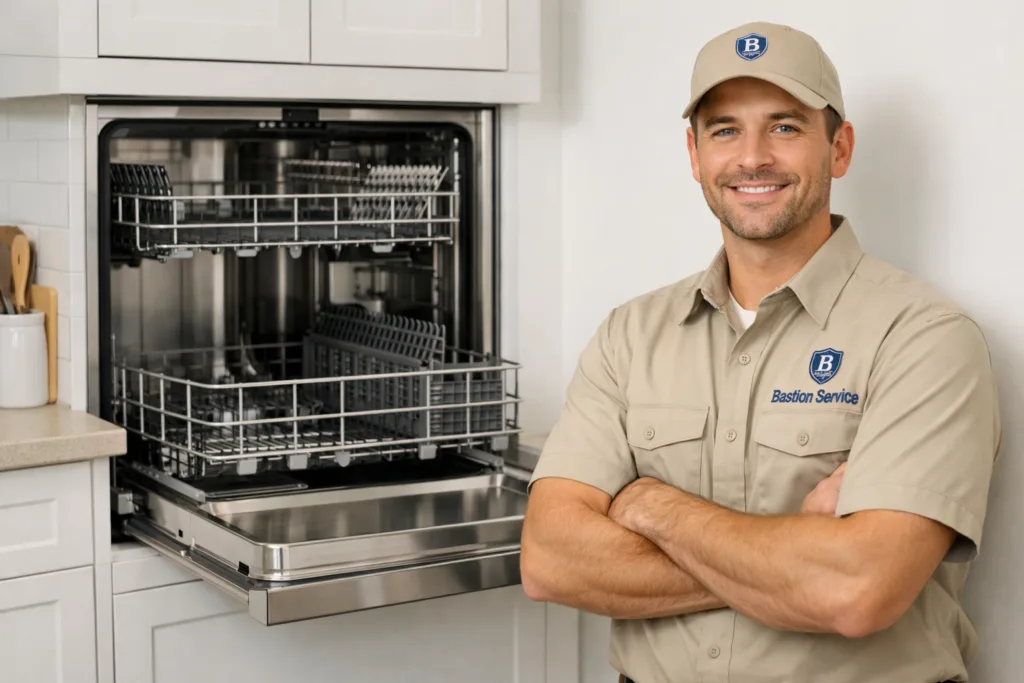
A Thermador dishwasher that leaves water behind, washes poorly, or stops partway through a cycle usually has an underlying system problem rather than a simple one-button fix. For homeowners in Palms, the fastest way to avoid wasted time is to look at the exact symptom pattern first, including when the problem appears, whether it happens every cycle, and whether performance has been gradually declining.
Signs your Thermador dishwasher likely needs service
Some dishwasher problems are easy to dismiss at first because the machine still turns on or seems to work part of the time. In practice, partial operation often points to a developing issue with draining, circulation, heating, sensors, or controls. If the dishwasher has started needing repeated resets, leaves dishes dirty despite normal loading, or behaves differently from one cycle to the next, it is usually time for a closer inspection.
Common symptoms that deserve attention include:
- Standing water left in the tub after a cycle
- Cloudy dishes, residue, or food particles after washing
- Water leaking from the door or under the unit
- Unusual humming, grinding, or rattling sounds
- Long cycles that never seem to finish properly
- Poor drying or noticeably low rinse temperature
- A control panel that lights up but does not run a full cycle
Drain problems and standing water
If your Thermador dishwasher is not draining, the most visible sign is water sitting at the bottom after the cycle ends. That can happen because of a blocked filter area, a restricted drain path, a failing drain pump, or a problem that prevents the drain portion of the cycle from completing as intended.
Homeowners sometimes restart the dishwasher several times hoping the water will finally clear. That can make the situation more frustrating, especially if dirty water continues to recirculate. When the same issue keeps returning, the cause is usually more than a one-time obstruction.
What this symptom can point to
- Clogged or heavily restricted filter components
- Drain pump wear or obstruction
- Kinked or poorly flowing drain line
- Control or sensor problems that interrupt the drain sequence
Poor cleaning, film, and residue on dishes
When dishes come out with spots, grit, grease, or cloudy film, many people assume detergent is the only issue. Sometimes detergent or loading habits do contribute, but consistent poor wash results often trace back to water flow, spray arm movement, circulation strength, heating performance, or dispenser operation.
A Thermador dishwasher may appear to run normally while still failing to clean well. That is why weak wash performance should not be judged only by whether the machine starts. If the dishwasher fills and runs but leaves behind the same residue load after load, there is often a mechanical or electrical reason behind it.
Common causes of weak wash performance
- Blocked or restricted spray arms
- Circulation motor or pump problems
- Low water fill
- Detergent dispenser not opening correctly
- Water not heating enough during the cycle
- Sensor issues affecting cycle timing or wash intensity
Leaks around the dishwasher
Water on the floor should never be treated as a minor annoyance. Even a slow leak can affect flooring, cabinet edges, and nearby surfaces over time. Some leaks show up only during wash or drain portions of the cycle, which can make them seem unpredictable.
Leaks may come from the door seal, a hose connection, overfilling, sump components, or internal spray issues that force water where it should not go. If moisture appears more than once, it is a sign to stop normal use until the source is identified.
Leak patterns homeowners often notice
- Water near the front corners of the dishwasher
- Moisture under the unit after a full cycle
- Drips that appear only during draining
- Intermittent leaking that worsens with heavier loads
Low rinse temperature and poor drying
If dishes are coming out wet, cool, or not fully rinsed, the dishwasher may have a heating-related problem. Low rinse temperature can affect both sanitation and final drying results, and it may also leave detergent residue behind. In some cases, the issue is tied to the heater circuit. In others, the machine may be advancing through cycles incorrectly or not reaching the proper operating conditions.
Because drying complaints can overlap with wash complaints, it helps to look at the whole pattern. A unit that both cleans poorly and dries poorly may have one root cause affecting multiple parts of the cycle.
Pump noise, humming, and unusual sounds
Dishwashers normally make some operational noise, but changes in sound matter. A new grinding, loud humming, or harsh rattling noise can point to an obstruction, worn pump components, spray arm interference, or a motor that is struggling under load. If the sound occurs at the same point in each cycle, that timing can help narrow down which system is involved.
Noises are especially important when they appear alongside slow draining, weak cleaning, or cycle interruptions. Those combinations often suggest the problem is progressing rather than staying isolated.
When a cycle starts but does not finish
A Thermador dishwasher that powers on yet stalls mid-cycle can be difficult to predict. It may fill and wash, then stop before draining. It may pause with lights flashing. It may appear to complete a program but leave obvious signs that key parts of the cycle were skipped.
This kind of behavior can involve several different systems, including water intake, drainage, heater performance, door latch feedback, or control communication problems. Intermittent issues are worth addressing sooner rather than later because they often become complete failures over time.
How symptom timing helps narrow down the problem
One of the most useful details a homeowner can provide is when the problem happens. A leak during fill points in a different direction than a leak during drain. A noise that begins only after the machine has been running for several minutes may suggest a different issue than a noise that starts immediately.
Before scheduling service, it helps to note:
- Whether the dishwasher fills with water
- Whether spray action seems normal
- Whether it drains completely
- At what point a noise begins
- Whether an error or flashing light appears
- Whether the issue happens on every cycle or only certain settings
When continued use can make repairs more difficult
Some dishwasher problems get more expensive when the appliance keeps running in a faulty condition. Repeated drain failures can strain the pump. Ongoing leaks can damage surrounding materials. Heating or control faults can turn a partial-cycle issue into a complete no-start condition.
If your dishwasher is leaking, leaving recurring standing water, tripping power, or stopping before the cycle finishes, it is generally best not to keep testing it over and over. Limiting use until the cause is confirmed can help prevent added wear.
Repair or replace?
For many Palms households, the smarter choice depends on the kind of failure and the overall condition of the dishwasher. A repair is often worthwhile when the problem is limited to a serviceable part such as a pump, seal, latch, dispenser, sensor, or related component. Replacement becomes a more serious consideration when there are multiple major issues, long-term leakage damage, or signs of broader internal wear.
The key is understanding whether the symptom comes from one identifiable fault or from several issues happening at once. That distinction often matters more than the symptom itself.
What to do before booking service
You do not need to disassemble anything to be helpful before an appointment. Simply paying attention to the machine’s recent behavior can make the next step more productive. If possible, note whether the dishes are coming out dirty, cool, wet, noisy, or surrounded by standing water. If there is active leaking, avoid running another full cycle just to confirm it.
For homeowners in Palms, symptom-based troubleshooting is usually the most reliable starting point. Whether the issue involves draining, leaks, low rinse temperature, pump trouble, or repeated cycle failure, a careful diagnosis is what determines whether repair is the practical next move for the appliance and the household.