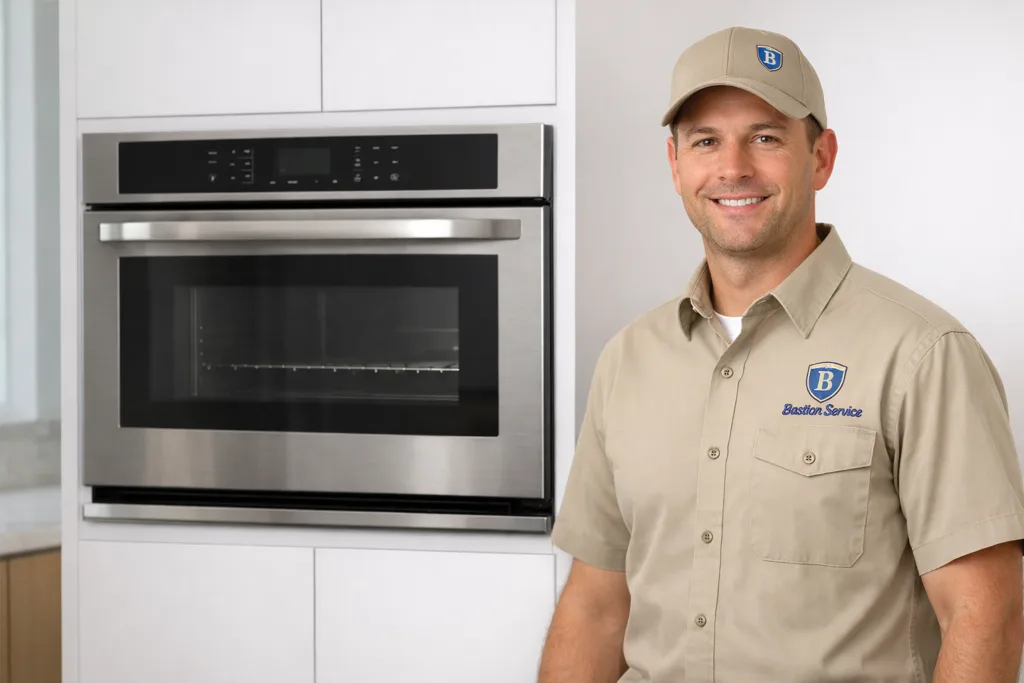
Wall ovens tend to fail in ways that look obvious at first and turn out to have several possible causes. A Whirlpool unit that seems to have a bad element may actually be dealing with a sensor problem, a relay that is no longer sending power correctly, a door-lock issue after self-clean, or a control fault that only shows up once the oven tries to reach temperature. Sorting out the symptom pattern before replacing parts is usually the quickest way to avoid wasted cost and repeat breakdowns.
Symptoms that tell you a Whirlpool wall oven needs service
Some problems are sudden, such as an oven that will not turn on or quits during preheat. Others build slowly over time, including longer cook times, hot spots, or food that comes out differently even when you use the same settings as usual. In Palms homes, these gradual changes are often the first sign that a heating or control component is weakening.
- Oven powers on but does not heat
- Slow preheat or failure to reach set temperature
- Uneven baking, burning, or undercooking
- Temperature swings during longer cooking cycles
- Error codes, beeping, or cycle cancellations
- Door not locking or unlocking properly
- Interior light and display work, but cooking performance does not
These symptoms may be connected, especially on electronic models. For example, a temperature complaint can start with slow preheat, then progress to uneven baking, and later become a full no-heat condition.
What common Whirlpool wall oven problems can indicate
Oven will not heat at all
If the display is on but the oven stays cold, the problem may involve the bake element, broil element, temperature sensor, thermal protection device, control board, relay, or internal wiring. On some units, normal cooking can also be interrupted by a latch or switch issue if the appliance thinks the door is locked or a clean cycle is still active.
A true no-heat complaint usually needs electrical testing rather than guesswork, because two different failed parts can create the same outward symptom.
Slow preheat
When preheat takes much longer than it used to, one heating circuit may be weak even though the oven still eventually gets hot. A partially failing element, inaccurate sensor reading, or control issue can all stretch preheat time. This is one of the most common early warnings that a repair is needed before the oven stops heating altogether.
Uneven baking and roasting
If cookies brown more on one side, casseroles stay cool in the center, or roasting times become unpredictable, the oven may be cycling heat incorrectly. Common causes include a drifting sensor, inconsistent element performance, poor temperature regulation, or a convection-related issue on models equipped with that feature.
When the same food keeps turning out differently from one use to the next, the oven is usually no longer maintaining temperature the way it should.
Oven runs too hot or too cool
A Whirlpool wall oven that overshoots the set temperature can burn food quickly and make baking unreliable. One that runs cool may leave dishes underdone even after extra time. Both conditions can come from sensor failure, calibration problems, or electronic control issues. If the temperature error is significant, continued use becomes more frustrating than practical.
Error codes and intermittent shutdowns
Error messages can point the diagnosis in the right direction, but they do not always identify the exact failed part. An oven that starts normally and then shuts off may be overheating internally, losing communication in the control system, or dropping power through a failing connection. Repeated resets may bring it back temporarily, but they rarely solve the underlying fault.
Door, latch, and self-clean issues
Problems that start after self-clean are especially common on wall ovens. The door may remain locked, the oven may refuse to start, or the control may act erratically afterward. Heat stress during self-clean can affect latch components, switches, fuses, and electronics. If the door does not close or lock correctly, the appliance may block heating for safety reasons.
Why accurate temperature matters more than many homeowners expect
Wall oven problems are not always dramatic. Sometimes the oven still works, just poorly. That can be easy to ignore until meal timing becomes difficult and results are inconsistent. Inaccurate temperature affects more than baking:
- Roasts can dry out before they are fully cooked
- Baked goods may collapse, overbrown, or stay raw in the middle
- Frozen meals can finish unevenly
- Longer cook cycles can put extra strain on heating components
For households that use the oven several times a week, even a modest temperature error can turn into a daily annoyance. If you find yourself constantly adding time, rotating pans, or lowering settings to compensate, the appliance is likely no longer operating normally.
When to stop using the wall oven
Some symptoms are inconvenient. Others are reasons to stop using the appliance until it is checked. Do not continue operating the oven if you notice repeated breaker trips, visible sparking, a sharp burning odor from wiring or electronics, or a door that will not unlock safely after a cycle. Because a wall oven uses high electrical load, recurring electrical symptoms should be treated seriously.
It is also wise to pause use if the oven heats unpredictably during important cooking tasks, especially when food safety depends on reaching and maintaining proper temperature.
Repair or replace?
Many Whirlpool wall oven issues are repairable, particularly when the problem is limited to a sensor, element, latch assembly, fuse-related failure, or another specific component. Repair often makes sense when the oven is otherwise in good condition and still fits the cabinet space well.
Replacement becomes a stronger consideration when there are multiple major failures, repeated control problems, severe wear, or a pattern of breakdowns that affects confidence in the appliance. Built-in units also add fit and installation concerns, so it helps to know whether the current issue is isolated or part of broader deterioration.
For homeowners in Palms, that decision is often less about the oven’s appearance and more about reliability, expected repair path, and whether the appliance can return to stable daily use.
What a thorough service visit should focus on
A useful service call should do more than confirm that the oven is malfunctioning. It should narrow the failure to the most likely circuit or component based on how the oven behaves during preheat, baking, broiling, and any fault display activity. That includes checking whether the complaint is tied to heating output, temperature feedback, door-lock status, or control response.
The goal is not just to get the oven running for the moment, but to understand why it failed and whether the repair is a sensible long-term fix. For a Whirlpool wall oven in Palms, that kind of practical repair guidance helps homeowners make the right call with fewer surprises.