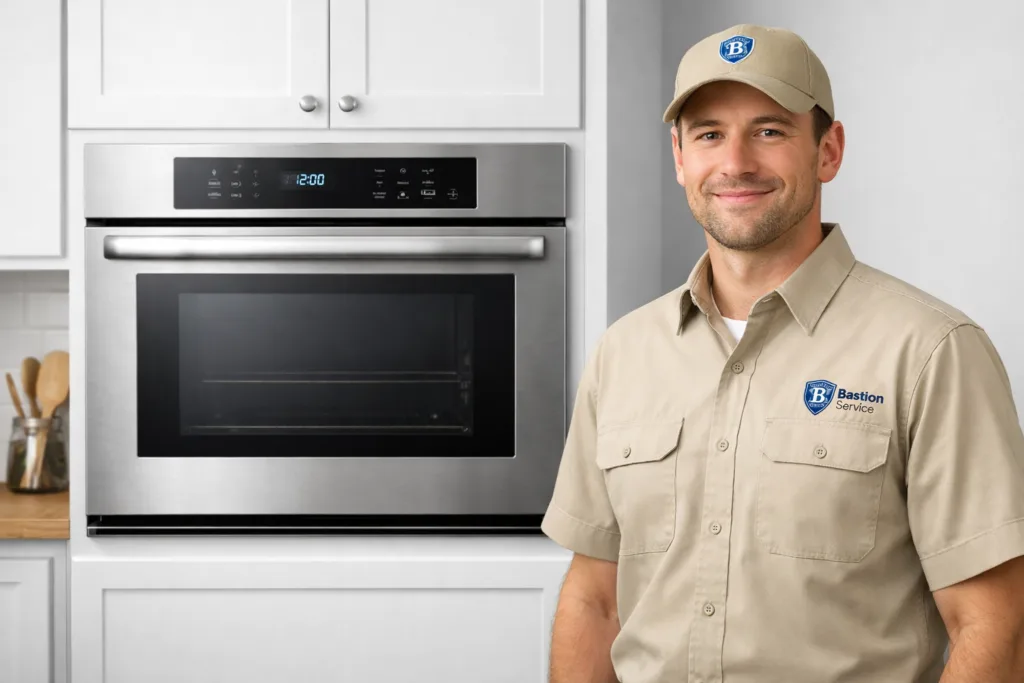
Wall oven problems usually show up in the kitchen long before the unit fully stops working. You may notice longer preheat times, baking that becomes less consistent, a display that responds only sometimes, or a cavity that seems hotter or cooler than the set temperature. With Summit units, those patterns matter because they often point to different faults even when the symptoms feel similar during daily use.
Start with what the oven is actually doing
The most useful way to approach a Summit wall oven problem is to look at the full symptom pattern rather than the final failure. An oven that powers on but never heats is different from one that heats weakly, and both are different from a unit that overshoots temperature or intermittently shuts down mid-cycle. Paying attention to what works, what does not, and whether the issue is constant can help narrow the likely cause.
In Palms homes, common clues include whether bake works while broil does not, whether preheat stalls at a certain point, whether the display resets during cooking, and whether the problem appeared after a self-clean cycle or heavy holiday use. Those details can help separate an element issue from a sensor problem, control fault, latch problem, or power-related failure.
Common Summit wall oven symptoms and what they may mean
Oven will not heat at all
If the control panel lights up but the oven cavity stays cold, the problem may involve a failed bake element, broil element, temperature sensor, thermal limiter, wiring connection, or electronic control board. On some units, the oven appears to start normally but never begins active heating because a relay or safety component is not allowing the cycle to complete.
This symptom is especially important to address promptly because repeated start attempts do not usually solve the issue and can make the pattern harder to track.
Slow preheating
A Summit wall oven that eventually reaches temperature but takes much longer than usual may have a weakening heating element, inaccurate sensor feedback, or a control issue affecting how heat cycles during preheat. Slow preheat is often an early warning sign rather than a minor annoyance. Many ovens continue to operate for a while in this condition, but cooking results tend to become less predictable over time.
Uneven baking or hot and cold spots
If one rack browns faster than another, cookies finish unevenly, casseroles need extra time in the center, or food burns despite normal settings, temperature regulation may be off. In a wall oven, that can be tied to a drifting sensor, inconsistent element output, or control logic that is no longer regulating heat properly. It is easy to mistake this for recipe inconsistency when the real issue is inside the appliance.
Temperature swings or inaccurate temperature
Some temperature variation is normal during a heating cycle, but wide swings are not. If the oven runs much hotter or cooler than the selected setting, takes repeated attempts to cook familiar meals correctly, or seems to overcompensate during preheat, the fault may involve the sensor circuit or electronic control. A simple recalibration does not fix every temperature complaint, especially when the issue has become progressively worse.
Display or touch controls not responding
When buttons stop registering, the screen goes blank, settings change unpredictably, or the oven starts and stops without clear input, the fault may involve the user interface, control board, or incoming power path. These problems can be frustrating because they often appear intermittent at first. A unit may work one day and fail the next, which is why the timing and pattern of the behavior matter.
Door lock problems after self-clean
If the door stays locked, will not latch correctly, or the oven remains stuck in an error state after a cleaning cycle, the issue may involve the latch assembly, switch feedback, or the control system that monitors lock position. Forcing the door or repeatedly trying to restart the cycle can worsen the problem. When a lock fault is present, it is better to stop and have the mechanism checked.
Signs the problem may be electrical rather than temperature-related
Some Summit wall oven issues look like heating failures but are really power or wiring problems. If the display flickers, the oven loses power during cooking, the breaker trips when preheat starts, or the unit shuts off under high heat, the cause may be outside the usual sensor-or-element path. Loose connections, failing relays, or heat-stressed wiring can all create symptoms that mimic other failures.
- The clock resets during use
- The oven turns off only when it gets hot
- Preheat begins, then stops unexpectedly
- The breaker trips during bake or broil
- The display works, but heating does not engage consistently
When these symptoms show up together, continued use is usually not the best choice until the cause is identified.
When to stop using the oven
It is smart to stop using the oven if you notice burning odors from inside the cabinet area, visible sparking, repeated breaker trips, a door that will not unlock, or temperatures that are clearly running far above the selected setting. These are not just convenience issues. They can affect safety, damage other components, and make a straightforward repair more complicated.
If food has started coming out unpredictably cooked, the issue may also be worth addressing sooner rather than later. Inconsistent oven temperature does not always seem urgent, but it often points to a component that is degrading and may fail completely with continued use.
Repair or replace?
Many Summit wall oven problems are still good repair candidates when the fault is limited to a sensor, heating element, latch component, switch, or a defined control-related issue. Repair tends to make sense when the oven is otherwise in solid condition and the failure is isolated.
Replacement becomes more worth considering when the appliance has several overlapping issues, recurring electrical failures, heavy cavity wear, or repair costs that are too high relative to the condition of the unit. Built-in appliances also require a practical look at fit and installation, since replacing a wall oven is not always as simple as swapping one freestanding appliance for another.
What to note before service
A few simple observations can make diagnosis faster and more accurate. Try to note what the oven does during startup, whether the problem happens every time, and which cooking modes are affected. If the issue is intermittent, the timing may be just as helpful as the symptom itself.
- Does bake fail while broil still works?
- Does preheat stop at a certain temperature?
- Is the display fully responsive or only partly working?
- Did the issue begin after self-clean or after a power interruption?
- Does the oven shut off during longer cooking cycles?
- Are there unusual noises, odors, or signs of excess heat?
For homeowners in Palms, these details often do more to narrow the repair path than a general description like “not working right.”
Built-in wall oven service needs a symptom-based approach
Wall ovens are different from countertop appliances because access, installation, airflow, and electrical configuration all affect how the diagnosis is performed. A built-in Summit unit may show one symptom at the panel but have the real fault in the heating circuit, latch system, or control path behind the trim and cabinet opening. That is why symptom-based evaluation matters more than guessing at the most common part.
When the repair path is based on how the oven behaves in actual cooking use, it is easier to decide whether the next step is a targeted repair, a pause in use until the fault is corrected, or replacement if the overall condition no longer supports a worthwhile fix.
Practical help for Summit wall oven issues in Palms
If your oven is not heating, preheats too slowly, bakes unevenly, or has control and door-lock problems, the right next step is to match the repair to the exact symptom instead of treating all no-heat and temperature complaints the same way. Bastion Service helps homeowners in Palms evaluate Summit wall oven problems based on appliance condition, failure pattern, and whether repair is likely to restore reliable everyday cooking.