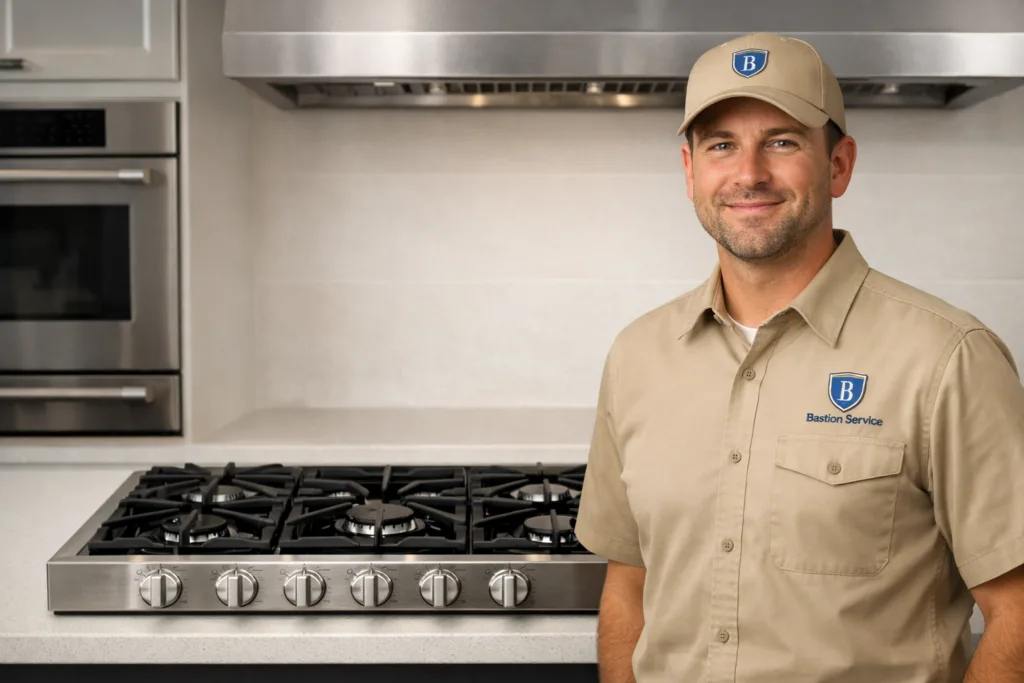
Cooktop problems are easiest to solve when the symptom pattern is specific. A burner that clicks once in a while after cleaning is different from one that clicks constantly, and a surface that heats slowly on one zone points to a different repair path than a cooktop that will not power on at all. In Palms homes, that distinction matters because it helps narrow the issue to ignition parts, burner components, wiring, controls, or a power-related fault instead of guessing.
Common Thermador cooktop symptoms and what they often mean
Thermador cooktops can fail in ways that seem similar at first, but the details usually tell the story. Paying attention to whether the issue affects one burner or the entire unit, whether it happens every time, and whether it started suddenly or gradually can make repair decisions much more straightforward.
Burner clicks but does not light
On gas models, repeated clicking without ignition often points to moisture, food residue, a misaligned burner cap, or an igniter problem. If the burner lights sometimes but not consistently, the issue may be developing rather than fully failed. Homeowners can check for obvious spillover and make sure burner parts are seated properly, but if the clicking continues, the cooktop usually needs service before regular use continues.
If there is a strong or persistent gas odor, stop using the appliance and treat it as a safety concern first. That is different from a burner that simply struggles to ignite with no gas smell present.
Flame is weak, unstable, or uneven
A weak flame can come from blocked burner ports, improper burner assembly fit, or gas flow issues. Sometimes the burner lights, but the flame ring looks patchy or does not distribute heat evenly across the cookware. In day-to-day cooking, that can show up as slow boiling, poor simmer control, or one side of the pan heating faster than the other.
Because uneven flame is not always caused by the same part, it helps to note whether the problem stays with one burner or appears on multiple burners. A single-burner issue often follows a different repair path than a cooktop-wide performance problem.
Electric or induction zones are not heating properly
On electric and induction Thermador cooktops, a zone that remains cool, cycles oddly, or heats inconsistently may involve the element, sensor, interface, or control board. Some homeowners first notice this as longer cook times or cookware that no longer heats at the expected setting. If the zone works intermittently, that can still indicate a part that is starting to fail rather than a one-time glitch.
Cooktop will not turn on
When the whole cooktop appears dead, the problem may be related to incoming power, a tripped breaker, wiring, a failed control, or an interface issue. A complete loss of function is usually easier to notice than intermittent burner trouble, but it can still have several possible causes. If the unit shut off unexpectedly during use or became unresponsive after operating normally, targeted testing is usually the fastest way to determine whether the fault is external or inside the appliance.
Touch controls lag, flash, or stop responding
Unresponsive controls can be caused by panel wear, heat exposure, communication faults, or an electronic failure behind the user interface. Some cooktops may appear to recover after a reset, only to repeat the same behavior later. When settings do not register reliably, or the display flashes and then clears without solving the issue, the problem often goes beyond simple surface cleaning.
What to check before scheduling repair
A few basic checks can help rule out simple setup problems before a repair visit:
- Make sure burner caps and grates are seated correctly after cleaning.
- Check for food debris, moisture, or residue around igniters and burner openings.
- Confirm the cookware is suitable for the cooking zone, especially on induction models.
- See whether the issue affects one burner or all burners.
- Note any error display, flashing lights, unusual clicking, or change in performance.
If the symptom returns after these checks, repeated use usually does not improve the situation. At that point, the useful next step is a clear diagnosis based on the exact behavior of the cooktop.
Signs the problem is becoming more serious
Some cooktop issues stay minor for a while. Others gradually become harder to ignore. A burner that used to light on the second try may stop igniting altogether. A zone that once heated unevenly may stop producing enough heat for normal cooking. Controls that occasionally missed input may become unreliable every day.
Common signs that a Thermador cooktop problem is progressing include:
- Clicking that continues longer than normal or spreads to other burners
- Heat output that changes noticeably from week to week
- Intermittent shutdowns during cooking
- Burners that work only at certain settings
- Recurring display or control problems after resets
These symptoms often point to wear that is moving beyond a simple adjustment. Addressing the issue earlier can help avoid added strain on related components.
When continued use may lead to bigger repairs
Working around a failing cooktop can be tempting, especially if at least one burner still works. The problem is that repeated ignition attempts, unstable heating, or unreliable controls can create more wear over time. A burner that sparks repeatedly without lighting may put stress on ignition components. A heating zone that cycles abnormally can make cooking inconsistent and may signal a deeper control issue. Electrical faults that begin as occasional interruptions can become full loss of function.
That does not mean every symptom is urgent, but it does mean recurring problems should not be treated as normal. If the appliance is behaving differently from one day to the next, the repair path is usually clearer before more systems are affected.
Repair or replace?
Many Thermador cooktop issues are worth repairing, particularly when the fault is limited to a burner assembly, igniter, switch, element, sensor, or control-related component. Replacement becomes a more realistic conversation when the cooktop has multiple major failures, the condition is poor overall, or the expected repair cost is hard to justify against the unit’s age and reliability.
For most households in Palms, the decision comes down to a few practical questions:
- Is the issue isolated to one component or part of a larger pattern?
- Has the cooktop been reliable until now, or has it needed repeated work?
- Will the repair restore normal everyday cooking performance?
- Are the symptoms mainly nuisance-level, or do they affect safe and consistent use?
When those questions are answered early, Thermador Cooktop Repair in Palms becomes less about trial-and-error and more about choosing the repair that makes sense for the appliance you already have.
What homeowners in Palms should note before service
A short record of the symptom can save time and help identify the likely fault more quickly. It helps to know:
- Which burner or zone is affected
- Whether the issue is constant or intermittent
- Whether it started after a spill, cleaning, power interruption, or no obvious event
- Any sounds, odors, flashing indicators, or error behavior
- Whether performance changes after the cooktop cools down
Those details are often more useful than general descriptions like “not working right.” A symptom-based explanation usually leads to a faster and more accurate repair recommendation.
Choosing service based on the symptom, not just the part
Cooktop repairs are most effective when the diagnosis starts with how the appliance fails in real use. One homeowner may need burner ignition service, while another may have a control issue that only looks like a burner problem from the surface. In residential kitchens across Palms, that symptom-first approach helps determine whether the fix is minor, whether more extensive repair is needed, or whether replacement should be considered instead.