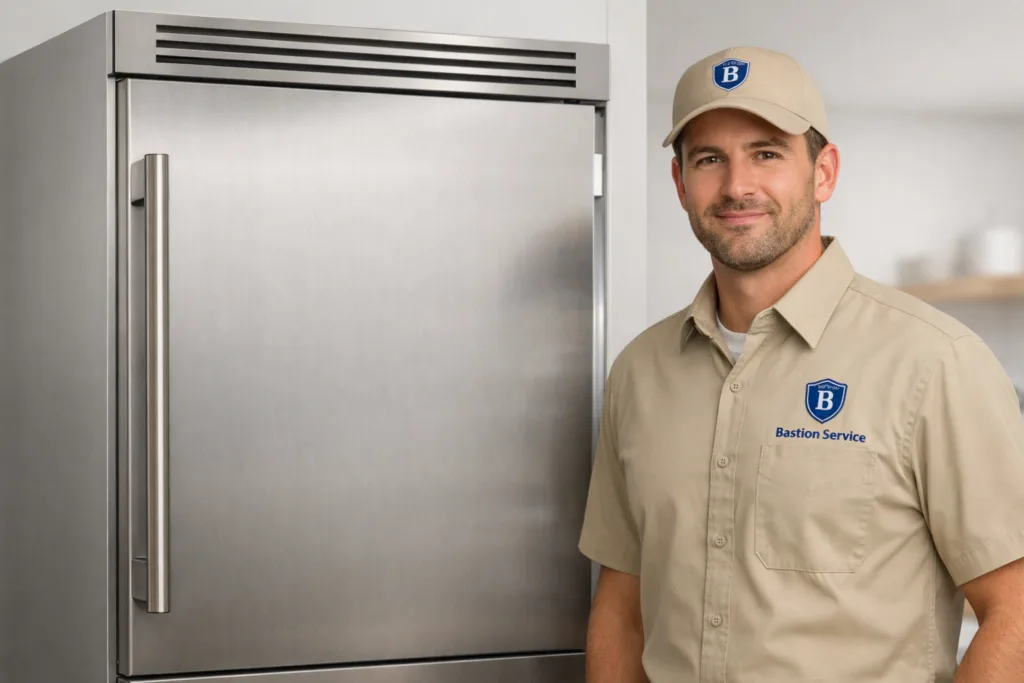
A Thermador freezer that begins warming, frosting over, leaking, or making new noise can affect more than food storage. It can lead to spoiled groceries, hidden ice buildup, longer run times, and uncertainty about whether the issue is minor or the start of a larger cooling problem. The most helpful next step is to match the symptom to the system most likely involved.
Common Thermador freezer symptoms and what they usually mean
Freezer problems rarely look identical from one home to the next. Two units may both seem “not cold enough,” yet one may have an airflow restriction while the other has a defrost or control issue. Looking closely at the pattern helps narrow down the repair path.
Freezer is running, but food is not staying fully frozen
If the interior feels cool but food is softening, the problem may involve weak evaporator fan airflow, sensor misreading, restricted vents, dirty condenser conditions, or declining cooling performance. Some homeowners first notice this when ice cream turns soft, frozen vegetables clump together, or items near the door thaw sooner than items deeper inside.
Temperature swings are especially important to address early. A freezer that cools part of the time and warms part of the time can create repeated thaw-and-refreeze cycles that affect food quality even before the compartment feels obviously warm.
Frost is building up on walls, shelves, or drawers
Heavy frost often points to a defrost problem, warm air entering through a poor door seal, or a door that is not fully closing. In some cases, one small air leak leads to moisture accumulation, which then freezes around vents and interferes with circulation. As airflow drops, cooling becomes more uneven and the freezer may run much longer than usual.
Frost concentrated in one area can be a useful clue. Frost near the door may suggest sealing trouble, while frost across the back interior panel can indicate a defrost or airflow issue that needs closer testing.
New noises have started
Not every sound is a problem, but changes in sound matter. A scraping or rubbing noise can come from a fan blade contacting ice. Buzzing or repeated clicking may point to starting trouble, electrical faults, or a component struggling to cycle correctly. Rattling can sometimes be as simple as vibration from shelving or an uneven surface, but when it appears with poor cooling, it should not be ignored.
Water is leaking or pooling near the appliance
Water under or inside a freezer is often related to a blocked defrost drain, melting frost caused by temperature instability, or moisture intrusion from a sealing problem. Even when the freezer still seems cold, recurring leaks can lead to odors, slick floors, cabinet wear, and more ice formation later.
Why symptom-based diagnosis matters
Thermador freezers rely on coordinated operation between the fan system, controls, sensors, defrost components, door seal, and cooling circuit. A visible symptom is not always the root cause. For example, frost may be the result of a failed defrost heater, but it may also start with a gasket that lets humid air enter. A nonstop running freezer might be struggling with airflow, inaccurate temperature sensing, or reduced cooling output.
That is why guessing at parts can be frustrating and expensive. A symptom-based approach focuses on actual freezer behavior: how temperatures change, where frost appears, whether airflow is strong, how the door seals, and whether the fan and controls respond normally. This helps keep repair recommendations tied to the real fault instead of the most obvious surface symptom.
Signs the problem is getting worse
Some freezer issues remain manageable for a short time, but others progress quickly. It is wise to schedule service sooner when you notice:
- Food softening at the edges or thawing overnight
- Frost returning soon after being cleared
- The freezer running almost constantly
- Condensation, dripping, or recurring water near the unit
- A fan noise that is getting louder or more frequent
- The door needing extra force to close or not sealing evenly
These signs often mean the freezer is compensating for a fault rather than operating normally. Continued use can increase ice buildup, reduce efficiency, and make food loss more likely.
What to check before a service visit
A few simple observations can make troubleshooting faster and more accurate. Before service, it helps to note:
- Whether the compartment is always too warm or only warms at certain times
- Where frost is appearing and how quickly it returns
- Whether the door closes flush on all sides
- If large food packages are blocking vents or interfering with the door
- What kind of sound the freezer is making and when it happens
- Whether water is pooling inside, underneath, or only after heavy frost forms
You do not need to disassemble anything to be helpful. Even small details about timing, noise, and frost location can point the diagnosis in the right direction.
Repair or replace?
Many Thermador freezer problems are repairable when the cabinet and core appliance condition are still solid. Fan motors, sensors, defrost components, drains, gaskets, and some control-related faults are often worth repairing when the issue is isolated and the unit has otherwise been performing well.
Replacement becomes a more serious consideration when there are multiple failing systems, repeated unresolved cooling complaints, or major sealed system trouble combined with age and overall wear. The right decision depends less on how dramatic the symptom looks and more on what testing shows. A freezer with severe frost may have a contained repair, while a freezer with only mild warming may have a deeper cooling issue.
Palms homeowners often benefit from acting early
In many homes in Palms, freezer trouble starts with a subtle sign that is easy to dismiss for a few days. But once frost blocks airflow or temperature swings begin affecting stored food, the repair can become more urgent. Early service can help prevent avoidable food waste and reduce the chance that a smaller fault turns into a larger one.
For households in Palms, the best repair decisions come from tested findings, not guesswork. When the symptom is understood clearly, it becomes much easier to tell whether the issue is limited to a serviceable part, related to airflow and defrost operation, or tied to a more substantial cooling problem.
What a practical repair plan should accomplish
A good freezer repair plan should do more than quiet a noise or temporarily reduce frost. It should address the reason the symptom started in the first place. That usually means confirming temperature behavior, checking airflow, evaluating frost pattern, inspecting door sealing, and verifying that the freezer responds correctly during operation.
When that process is done carefully, homeowners can make an informed decision about next steps with less uncertainty. For Thermador freezer problems in Palms, that approach helps reduce repeat issues, protects stored food, and keeps the repair focused on what the appliance actually needs.