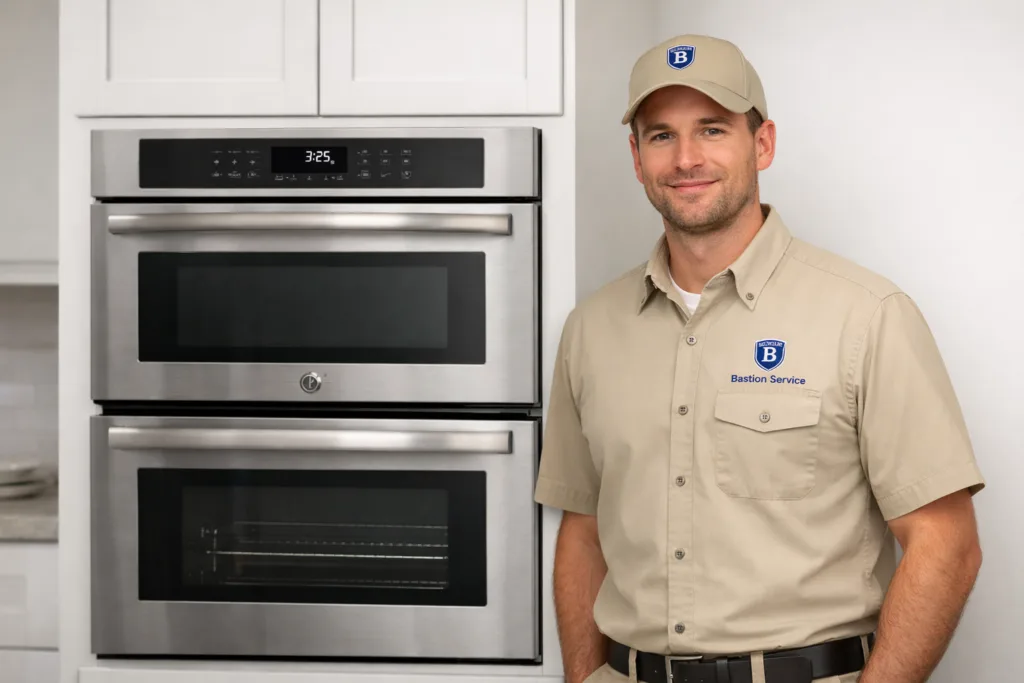
Cooking problems with a built-in oven tend to show up in everyday ways first: cookies browning unevenly, casseroles taking much longer than usual, or a unit that seems to preheat forever without ever getting fully hot. With GE wall ovens, those symptoms can come from heating components, temperature sensing, control failures, door-seal problems, or electrical issues behind the display and touch controls. Sorting out which pattern you are seeing is the fastest way to decide what kind of repair makes sense.
Common GE wall oven symptoms in Palms homes
Some failures are immediate and obvious, while others develop gradually. A wall oven that will not power on at all can point to a supply issue, a failed control, or a safety-related component that has opened the circuit. If the display works but the cavity does not heat, attention usually turns to the bake system, broil system, temperature sensor, relays, or wiring connections.
Other homeowners notice performance changes before a full breakdown. These are some of the most common signs that service is worth considering:
- Slow preheating
- Food cooking unevenly from side to side or top to bottom
- Oven temperature running hot or cold
- Heat that drops off during baking
- Recurring fault codes or unexplained beeping
- Door not closing, sealing, or locking properly
- Breaker trips during preheat, broil, or self-clean
What different symptom patterns can mean
Oven turns on but does not heat
When lights, display, or controls appear normal but the oven stays cold, the problem is often deeper than a simple reset. A failed bake element, weak broil element, damaged wiring connection, sensor fault, or control board problem can all produce this exact complaint. In some GE models, one heating circuit may fail while the rest of the appliance still appears to operate normally, which can make the issue look smaller than it is.
Uneven baking or roasting
If one rack browns too fast, the center of dishes stays underdone, or meals come out differently from one use to the next, the oven may not be distributing heat correctly. Causes can include a drifting sensor, partial element failure, weak convection airflow, door-gasket heat loss, or a control that is cycling heat inconsistently. This is especially noticeable with baking, where even small temperature differences affect results.
Preheat takes too long
Slow preheat is often one of the earliest warning signs. The oven may eventually reach the set temperature, but only after a long wait. That can happen when one heating component is no longer pulling its full load, when the sensor is misreporting cavity temperature, or when the control is not energizing the correct circuits at the right time. A worn door seal can also contribute by allowing heat to escape throughout the preheat cycle.
Temperature swings during cooking
All ovens cycle heat, but wide swings can make recipes unreliable. If food comes out overdone one day and pale the next, the oven may be overshooting or undershooting because of sensor drift, relay trouble, calibration issues, or intermittent electronic faults. In built-in units, repeated overheating should be taken seriously because it can affect both cooking performance and surrounding components.
Error codes and control issues
GE wall ovens may display faults related to temperature sensing, door latch position, key panel communication, overheating, or control failures. The code is a useful clue, but it does not always identify the failed part by itself. For example, a sensor-related code may be caused by the sensor, the harness, or the control receiving a bad signal.
Door and latch problems
A door that sags, does not close tightly, or remains locked after a cycle can interfere with normal use and heat retention. If the latch system does not return to the correct position after self-clean, the oven may refuse to start or may keep showing an error. Hinges, latch assemblies, switches, and gaskets can all play a role in this symptom group.
Breaker trips, burning smell, or visible arcing
These are stop-use symptoms. If the oven trips the breaker more than once, smells like hot wiring, or shows signs of sparking, do not keep testing it. Those signs may indicate a shorted element, damaged terminal, failing wire connection, or a control-related electrical fault that can worsen with continued operation.
Why built-in wall oven issues should be diagnosed carefully
Wall ovens pack a lot of components into a tight built-in space, and several different failures can look the same from the outside. A unit that seems to be “not heating” might actually be heating partially. An oven that seems too cool may really be losing heat through the door. A fault code that points to the control may actually start with a sensor circuit problem.
That is why repair decisions are better made after the actual failure path is identified. For homeowners in Palms, this helps answer practical questions: whether the issue is isolated or part of larger wear, whether the oven is safe to keep using for now, and whether the expected repair is relatively straightforward or more involved.
When to schedule service sooner rather than later
It is smart to schedule service when the oven still works but no longer works predictably. Temperature drift, uneven baking, and long preheat times often start as performance complaints before becoming complete heat loss. Addressing those symptoms earlier can help avoid ruined meals and reduce the chance of a second component being stressed by the original problem.
You should stop using the oven and have it checked promptly if you notice any of the following:
- Repeated breaker trips
- A strong electrical burning odor
- Sparking or signs of arcing
- A door that will not stay closed
- Runaway heat or scorching far beyond the selected setting
- A latch that stays locked and prevents normal operation
Repair versus replacement for a GE wall oven
Many GE wall oven problems are repairable, especially when the issue is limited to a sensor, heating element, latch assembly, fan motor, switch, or a specific electronic fault. Repair tends to be more appealing when the oven fits the kitchen well, has otherwise been performing reliably, and the failure is confined to one system.
Replacement becomes a stronger consideration when the oven has multiple age-related problems at once, repeated electrical failures, heavy wear across controls and heating components, or limited parts availability for an older model. The best choice usually comes down to the exact failed part, the overall condition of the unit, and how confident you are in the oven after the repair is completed.
What homeowners can check before a service visit
Without disassembling anything, there are a few useful observations that can help narrow the issue:
- Whether the display is fully powered or blank
- Whether broil works when bake does not, or vice versa
- How long preheat takes compared with normal use
- Whether the problem started after self-clean
- Whether the door feels loose, misaligned, or hard to latch
- Any fault code shown on the display
- Whether the breaker trip happens immediately or only after heating begins
These details can help identify whether the problem is centered on heat production, temperature feedback, control response, or door function.
A focused approach for GE wall oven repair in Palms
Because these appliances are installed into cabinetry and run on a dedicated electrical supply, repair should be based on testing rather than guesswork. A good service visit should verify the complaint, compare the symptom to likely GE failure patterns, inspect the relevant heating and control circuits, and then recommend the next step based on what the oven is actually doing.
For households in Palms, that makes it easier to move from frustration to a realistic plan. If your wall oven has become unreliable for daily cooking, the most useful next step is to have the problem narrowed down by symptom so you can decide whether repair is the right path for the appliance you already have.