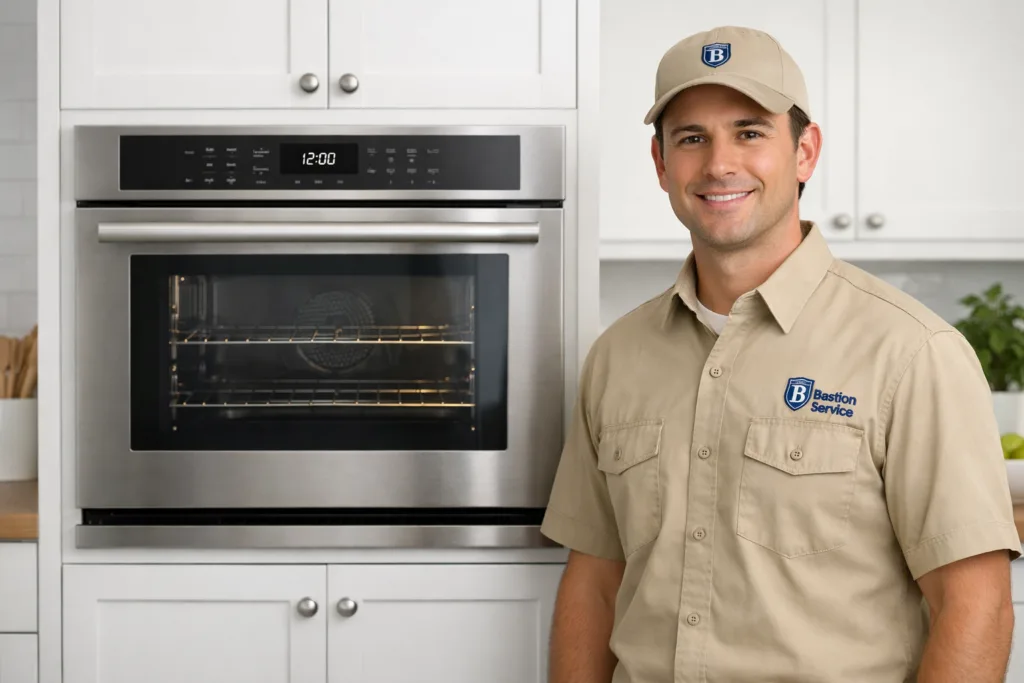
Wall ovens often show trouble gradually before they fail completely. You might notice longer preheat times, baked dishes that brown unevenly, a broiler that works while the lower heat does not, or a display that accepts settings but does not produce consistent cooking results. Because several different parts can cause the same symptom, the best next step is to identify whether the fault is in the heating system, the controls, the door seal, or the electrical supply to the unit.
Common wall oven symptoms and what they may mean
Slow preheating is one of the most common complaints in Palms homes. In an electric wall oven, that can point to a weakened bake element, a failing relay, or a sensor that is reporting the wrong cavity temperature. In a gas-equipped unit, delayed ignition or poor flame performance can create similar cooking problems even though the symptom looks the same from the outside.
Uneven baking is another frequent issue. If cookies overbrown on one side, casseroles need extra time in the center, or foods cook differently from rack to rack, the cause may be a temperature sensor drifting out of range, an element that cycles incorrectly, or airflow disruption from a convection fan problem. These issues are frustrating because the oven still appears to run, but the cooking performance is no longer trustworthy.
Some households first think they need a different service because the symptom sounds broader than a built-in oven problem. If the issue is centered on an exposed cooking surface rather than the oven cavity, Cooktop Repair in Palms may be the better place to start.
Heating and ignition problems
If the oven powers on but does not reach the set temperature, the failure is often within the heating circuit. Electric models may have a damaged bake or broil element, while gas models may have an igniter that glows but is too weak to open the gas valve reliably. A wall oven can also lose temperature control when the sensor and control board are no longer communicating accurately.
Pay attention to whether the problem affects baking, broiling, or both. If only one function is failing, that narrows the diagnosis considerably. If the same symptom is happening in a standard non-built-in cavity, Oven Repair in Palms may be more relevant for that appliance configuration.
Control, power, and display issues
A wall oven that seems dead, flashes error codes, shuts off mid-cycle, or trips the breaker should not be treated as a simple inconvenience. These symptoms can come from a failed control board, touchpad issues, wiring damage, a faulty thermal limiter, or a larger electrical fault. In some cases the display still lights up even though the oven cannot safely heat.
Intermittent operation is especially important to diagnose correctly. An oven that works one day and fails the next may have a loose connection, heat-related control failure, or a part that only stops working after the appliance warms up. Guessing at replacement parts can waste time and money when the real fault is elsewhere in the circuit.
Door and latch problems
Door problems affect performance more than many homeowners expect. A worn gasket, bent hinge, or latch issue can let heat escape and stretch cooking times, especially during longer baking cycles. If the door will not close fully, the oven may never stabilize at temperature no matter how long it preheats.
Self-clean lock problems are another reason people schedule service. A door that remains locked after a cycle, or a latch that does not engage correctly, may involve the lock motor, switch, control system, or heat-related distortion around the mechanism. Forcing the door open can turn a manageable repair into a larger one.
When to stop using the oven
It is wise to stop using the wall oven if you notice repeated breaker trips, sparking, a strong burning smell from wiring, overheating around the cabinet face, or persistent gas odor on a gas-equipped unit. Continued use can damage controls and wiring further, and it can also create a safety issue in the kitchen.
Less urgent symptoms still deserve attention. Temperature swings, noisy fans, delayed ignition, and longer-than-normal preheat times often begin as repairable problems but can become more disruptive if left alone. Addressing them early usually gives you more options than waiting for a complete loss of cooking function.
Repair or replacement?
Repair is often reasonable when the fault is limited to a heating element, igniter, temperature sensor, door hardware, fan motor, or a single control-related part. Replacement becomes more likely when the unit has multiple failures, severe wiring damage, parts that are no longer available, or repair costs that approach the value of the appliance.
Built-in appliances also make the decision more nuanced. A wall oven may still be worth repairing because replacement can involve cabinet fit, electrical compatibility, and installation considerations that do not apply to freestanding equipment. If the problem affects both the upper oven functions and surface burners in one combined appliance, Range Repair in Palms may be the better service path.
What a service visit should help determine
A productive wall oven diagnosis should confirm whether the appliance is heating correctly, whether the sensor is reading accurately, whether relays and controls are cycling as intended, and whether any door or safety components are contributing to the symptom. That process helps separate a straightforward part failure from a broader issue that changes the repair recommendation.
It should also clarify whether the oven is safe to keep using while parts are ordered, or whether it should remain off until repairs are completed. That matters in busy households in Palms where the wall oven is used regularly for everyday meals, holiday cooking, and batch baking.
Some homes have overlapping cooking problems that can make the source harder to identify at first. If the concern involves a freestanding unit with burner and oven symptoms together, Stove Repair in Palms may fit that setup more closely.
Choosing the right next step in Palms
For homeowners in Palms, the most useful approach is symptom-based service rather than assumptions based on age alone. An oven that bakes unevenly may need a relatively modest repair, while a unit with repeated electrical faults may call for a more cautious recommendation. The goal is to understand what failed, what else may have been affected, and whether the repair is likely to restore reliable daily cooking.
When the issue is isolated to the built-in oven itself, focused wall oven service keeps the process straightforward. That means less guesswork, a clearer repair decision, and a better chance of getting back to normal kitchen use without unnecessary parts replacement.