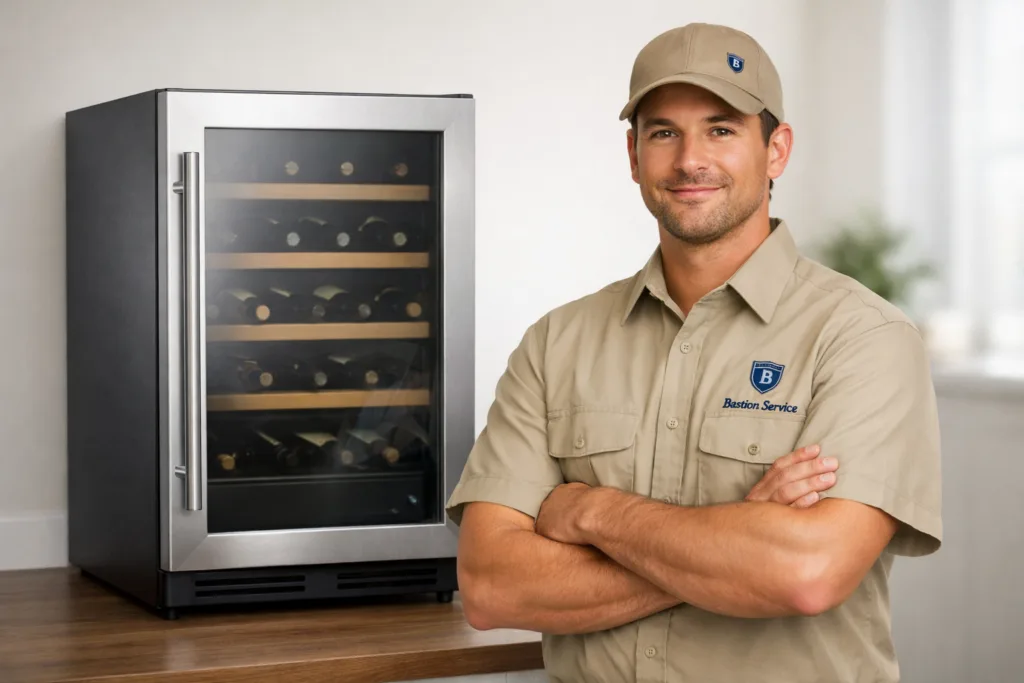
Temperature instability in a wine cooler is more than an inconvenience. Even modest swings can affect storage conditions, and symptoms that look minor at first often point to airflow, control, or seal problems that get worse with time. With Summit units, the same complaint can come from very different causes, so testing matters before any repair decision is made.
Why Summit wine coolers start losing performance
A wine cooler depends on balanced airflow, accurate sensing, and a properly sealed cabinet. If one part of that system falls out of range, the cooler may still run, but not hold the temperature you expect. In Santa Monica homes, these appliances are often built into cabinetry, placed under counters, or used in entertaining spaces where ventilation and door traffic can affect performance.
Common causes behind cooling problems include:
- Restricted airflow around the cabinet or condenser area
- Worn or misaligned door gaskets
- Faulty temperature sensors or thermostatic controls
- Evaporator or condenser fan issues
- Drainage and condensation problems
- Compressor or sealed-system trouble
Because these issues can overlap, symptom-based diagnosis is usually the fastest way to determine whether repair is straightforward or more involved.
Common Summit wine cooler symptoms and what they may mean
Not cooling enough
If the cabinet feels only mildly cool, takes too long to recover after the door opens, or no longer reaches the set temperature, the problem may be related to poor airflow, dirty heat exchange surfaces, a sensor fault, or an electronic control issue. In some cases, weak cooling points to a sealed-system problem, especially if the unit runs for long periods without improving.
This symptom deserves attention early because the cooler often keeps working harder as performance drops, which can increase wear on other components.
Too cold or freezing bottles
Overcooling is often traced to temperature sensing errors, control faults, or airflow problems that create cold spots inside the cabinet. If one shelf is much colder than another, or bottles are noticeably colder than the setting suggests, the unit may not be reading internal temperature correctly.
Freezing is a sign that regulation has been lost, not just that the unit is “cooling well.”
Condensation inside or around the door
Moisture on glass, shelves, or around the gasket usually means warm air is entering the cabinet, the door is not sealing consistently, or internal temperatures are fluctuating more than they should. Condensation can also appear when drainage is impaired or when the cooler is running longer than normal and still struggling to stabilize.
If left alone, excess moisture can lead to odors, label damage, and unnecessary strain on the cooling system.
Buzzing, rattling, clicking, or fan noise
Some operating sound is normal, but a new noise pattern usually means something has changed. Rattling can come from mounting or installation vibration. Scraping or uneven fan noise may indicate a failing fan motor or blade obstruction. Clicking paired with poor cooling can suggest start or compressor-related trouble.
Noise becomes more meaningful when it appears together with warming temperatures or longer run times.
The unit runs constantly
A Summit wine cooler that rarely shuts off may be losing temperature through the door seal, struggling with restricted airflow, or compensating for a control or refrigeration fault. Continuous running is a useful symptom because it often shows the appliance is trying to cool but cannot reach the target temperature efficiently.
That pattern is especially important in built-in installations where limited ventilation can magnify an existing problem.
Short cycling or inconsistent operation
If the cooler turns on and off too frequently, internal temperature regulation may be unstable. Possible causes include sensor errors, control board issues, overheating components, or an early refrigeration-system problem. Short cycling can also create uneven temperatures from shelf to shelf.
What to check before scheduling repair
There are a few simple things homeowners can look at before service:
- Make sure the temperature setting was not changed accidentally
- Confirm the power supply is stable and the outlet is functioning properly
- Check whether the door closes fully without rubbing or obstruction
- Inspect the gasket for gaps, tears, or sections that no longer sit flat
- Look for dust buildup around ventilation openings
- Make sure bottles and shelving are not blocking internal airflow
These checks can help narrow down the issue, but they do not replace proper testing when the cooler is warming, overcooling, leaking moisture, or making unusual noise.
Built-in installation issues that affect wine coolers
Many Summit wine coolers in Santa Monica are installed in tight cabinet openings, which makes ventilation especially important. If heat cannot dissipate as intended, the appliance may run hot, cool slowly, or cycle in ways that look like a part failure. An installation that was acceptable at first can also become a problem later if dust accumulates, trim shifts, or surrounding cabinetry reduces airflow.
That is one reason service should look at both the appliance and the space around it rather than assuming every temperature complaint comes from an internal component.
When repair is usually worth considering
Repair is often practical when the problem involves a fan motor, control component, sensor, switch, door gasket, or drainage-related fault. These are the kinds of failures that can cause obvious symptoms without necessarily meaning the entire unit is near the end of its life.
It usually makes sense to schedule service when:
- The temperature no longer stays consistent
- Condensation keeps returning after basic cleaning and inspection
- The unit has become noticeably louder
- The door no longer seals correctly
- The cooler runs almost constantly
- Contents are warming or freezing unexpectedly
When replacement may make more sense
Replacement becomes a more serious consideration when the wine cooler has major sealed-system trouble, repeated cooling loss, multiple failing components, or an overall repair cost that is hard to justify for the appliance’s age and condition. A newer unit with a single identifiable failure is very different from an older cooler with chronic performance issues.
The most useful next step is usually a clear diagnosis followed by a practical repair plan based on the exact symptom pattern, part failure, and expected outcome.
Why symptom timing matters
Homeowners can often help speed up diagnosis by noticing when the problem occurs. For example, a cooler that struggles only in the afternoon may be reacting to ambient heat or ventilation limitations. A unit that becomes noisy right before temperatures rise may point more directly to a fan or compressor-related problem. Condensation that appears mostly after frequent door openings may suggest a seal or recovery issue rather than a constant leak.
Small details like when the sound starts, whether the cabinet sides feel unusually warm, and how quickly the temperature recovers after use can make repair decisions more accurate.
Residential service focused on protecting the appliance and the collection
Wine coolers are different from standard kitchen refrigeration because the goal is not just cold air, but stable storage conditions. When a Summit unit starts drifting, overcooling, or running unpredictably, the priority is finding the source of the instability before more bottles are exposed to poor conditions. For Santa Monica homeowners, that means looking beyond the surface symptom and identifying whether the issue is with airflow, controls, sealing, or the refrigeration system itself.