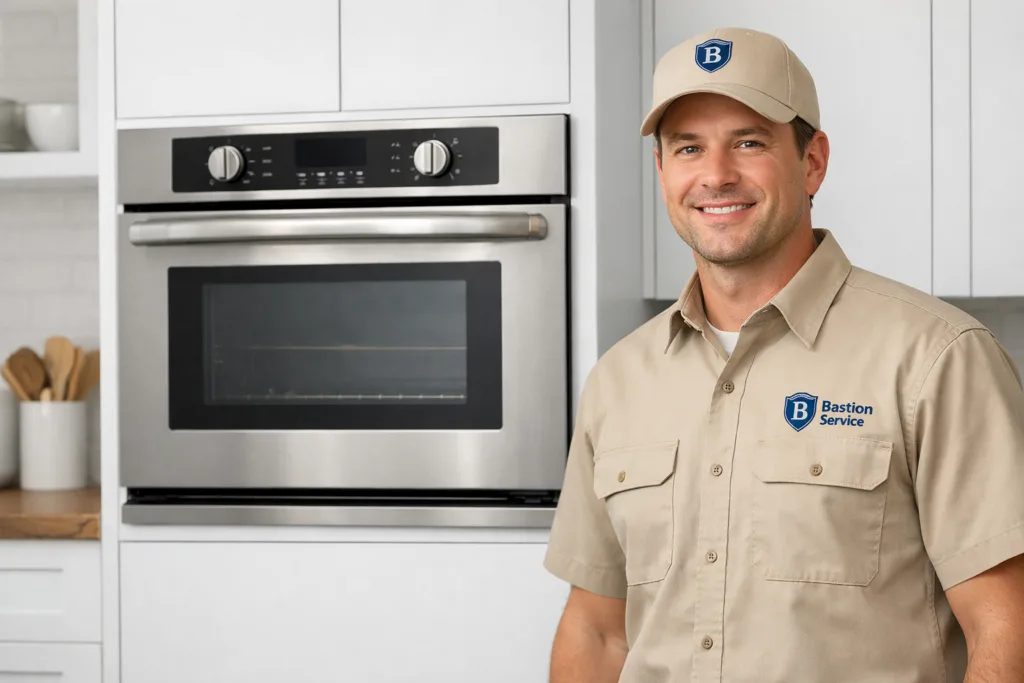
Wall oven problems rarely stay minor for long. A unit that starts with slow preheat or slightly inconsistent baking can eventually turn into a no-heat call, repeated error codes, or an oven that shuts down in the middle of cooking. With Summit wall ovens, the most useful approach is to match the symptom pattern to the likely failure point instead of guessing based on one visible part.
Common Summit wall oven symptoms and what they usually mean
Most repair decisions become easier once the problem is grouped by behavior. While different failures can overlap, certain symptoms tend to point in a specific direction.
Not heating at all
If the display comes on but the oven never gets hot, the issue may involve a failed bake or broil element, a temperature sensor sending the wrong reading, a control relay that is not sending power, or a supply problem. In some cases, one part of the heating circuit works while another does not, making the oven appear partially alive even though it cannot cook properly.
This is especially common when the oven lights up, accepts settings, and seems normal at first, but the cavity remains cool or only warms slightly.
Slow preheat
When preheat times stretch longer than normal, homeowners often assume the oven is simply aging. In reality, slow preheat usually means one heating function is weak, the sensor is drifting out of range, or the control is not managing heat correctly. A Summit wall oven that takes too long to come to temperature will often start showing uneven cooking soon after.
Uneven baking or temperature swings
If cookies brown unevenly, casseroles finish at different rates, or food needs much longer than expected, the problem may be inaccurate temperature sensing, inconsistent element operation, or control issues. Temperature swings can also show up as food that comes out overdone on one rack and underdone on another.
Before assuming it is cookware or recipe timing, it helps to look at whether the issue happens across different dishes. If it does, the oven itself is usually the source.
Oven will not turn on
A completely unresponsive wall oven can be tied to power supply issues, internal wiring faults, failed controls, thermal protection components, or keypad problems. Because built-in units are installed into cabinetry, access for testing matters. A quick power reset may temporarily restore operation, but a repeat shutdown usually means the underlying fault is still present.
Error codes, flashing display, or random beeping
Electronic problems often start intermittently. A Summit wall oven may beep unexpectedly, show a fault code, lose part of the display, or stop a cycle without warning. These issues can point to sensor faults, communication problems, moisture or heat damage at the control, or a failing interface.
Intermittent electronic faults are frustrating because the oven may seem fine between episodes. That does not make them minor. Once the control becomes unreliable, the oven can become difficult to trust for everyday use.
Door latch or self-clean problems
If the door will not unlock, the latch motor seems stuck, or the self-clean cycle fails to start or finish correctly, the problem may be with the latch assembly, switch, wiring, or control logic. Forcing the door or repeatedly cycling power can make the repair more complicated. When the latch system is involved, proper testing is usually the safest next step.
Signs the oven should not be used until it is checked
Some oven issues are inconvenient. Others are a reason to stop using the appliance right away. It is smart to pause use if your Summit wall oven is doing any of the following:
- Tripping the breaker
- Producing a burning smell from the appliance itself
- Overheating or running much hotter than the setting
- Failing to shut off normally
- Showing repeated error codes
- Starting and stopping unpredictably during cooking
- Locking the door unexpectedly
These symptoms can indicate problems with wiring, controls, heating circuits, or safety components. Continued use may increase damage and make the eventual repair more involved.
Why replacing a part based on symptoms alone can backfire
Many wall oven complaints sound straightforward but are not. An oven that will not heat could need an element, but it could also have a sensor problem, a failed relay, damaged wiring, or an incoming power issue. The same goes for uneven baking, which can be caused by poor sensor feedback, weak heat output, or control inaccuracy.
That is why symptom-based diagnosis matters. Replacing the most obvious part without confirming the cause can leave the original failure untouched and lead to repeat breakdowns. In Santa Monica homes, where built-in kitchen appliances are often integrated tightly into cabinetry, avoiding unnecessary removal and repeat work is especially important.
What homeowners often notice before a full failure
Summit wall ovens frequently show smaller warning signs before they stop working completely. Paying attention to those early changes can help you schedule service before the problem becomes more disruptive.
- Preheat takes noticeably longer than it used to
- The displayed temperature does not match actual cooking results
- The oven needs frequent resets to work normally
- The control panel responds inconsistently
- The fan, latch, or heating cycle sounds different than usual
- Food suddenly requires different cook times despite the same settings
These are often the first signs that a heating or control component is beginning to fail rather than an isolated one-time glitch.
Repair or replacement: what usually makes sense
For many households in Santa Monica, repair is still the practical choice when the issue is isolated to a defined component such as a sensor, element, latch assembly, or control-related part that has not caused broader damage. Built-in wall ovens are not as simple to replace as countertop appliances, so a focused repair can often be the easier path.
Replacement starts to make more sense when the oven has multiple unrelated failures, recurring electrical or electronic problems, or wear across several systems at once. Age alone is not the only factor. The bigger question is whether the unit has one repairable fault or a pattern of declining reliability.
What a useful service visit should help you understand
Homeowners usually want clear answers to a few practical questions:
- What actually failed?
- Is the oven safe to use in the meantime?
- Is the problem isolated or part of a larger wear pattern?
- Is repair likely to restore normal cooking performance?
For a wall oven, that means looking beyond whether the display powers on. Heating performance, sensor readings, control behavior, latch operation, and electrical integrity all matter. A proper assessment should explain why the symptom is happening, not just identify that the oven is malfunctioning.
Household impact of common wall oven problems
Wall oven issues affect more than one meal. In a busy home, unreliable cooking can disrupt dinner timing, holiday preparation, batch baking, and everyday routines. Even a unit that still technically works can become impractical if it needs constant monitoring, runs hotter than expected, or fails to preheat on time.
That is often the point where service becomes worthwhile. When the appliance stops being predictable, the problem is no longer minor from a household standpoint.
Summit wall oven repair in Santa Monica with symptom-focused guidance
When a Summit wall oven starts behaving unpredictably, the next step should be based on the exact symptom, how the oven is installed, and whether the failure appears isolated or recurring. That makes it easier to decide whether repair is worthwhile and whether the appliance should stay in use before service.
For homeowners in Santa Monica, the goal is simple: restore safe, consistent cooking performance without wasting time on guesswork or unnecessary parts.