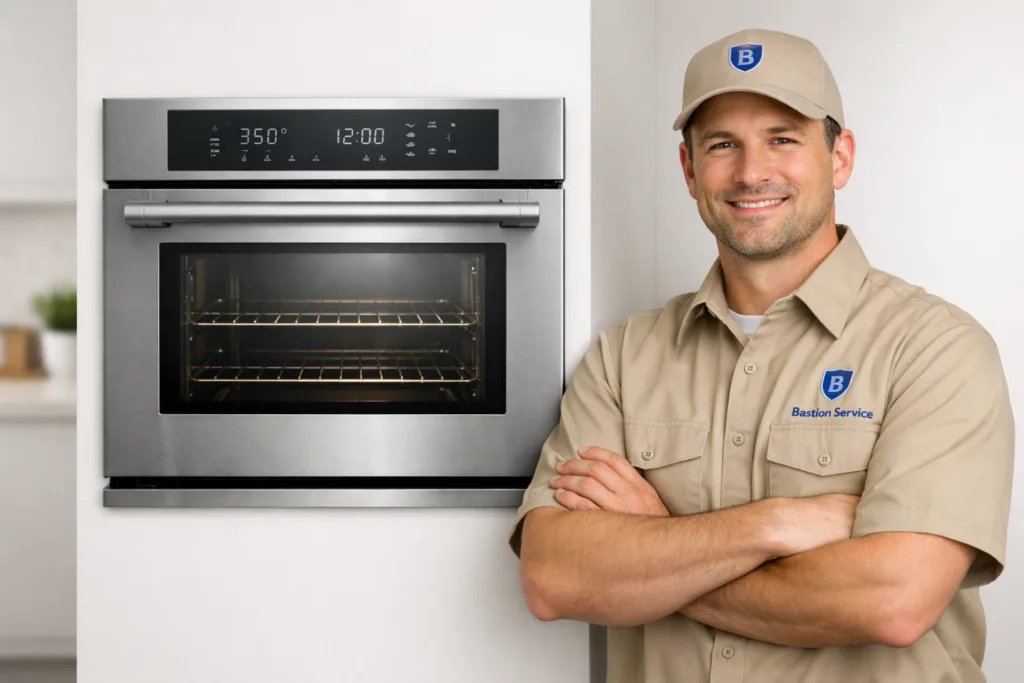
Cooking problems usually show up before a Summit oven fully fails. A unit that takes too long to preheat, browns unevenly, or shuts off mid-cycle can point to very different causes, so the most useful next step is matching the repair approach to the exact symptom instead of guessing at parts.
Start with the way the oven is failing
Many Summit oven issues look similar from the outside. Food may come out underdone, the display may appear normal, and the oven may still seem to run, yet the actual failure could involve heat production, temperature sensing, airflow, door sealing, or controls. In Santa Monica homes, symptom-based diagnosis helps narrow down whether the problem is isolated or part of a larger electrical or control issue.
Oven not heating at all
If the oven powers on but produces no heat, likely causes depend on whether the model is electric or gas. Electric models may have a failed bake element, broil element, thermal cutout, relay, or wiring fault. Gas models may have a weak igniter, gas valve issue, or ignition circuit problem. In either case, an oven that appears to start but never actually heats should not be treated as a simple settings issue.
Slow preheat or low temperature
An oven that eventually warms up but takes far too long often has a component weakening rather than failing completely. A deteriorating bake element, a tired igniter, or a sensor that is reading incorrectly can all cause long preheat times. Homeowners often notice this first when routine meals suddenly take much longer than expected or recipes that were once reliable start coming out pale and undercooked.
Uneven baking and hot spots
If one rack cooks faster than another or food burns around the edges while staying cool in the center, heat may not be circulating or cycling correctly. Common causes include sensor drift, a convection fan issue, a partially failed element, or a worn door gasket that lets heat escape. Uneven results are especially frustrating because the oven still seems usable, but the performance becomes too inconsistent for daily cooking.
Temperature swings during cooking
Some temperature variation is normal, but wide swings can lead to scorched dishes one day and undercooked meals the next. This symptom may be tied to a faulty sensor, a control board problem, relay trouble, or calibration drift. If the oven seems to run much hotter or cooler than the set temperature, testing the actual heating cycle is usually more informative than replacing one part at random.
Display, keypad, or start-up issues
When the control panel becomes unresponsive, flashes unexpectedly, or stops a cycle before cooking is complete, the problem may involve the user interface, electronic control, latch system, or incoming power. These symptoms can mimic each other, which is why repeated resets rarely solve the underlying problem for long.
Signs the problem may be getting worse
Some Summit oven problems begin as small annoyances and then turn into a complete loss of function. It is smart to schedule service when you notice patterns such as:
- Preheat times getting longer from week to week
- Food cooking unevenly despite normal rack placement
- The oven shutting off before the cycle is complete
- Error codes or blinking display behavior
- A door that does not close or seal properly
- Burning smells that suggest overheating components
Continued use in these conditions can sometimes strain other parts, especially when the unit is overcompensating to maintain heat.
When to stop using the oven
There are times when pausing use is the safer choice. If the oven overheats badly, trips power repeatedly, will not turn off correctly, or produces a strong gas odor on a gas model, it should be checked before normal operation continues. The same is true if the door will not shut securely or if internal components appear to spark, smoke, or smell like burning insulation.
Repair or replacement: what usually makes sense
For many Santa Monica households, repair is worthwhile when the issue is limited to a part such as an igniter, sensor, heating element, fan motor, gasket, or a specific control-related failure and the rest of the oven is in good condition. A targeted repair often restores normal performance without the disruption of replacing the appliance.
Replacement becomes more reasonable when the oven has multiple developing faults, recurring electronic problems, structural wear around the door or cavity, or major parts needs combined with age. The decision is less about one symptom in isolation and more about whether the appliance can return to reliable daily use after the repair.
What a service visit should help you understand
A useful diagnosis should identify which system has failed, explain how that failure matches the symptoms you have been seeing, and clarify whether the repair path is straightforward or more involved. On a Summit oven, that may mean confirming a heat source problem, a sensor reading issue, a control fault, an airflow problem, or an electrical supply interruption.
That kind of clarity matters because ovens often produce overlapping symptoms. Slow preheat, poor baking results, and temperature inconsistency can all feel like the same problem in the kitchen, even when the actual cause is different. The goal is not just getting the oven to turn on again, but getting it back to stable, predictable cooking performance.
Common household situations that point to oven service
In everyday use, Summit oven trouble often becomes obvious through routine cooking tasks. A frozen dinner takes much longer than the package says. Cookies that used to bake evenly now brown on one side only. A roast that should finish on schedule is still undercooked after an extra half hour. These real-world changes are often more revealing than the display itself.
If your oven has become unreliable enough that meal planning is affected, the issue is usually past the stage of simple trial and error. A symptom-based repair plan helps determine whether the fix is minor, whether multiple systems need attention, or whether replacement is the better long-term call.