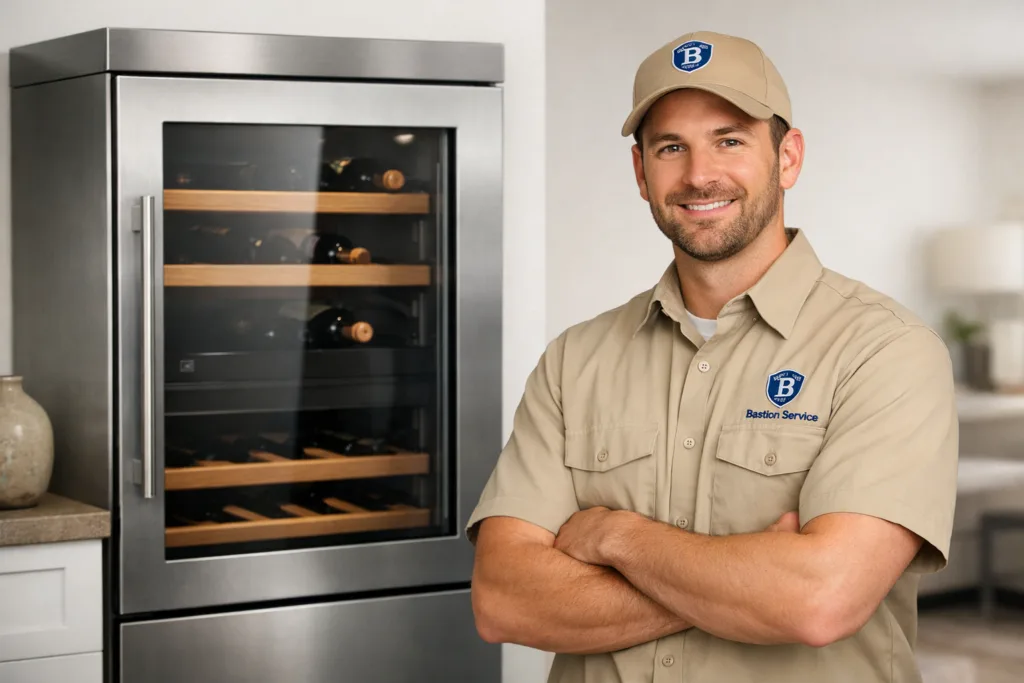
Wine storage problems usually show up as patterns rather than a single failure. A cabinet that feels slightly warm, a fan that sounds different at night, or moisture that keeps returning around the door can all point to very different repair needs. For a household appliance designed to protect temperature-sensitive bottles, it helps to look at the symptom group first instead of assuming every cooling issue means the same thing.
What homeowners often notice first
Many Miele wine cooler problems begin with a subtle change in daily use. The display may still appear normal while bottles feel warmer than expected. One temperature zone may stay close to the setting while the other drifts. A unit that was once quiet may begin to buzz, hum more heavily, or run for unusually long stretches.
Other early warning signs include condensation on the glass, moisture inside the cabinet, water near the base, interior lighting that behaves inconsistently, or alarms that repeat even though the door looks closed. These clues matter because they help narrow down whether the issue is related to airflow, cooling performance, controls, drainage, or door sealing.
Common symptom groups in a Miele wine cooler
Not cooling well or running too warm
If the cabinet no longer holds the selected range, the cause can be simple or complex. Restricted ventilation, a door left slightly misaligned, or a worn gasket can let warm air enter and make the system work harder. In other cases, the problem may involve a fan motor, temperature sensor, control fault, or a deeper cooling-system issue.
Signs that the unit is running too warm include bottles losing their usual chill, frequent compressor operation, or a noticeable difference between the set temperature and the actual cabinet feel. If this continues, the cooler is no longer providing stable storage conditions and should be evaluated before the problem affects other components.
Temperature swings or uneven zones
Stable storage depends on consistency. If temperatures rise and fall more than they used to, or if some shelves feel cooler than others, airflow and sensor response should be checked. In dual-zone models, one section working properly while the other becomes erratic is especially useful diagnostic information.
This type of issue may come from weak air circulation, inaccurate sensor readings, intermittent control behavior, or frost-related airflow obstruction. Uneven cooling does not always mean a major repair, but it does mean the cooler is not operating as intended.
Condensation, water, or excess moisture
Moisture problems often create confusion because they can be caused by either room conditions or appliance faults. In Santa Monica homes, indoor humidity can change enough to make glass fogging seem appliance-related when the bigger issue is repeated warm-air entry or a sealing problem. That is why gasket condition, door alignment, drainage, and internal airflow all need to be considered together.
Water inside the cabinet or beneath the unit may point to a drain issue, condensation buildup, or cooling behavior that is no longer regulating internal conditions properly. If moisture keeps returning after simple cleaning and normal door use, it is usually a sign that inspection is needed.
Fan noise, vibration, or louder operation
A wine cooler should not become distractingly loud in a kitchen, dining area, or built-in cabinet space. Rattling can come from panel vibration or installation shift. Buzzing may be related to compressor operation or contact between components. A sharper whirring or scraping sound can indicate fan trouble.
Noise changes matter for two reasons. First, they often signal wear before complete failure. Second, wine storage equipment is expected to run with minimal disturbance. If the unit suddenly sounds different or seems to run almost constantly, the issue should be addressed before cooling performance declines further.
Display, alarm, or control issues
Flashing indicators, repeated beeping, unresponsive touch controls, or temperatures that do not match cabinet conditions can all point to an electronic or sensor-related problem. Sometimes the display is not the root issue at all. It may be correctly warning about a door switch fault, a cooling problem, or unstable internal temperatures.
When controls become inconsistent, homeowners may end up adjusting settings repeatedly without solving the actual cause. A proper diagnosis separates a true control failure from a system problem that the controls are simply reporting.
Simple checks to make before scheduling service
Before arranging repair, a few basic observations can help clarify what is happening:
- Confirm the door closes fully and does not rebound slightly.
- Look for gaps, stiffness, or visible wear in the door gasket.
- Make sure interior airflow is not blocked by overcrowded bottle placement.
- Check whether exterior ventilation areas are clear of dust or obstruction.
- Notice whether the problem affects both zones or only one.
- Pay attention to when alarms, noise, or moisture appear.
These steps do not replace service, but they can make the symptom pattern much clearer. That helps determine whether the issue looks like airflow restriction, sealing trouble, drainage trouble, or a component fault.
When service should not be delayed
Some conditions deserve prompt attention. If the cabinet is clearly warm, if alarms keep returning, if water collects repeatedly, or if the compressor seems to run without normal cycling, continued use can increase strain on the appliance. A door that does not seal consistently can also turn a minor issue into a larger one by introducing constant warm-air intrusion.
It also makes sense to act quickly if you are rearranging bottles to work around warm spots, seeing repeated condensation after normal use, or noticing that settings no longer produce predictable temperatures. At that point, the unit is no longer offering reliable storage, even if it still powers on.
Repair or replacement: what usually makes sense
Many wine cooler problems are repairable when the cabinet itself is in good condition and the issue is limited to parts such as fans, sensors, switches, seals, controls, or drainage-related components. These are often the types of faults that can restore normal operation without replacing the appliance.
Replacement becomes a more serious consideration when there are multiple major failures, severe cooling-system problems, or overall wear that makes long-term reliability unlikely. Age matters, but age alone does not decide the outcome. The more useful question is whether the diagnosed fault supports a stable repair path for the way the cooler is used in the home.
What a focused repair visit should accomplish
For this appliance, the goal is not only to restore power or silence an alarm. The real objective is to determine why temperatures, airflow, drainage, or controls stopped behaving normally and whether the correction is likely to hold up in regular household use. That includes identifying the failed component, watching for related issues, and explaining what continued operation could risk if repair is postponed.
With Miele wine cooler repair in Santa Monica, homeowners are usually best served by a symptom-based approach that leads to a realistic next step, whether that means targeted repair, further parts evaluation, or a replacement decision based on overall condition.