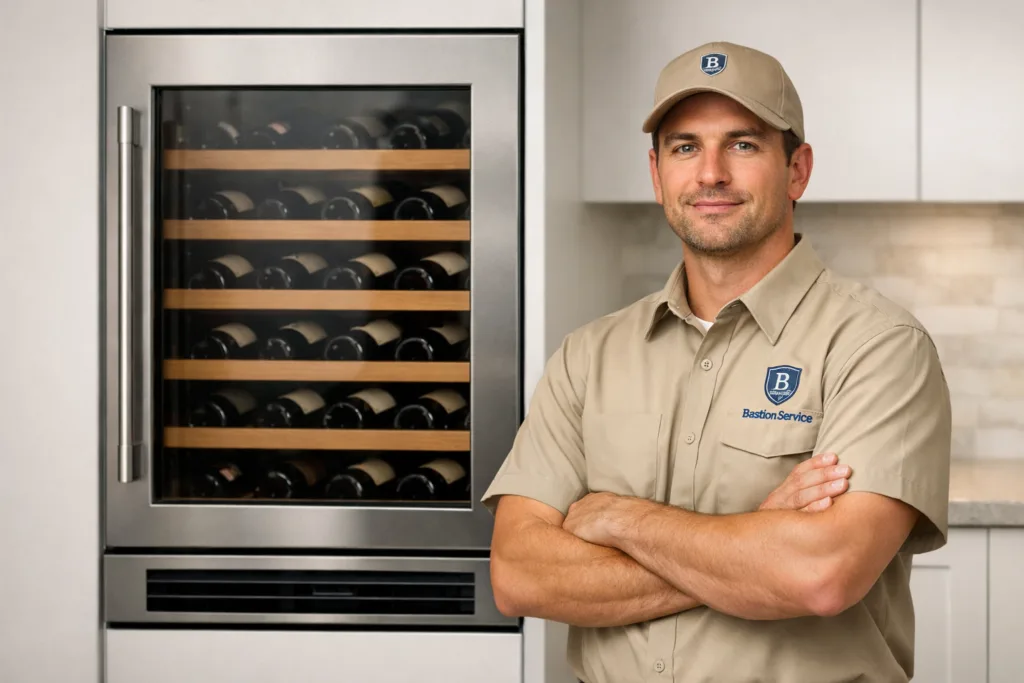
A KitchenAid wine cooler that stops holding temperature, runs constantly, or starts leaking can put a collection at risk faster than many homeowners expect. Because similar symptoms can come from very different causes, the most useful first step is confirming whether the problem is related to airflow, controls, sensors, drainage, fans, door sealing, or the cooling system itself.
What a proper wine cooler diagnosis should verify
Wine coolers operate within a narrower temperature range than a standard refrigerator, so even modest swings can affect storage conditions. A meaningful inspection should confirm the actual cabinet temperature, compare it to the display or setting, and check whether the unit is cooling evenly from top to bottom.
It also helps to verify fan operation, condenser condition, evaporator frost pattern, door gasket contact, drain performance, and compressor behavior. That matters in Santa Monica homes because replacing parts based on guesswork can add cost without fixing the real issue, especially when a control symptom and a refrigeration symptom can look similar at first.
Common KitchenAid wine cooler symptoms and what they may mean
Not cooling enough
If bottles feel cool but the cabinet never reaches the set temperature, the cause may be restricted airflow, dirty coils, weak fan performance, an inaccurate sensor, or an electronic control issue. In other cases, the compressor may be running but the sealed system is no longer cooling effectively.
This symptom often starts gradually. Homeowners may notice the display seems normal while the actual interior temperature drifts higher than expected. When that happens consistently, the problem usually needs hands-on testing rather than a reset or setting change.
Too cold or freezing bottles
Overcooling usually points to a regulation problem rather than a lack of cooling. Depending on the model, possible causes include a faulty thermostat, a thermistor reading incorrectly, or a control board that is no longer cycling the compressor properly.
If one section is much colder than another, airflow distribution may also be part of the issue. Freezing bottles should be addressed quickly because the unit is no longer protecting stable storage conditions.
Constant running or very long cycles
A KitchenAid wine cooler that seems to run all day may be struggling to remove heat efficiently. Dust on coils, weak condenser airflow, a leaking door gasket, poor ventilation clearance, or a compressor working harder than normal can all lead to extended run time.
Long cycles are especially worth attention when the cooler still does not reach the selected temperature. That combination can signal a deeper performance problem instead of normal operation.
Clicking, buzzing, rattling, or fan noise
Some operating sound is normal, but new or sharper noises often point to a part beginning to fail. Repetitive clicking can be related to start components or compressor startup trouble. Buzzing may come from vibration, a fan motor, or electrical components under strain. Rattling can be as simple as a loose panel, but it can also indicate mounting or fan blade interference.
If the sound changes with the cooling cycle or becomes more frequent over time, that pattern is often useful in narrowing down the cause.
Condensation, water inside, or leaking onto the floor
Moisture problems do not always mean a major cooling failure. A blocked drain, poor door seal contact, excess humidity entering the cabinet, or ventilation conditions around the unit can all lead to water buildup.
What matters is whether the moisture is occasional or recurring. Repeated condensation or leaking should be corrected before it affects surrounding flooring, trim, or cabinetry.
Display, controls, or temperature settings not responding
When the display becomes erratic, buttons stop responding, or settings change but performance does not, the issue may involve the user interface, the main control, or temperature sensing feedback. Control-related faults can mimic mechanical problems because the cooler may appear to run, but it is no longer cycling at the right times.
Why symptom patterns matter
One of the biggest differences between a quick guess and a useful repair plan is understanding the full symptom pattern. For example, a wine cooler that runs constantly and cools poorly suggests a different path than one that cycles normally but freezes bottles. A noisy unit with normal temperature points in a different direction than a silent unit that is warming.
Useful details include:
- Whether the issue started suddenly or gradually
- Whether the display temperature matches the actual cabinet temperature
- Whether the noise happens during startup, shutdown, or continuously
- Whether moisture appears inside the cabinet or outside on the floor
- Whether the unit has recently been moved, cleaned, or loaded more heavily than usual
When continued use can make the problem worse
If the cooler is warming noticeably, cycling hard, or no longer regulating temperature, continued use can add wear to the compressor and expose the contents to wider temperature swings. A failing fan can also create secondary problems because reduced airflow affects how the entire system performs.
Stop using the unit and arrange service promptly if you notice a burning smell, repeated breaker trips, visible wire damage, or signs that the compressor is trying to start and failing over and over. Those symptoms go beyond routine inconvenience and should not be ignored.
What you can check before scheduling service
Before booking a repair visit, it is worth ruling out a few simple issues that can imitate bigger failures:
- Confirm the temperature setting was not changed accidentally.
- Make sure bottles or shelving are not blocking interior vents.
- Check that the door closes fully and the gasket seals evenly.
- Look for dust buildup around areas that need ventilation.
- Verify the outlet has power and the breaker has not tripped.
- If the unit was recently installed or moved, confirm it has the recommended clearance around it.
If those basics are in order and the symptom remains, the issue is more likely to involve a component fault or cooling-system performance problem.
Repair or replace: how homeowners usually decide
Whether repair makes sense usually depends on the failed part, the age and condition of the wine cooler, and whether the problem is isolated or part of broader wear. Repairs are often reasonable when the fault is limited to a fan motor, sensor, door gasket, drain issue, control component, or startup part.
Replacement becomes more likely when the unit has multiple failures, significant sealed-system trouble, or an overall condition that makes parts and labor hard to justify. In many cases, the deciding factor is not just age alone, but whether the cooler still fits the space well and whether the issue is contained to one repairable area.
KitchenAid wine cooler repair considerations in Santa Monica homes
In residential kitchens, bar areas, and built-in cabinet installations, wine coolers often have tighter ventilation conditions than freestanding appliances. That makes airflow, door alignment, and heat removal especially important. A unit that looks fine from the front may still be struggling because of blocked clearance, dust accumulation, or reduced fan performance.
For Santa Monica homeowners, that means the best repair decision usually comes from identifying the exact failure instead of assuming every cooling complaint points to the compressor. Many serviceable issues begin with smaller parts and operating conditions that can be corrected before they lead to heavier wear.
What a useful repair outcome looks like
A successful repair is not just replacing a part and hoping temperatures improve. It should result in stable cabinet cooling, normal cycling, proper airflow, and controls that respond the way they should. It should also answer whether the unit is likely to continue operating reliably or whether the repair only solves part of a larger problem.
When a KitchenAid wine cooler starts showing repeat symptoms, the real goal is to restore consistent storage conditions and prevent avoidable damage to the appliance or what is inside it. That is what turns an annoying malfunction into an informed household decision.