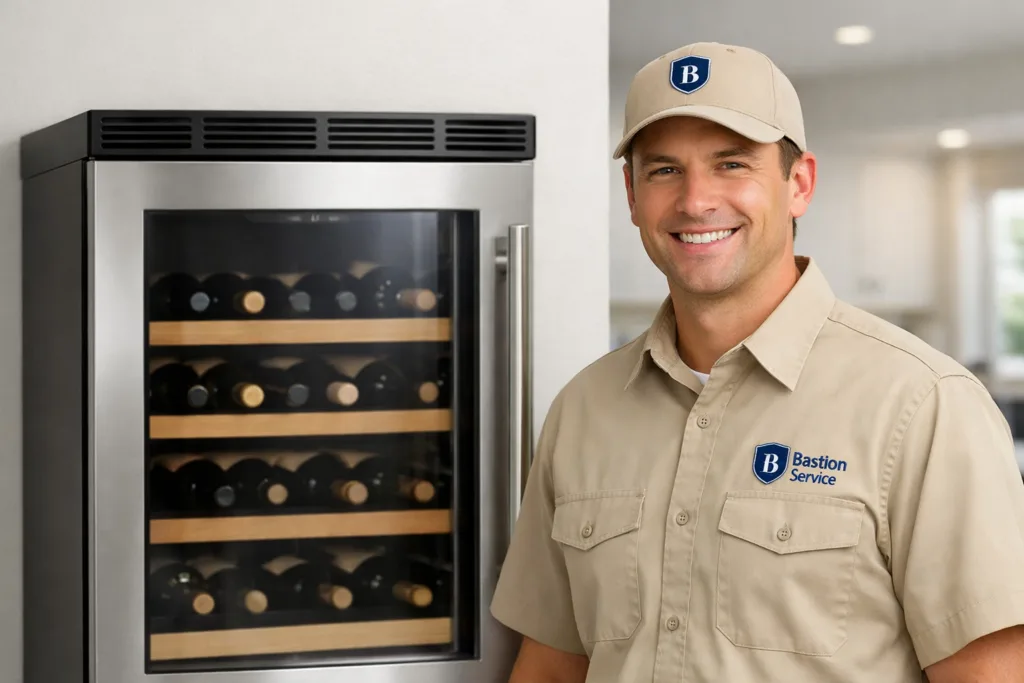
Temperature drift in a wine cooler is easy to miss until bottles feel noticeably warmer, labels start to dampen, or the unit seems to run all day without settling. With EdgeStar models, the same outward symptom can come from very different issues, so it helps to look at how the cooler is behaving rather than assuming one part is to blame.
Common EdgeStar wine cooler problems homeowners notice
Wine coolers are built for steady, controlled storage. When that stability changes, the warning signs are often subtle at first. A unit may still power on, light up, and respond at the display while cooling performance slowly declines.
Running warm or not cooling enough
If the cabinet no longer reaches the selected temperature, possible causes include restricted airflow, a dirty condenser area, a weak fan motor, a sensor reading incorrectly, a door that is not sealing well, or a compressor-related fault. In some homes, the problem appears as a gradual loss of cooling rather than a total failure, which can make it seem less urgent than it is.
Warm storage is especially important to address early because the cooler may keep running harder in an attempt to recover, adding wear without actually protecting the contents.
Freezing bottles or creating uneven temperatures
An EdgeStar wine cooler that becomes too cold can have a thermostat or thermistor issue, a control board problem, or an airflow imbalance inside the cabinet. Some homeowners notice one shelf feels much colder than another, or that a dual-zone model keeps one section stable while the other drifts. Those patterns matter because they often point to a more specific failure path.
Condensation, moisture, or leaking water
Water around the base, droplets on the glass, or damp shelves can indicate clogged drainage, excess humidity inside the cabinet, a worn door gasket, or cooling problems that are causing the unit to cycle abnormally. Moisture problems are worth addressing quickly, since they can lead to odors, interior staining, or damage to nearby flooring and cabinetry.
Buzzing, rattling, clicking, or fan noise
Wine coolers are not silent, but a new sound usually means something has changed. Rattling can come from loose panels or vibration, while clicking may indicate a start problem, relay issue, or compressor struggling to engage. A scraping or whirring sound can point to a fan blade, fan motor, or ice buildup interfering with airflow.
Constant running or short cycling
If the cooler seems to run nearly nonstop, the issue may be poor heat exchange, a sealing problem at the door, an inaccurate sensor, or a cooling system that is no longer operating efficiently. Short cycling, where the unit turns on and off too quickly, can suggest control or electrical faults and should not be ignored.
What symptom patterns can reveal
The most useful clues usually come from the pattern, not just the complaint. For example, a cooler that runs warm only during part of the day may be dealing with airflow, placement, or heat-load stress. A unit that cools well at first and then drifts upward may be showing fan, frost, or control problems. A display that appears normal while cabinet temperature is not can indicate that the control system is receiving inaccurate information.
This is why diagnosis matters before parts are replaced. A warm cabinet does not always mean a failed compressor, and condensation does not always mean the door was left ajar. Matching the symptom pattern to the likely cause helps avoid unnecessary repairs and gives homeowners a better idea of whether service makes sense.
When to stop using the cooler and schedule service
It is usually time to schedule service if the unit:
- Will not hold the selected temperature
- Starts freezing bottles or forming frost unexpectedly
- Leaks water or develops heavy condensation
- Makes new clicking, buzzing, or fan-related noises
- Runs constantly or shuts off too quickly
- Shows different performance between zones
- Trips power or struggles to restart
If the cabinet is steadily warming or the compressor seems hot and unable to start properly, continued operation can create more stress on major components. In those cases, unplugging the unit and arranging an inspection is often safer than letting it run unchecked.
Conditions in the home that can affect performance
Not every cooling complaint starts with a failed part. Placement and usage can matter, especially with built-in or undercounter wine coolers. Limited ventilation space, nearby heat sources, frequent door opening, or a recent move can all affect how the unit performs. A cooler that was operating normally before a layout change or installation adjustment may need more than a simple part replacement.
In Santa Monica homes, homeowners often notice issues after the cooler has been pushed tightly into cabinetry, loaded heavily, or left with a door seal that no longer closes evenly. Those details are useful because they help separate installation-related strain from internal component failure.
Repair or replacement: how the decision is usually made
Many EdgeStar wine cooler problems are repairable when the issue is limited to fans, controls, sensors, gaskets, drainage components, or accessible electrical parts. Replacement becomes more likely when the unit has major sealed system trouble, repeated cooling failures, or overall wear that makes additional repairs hard to justify.
The real question is not only whether the cooler can be made to run again, but whether it can return to stable, reliable storage without recurring issues. For homeowners in Santa Monica, that decision usually comes down to the age of the unit, the specific failure involved, and the expected value of the repair compared with replacement.
What to note before service
A few observations can make troubleshooting more efficient. It helps to note whether the problem affects both zones or only one, whether the display matches the actual cabinet temperature, whether new noises happen at startup or continuously, and whether moisture appears inside, underneath, or around the door. If the issue started after cleaning, moving, or changing the setup around the cooler, that is worth mentioning too.
Those details often narrow the problem faster and help determine whether the repair path is straightforward or whether the cooler is showing signs of a larger cooling-system issue.