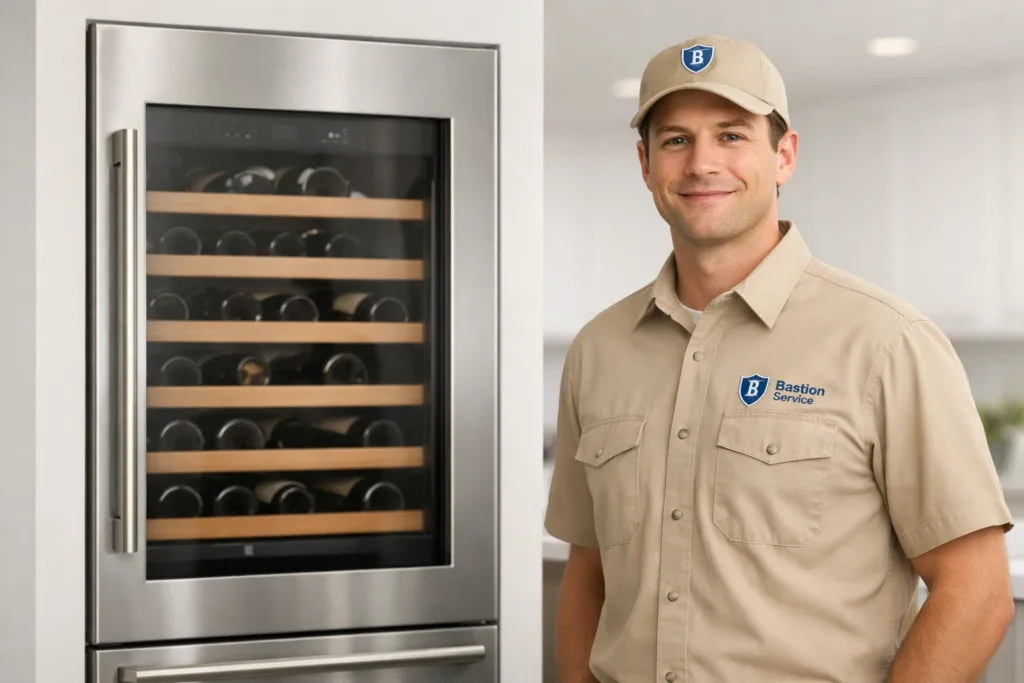
A Monogram wine cooler that starts running warm, cycling strangely, or collecting moisture can put both wine storage and appliance reliability at risk. The most useful next step is to match the symptom pattern to the likely system involved, because the same “not cooling” complaint can come from airflow problems, a sealing issue, fan failure, controls, sensors, or a more serious refrigeration fault.
What homeowners usually notice first
Most wine cooler problems do not begin with a complete shutdown. More often, the first sign is a change in performance. The cabinet may feel slightly warmer than usual, the display may not seem to match actual temperature, or the unit may run much longer than it used to. In some homes, the first clue is moisture on the glass, a small puddle near the base, or a new hum, rattle, or fan noise during operation.
These early changes matter because they often point to the stage of the failure. A cooler that is still running but no longer holding a stable temperature may have a repairable issue before major component strain sets in. Catching that shift early can help protect stored bottles from repeated temperature swings.
Common Monogram wine cooler symptoms and what they can mean
Cabinet is not cooling properly
If the interior stays above the set temperature, the problem may involve restricted airflow, condenser dirt buildup, a weak fan, an inaccurate sensor, an electronic control issue, or a sealed-system problem. The right repair depends on whether the unit is cooling somewhat, not cooling at all, or losing temperature only during parts of the day.
- Slightly warm but still cooling: often points to airflow, maintenance-related restriction, or sensor/control trouble.
- Warm throughout the cabinet: can suggest a fan problem, compressor-related issue, or loss of cooling performance.
- Cooling returns briefly, then fades: may indicate intermittent controls, sensor faults, or a system struggling to maintain normal operation.
Uneven temperature from shelf to shelf
When one area feels colder than another, air circulation becomes a main suspect. Blocked vents, overpacked shelving, internal frost, or fan performance issues can all reduce even cooling. In a wine cooler, this matters because stable storage depends on consistent air movement throughout the cabinet rather than just one cold zone.
Condensation on the glass or around the door
Visible moisture often suggests warm air is entering the cabinet or the interior conditions are not being controlled properly. A worn gasket, door alignment issue, repeated short-cycling, or unstable cabinet temperature can all contribute. In Santa Monica homes, condensation may become more noticeable when a sealing problem combines with frequent door opening.
Water inside or around the unit
Water can collect for more than one reason, and the location helps narrow it down. Moisture on shelves or walls may point to condensation or drainage trouble inside the cabinet. Water near the front or underneath may suggest a different leak path, leveling issue, or repeated sweating caused by warm air infiltration. A recurring puddle is worth addressing before it affects surrounding cabinetry or flooring.
Frost buildup inside the cooler
Frost usually means moisture is entering where it should not, or that the unit is running in a way that allows ice to form on interior surfaces or cooling components. Door sealing issues, sensor problems, airflow restrictions, or prolonged run time can all be part of the pattern. Frost is especially important to address because it can interfere with circulation and make temperature control less accurate over time.
Buzzing, rattling, clicking, or fan noise
Not every sound is a failure, but a change in sound often means a component is under stress or something is out of position. A rattle may come from vibration or a loose part. A scraping or fan-like noise may point to obstruction or fan wear. Repeated clicking, especially when cooling performance also drops, can indicate an electrical or control-related problem rather than normal cycling.
Why symptom overlap makes diagnosis important
Wine cooler problems can look similar from the outside while coming from very different causes inside the appliance. For example, a unit that feels warm might have a weak evaporator fan, a bad sensor reading, a door not sealing correctly, or a sealed-system issue. Likewise, condensation may be caused by a gasket problem, temperature instability, or repeated warm-air entry from door alignment trouble.
That overlap is why replacing parts based on guesswork often leads to extra cost without solving the actual problem. A focused service visit should identify which system is failing and whether the repair is likely to restore stable operation.
Signs the issue is getting worse
Some changes suggest the cooler should not be left to “see if it fixes itself.” Watch for these patterns:
- The cabinet temperature keeps drifting upward.
- The unit runs almost constantly or restarts too often.
- Moisture or frost returns soon after being wiped away.
- The display behaves irregularly or does not match the interior feel.
- Noises become louder, more frequent, or happen with poorer cooling.
When those symptoms continue, normal operation can place more strain on fans, controls, and refrigeration components. It can also expose wine to repeated warming and cooling cycles that defeat the purpose of controlled storage.
When homeowners can do a quick check first
Before scheduling repair, a few simple observations can help clarify the problem without taking the unit apart:
- Make sure the door is closing fully and not being blocked by bottle placement.
- Look for visible gasket gaps, tears, or moisture around the seal.
- Check whether vents inside the cabinet are blocked by shelving or stored items.
- Notice whether the unit is warm everywhere or only in one section.
- Pay attention to whether the noise happens constantly or only during certain cycles.
These checks do not replace service, but they can help describe the issue more clearly and may reveal whether the symptom points toward airflow, sealing, drainage, or a deeper cooling problem.
When service is the better next step
Service is usually the right move when the cooler no longer maintains its set temperature, when water keeps returning, when frost begins to build, or when the unit sounds noticeably different from normal. It also makes sense to schedule help if the interior light and display seem functional but the cabinet is not cooling correctly, or if the appliance alternates between overcooling and warming.
For premium refrigeration, accurate diagnosis matters because the repair decision is not only about whether the unit turns on. It is about whether it can return to stable, controlled storage conditions without repeated breakdowns.
Repair versus replacement considerations
Many Monogram wine cooler problems are still practical to repair, especially when the issue involves fans, sensors, controls, drainage, electrical components, or door sealing. Replacement becomes a stronger consideration when the appliance has multiple age-related failures, when cooling-system repairs are extensive, or when reliability has dropped after repeated service history.
The better choice depends on the fault itself, the condition of the cabinet, and whether the repair is likely to restore consistent temperature control. In a Santa Monica home, built-in fit and finish may also matter when weighing the value of repair against replacement.
What a thorough service visit should accomplish
A productive visit should do more than confirm that the wine cooler feels warm. It should evaluate how the unit is cooling, how air is moving through the cabinet, whether the door is sealing correctly, whether moisture is forming from condensation or drainage problems, and whether the controls and sensors are responding as they should.
From there, homeowners should be able to understand the likely cause, the recommended repair path, and whether the appliance is a good candidate for continued service life. That kind of practical repair guidance helps reduce guesswork and makes it easier to decide what to do next.