
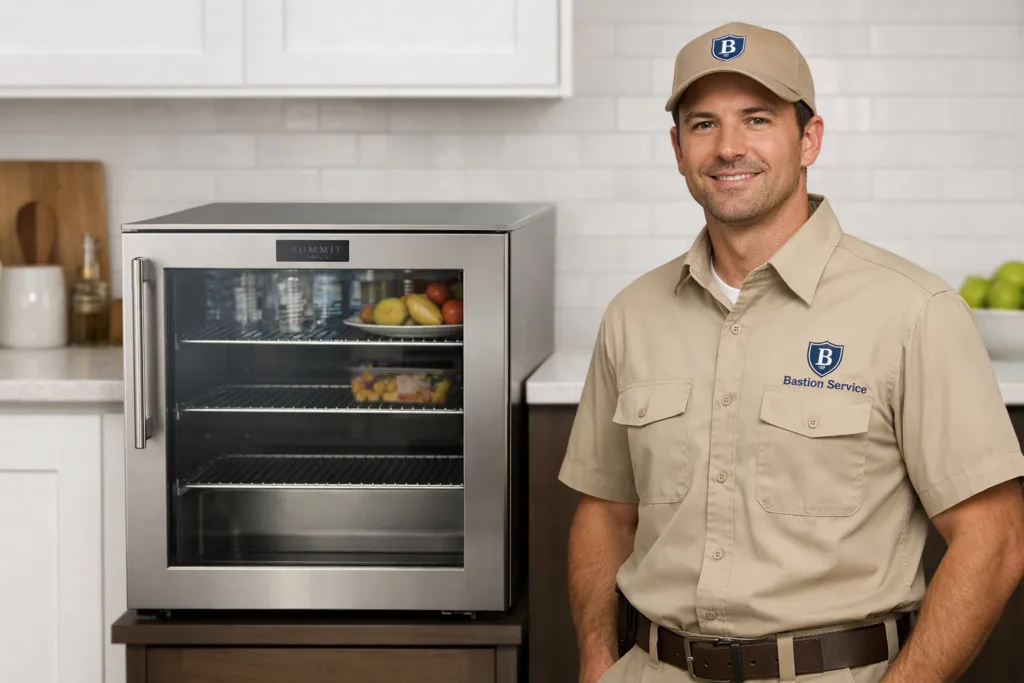




How to read Summit appliance symptoms before a small issue grows
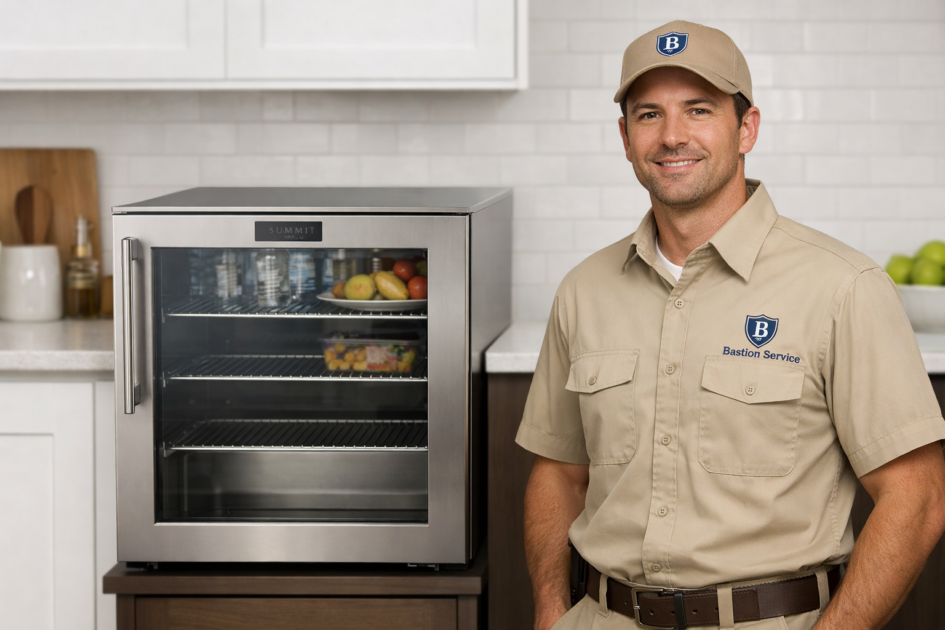
Many household appliance problems begin with a symptom that seems obvious but is actually misleading. A refrigerator that feels warm may have an airflow or sensor issue rather than a major cooling failure. A dishwasher that leaves water in the tub may be dealing with a drain restriction, pump problem, or control interruption. An oven that cooks unevenly may not be “getting old” so much as losing temperature accuracy.
For homeowners in Santa Monica, the most useful approach is to look at the full symptom pattern: what changed, when it started, whether performance is inconsistent or completely lost, and whether the problem affects safety, food storage, or water containment. That makes it easier to judge urgency and decide whether repair is likely to be worthwhile.
Refrigerators and freezers: the early signs matter
Summit refrigerators and freezers often show trouble gradually. You may notice milk spoiling sooner, frozen food softening around the edges, frost collecting where it did not before, or the compressor running longer than usual. Those clues often point to a problem with airflow, defrost operation, door sealing, fan performance, temperature sensing, or heat exchange at the condenser.
Not every cooling complaint means the sealed system has failed. In many cases, a unit that still cools somewhat but struggles to recover temperature after the door is opened is dealing with a circulation or control-related issue. That distinction matters because the repair path can be very different from a major refrigeration-system problem.
Symptoms that deserve faster attention
- Food temperatures that no longer stay consistently safe
- Heavy frost buildup inside the freezer
- Water appearing under the refrigerator
- Loud fan noise, clicking, or repeated start attempts
- A unit that runs constantly with little cooling improvement
If a refrigerator or freezer is still operating but cannot hold temperature reliably, continued use can lead to food loss and extra strain on critical components.
Ice maker and water issues are often broader than they look
When a Summit ice maker stops producing ice, makes hollow cubes, leaks, or slows down noticeably, the issue is not always the ice maker assembly itself. Water supply conditions, inlet valve behavior, freezing temperature, fill timing, and drain-related issues can all create similar symptoms.
Homeowners sometimes assume a puddle near the appliance means a supply line leak, but defrost drainage problems and door sealing issues can create water where it is not expected. If water appears more than once, it is best not to dismiss it as a one-time spill. Repeated moisture can damage flooring, encourage ice buildup, and conceal a problem that is getting worse.
Dishwasher problems usually show up in cleaning, draining, or leaking
A Summit dishwasher rarely fails all at once. More often, there is a progression: dishes come out cloudy, the lower rack seems dirtier than usual, the cycle sounds different, or a small amount of water remains after completion. Those signs can point to poor wash pressure, filter blockage, partial drainage, heating issues, latch problems, or pump wear.
Smells are another useful clue. Persistent odor after cycles often means water is not clearing properly or food debris is staying in the wash system. If the dishwasher stops mid-cycle or becomes unresponsive, the cause may involve the door switch, control system, or a component the machine is monitoring for normal operation.
Signs the problem should not wait
- Standing water that remains after multiple cycles
- Leakage at the door or underneath the machine
- Burning smells, buzzing without washing, or repeated shutoffs
- Dishes that stay dirty even with normal loading and detergent use
Leaks and drainage issues are especially important to address quickly because they can affect cabinetry and flooring long before the source is obvious.
Cooktops, ovens, wall ovens, and ranges often fail through performance changes first
Cooking appliances tend to announce problems through results. Burners may click repeatedly, heat unevenly, or fail to ignite on the first try. Ovens may preheat slowly, overshoot the set temperature, or bake one side of a tray faster than the other. A range that seems usable but no longer responds predictably can have a sensor, igniter, element, switch, relay, or control fault.
Gas and electric models show different patterns, but the same rule applies: inconsistency matters. A burner that lights only after multiple attempts or an oven that swings far above or below the selected temperature should not be treated as normal wear. Cooking performance problems often affect both daily use and safety.
Common cooking-appliance symptom patterns
- Repeated clicking: often tied to ignition, moisture, switch, or spark issues
- Weak or uneven flame: may involve burner blockage, ignition components, or gas-flow problems
- Slow preheating: can indicate element, igniter, sensor, or control trouble
- Temperature swings: often point to sensor or regulation problems rather than the display setting itself
- Unresponsive controls or error codes: may reflect board, wiring, or communication faults
If a gas appliance produces a persistent gas smell, stop using it. If the odor is strong or does not clear, leave the area if needed and contact the gas utility or emergency service before arranging appliance repair.
Wine coolers need stable operation, not just “some cooling”
Summit wine coolers can seem functional even when storage conditions are drifting. A unit that runs constantly, forms condensation, changes temperature unexpectedly, or becomes louder than usual may be losing the stable environment it was designed to maintain. Fan problems, sensor drift, airflow restrictions, seal wear, and control faults can all contribute.
Unlike a general refrigerator complaint where “cold enough” may seem acceptable for a short time, wine cooler performance depends on consistency. If bottles are no longer being stored at the expected temperature, the problem is worth evaluating before fluctuation becomes the new normal.
What certain noises and behaviors can tell you
Across Summit appliances, a few symptom groups show up repeatedly:
- Clicking, buzzing, or humming: may suggest a start failure, fan issue, motor problem, pump strain, or ignition-related fault depending on the appliance
- Pooling water: often relates to drains, hoses, seals, defrost water management, or inlet components
- Poor temperature control: can come from sensors, thermostats, airflow restrictions, fans, gaskets, or electronic controls
- Intermittent operation: often points to a component beginning to fail rather than a total breakdown
- Error displays or dead controls: may indicate communication, board, sensor, or power-path issues
Because these symptoms overlap across several possible causes, guessing based on one visible sign often leads to unnecessary parts replacement. A good diagnosis separates the symptom from the actual failing component.
When continued use can make repair harder
Some appliances keep working just well enough to encourage delay. That can be tempting, especially when the issue seems minor. But partial operation can still cause extra damage.
- A refrigerator running nonstop can put ongoing stress on the cooling system.
- A freezer with frost buildup can lose airflow and become less stable over time.
- A dishwasher with incomplete draining can strain the pump and create odor or leak risks.
- An oven with inaccurate heat can damage components if overheating becomes frequent.
- A cooktop with unreliable ignition can become less dependable with repeated attempts to light.
If the appliance is leaking, failing to store food safely, sparking, tripping power, or behaving unpredictably during ignition or heating, it is usually better to stop routine use until the fault is identified.
Repair or replacement depends on the fault, not just the appliance age
Homeowners often ask whether a Summit appliance is worth repairing. The better question is what has actually failed, whether the problem is isolated or systemic, and how the overall condition of the appliance compares to the cost of repair.
Many issues involve serviceable components such as fans, sensors, igniters, pumps, latches, elements, switches, or control-related parts. Replacement becomes a more serious consideration when there are multiple failures at once, major cooling-system concerns, repeated breakdowns, substantial rust or interior deterioration, or evidence that the unit has been unstable for a long time.
A newer appliance is not automatically the better repair candidate, and an older one is not automatically at the end of its life. In Santa Monica homes, the best decision usually comes from matching the symptom history to the confirmed fault and the appliance’s overall condition.
Household support across Summit kitchen and cooling appliances
Summit products used in homes can include refrigerators, freezers, ice makers, dishwashers, cooktops, ovens, wall ovens, ranges, and wine coolers. Each category has its own common weak points, but the most useful service process is similar across all of them: identify the symptom pattern, test the likely causes, and determine whether repair restores normal day-to-day use.
For Santa Monica homeowners, that means paying attention to changes in temperature, drainage, ignition, noise, cycle completion, and control response. Those details often tell the story long before a unit stops working completely.


