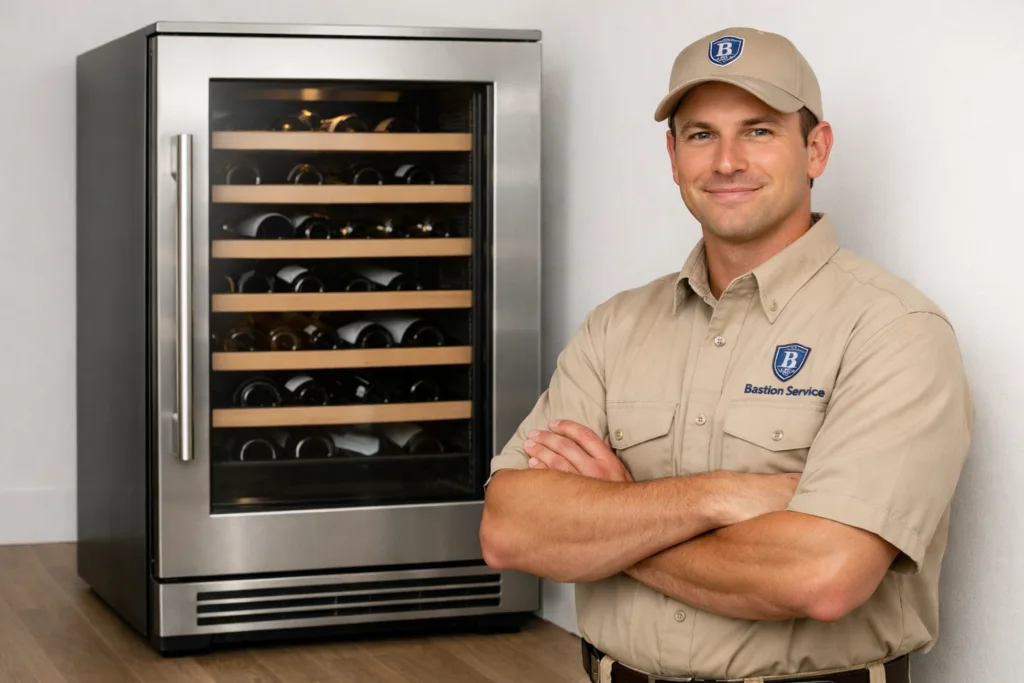
Temperature problems usually point to more than one possible cause

When a True wine cooler starts drifting out of range, the symptom alone does not identify the failed part. A cabinet that feels warm, cools unevenly, or takes too long to recover after the door opens may be dealing with blocked airflow, a faulty sensor, condenser buildup, fan trouble, a weak door seal, or a control issue. In some cases, the cooling system itself may be struggling.
That is why the first goal is to match the repair path to the actual behavior of the unit. A cooler that still runs but cannot hold a stable temperature needs a different approach than one that will not cool at all or one that overcools certain sections while leaving others too warm.
Common True wine cooler symptoms and what they can mean
Cabinet runs warm or stops cooling properly
If bottles are no longer staying at the expected serving or storage temperature, the problem may involve poor air movement, dirty condenser coils, a failed evaporator or condenser fan, a misreading temperature sensor, or an electronic control fault. Warm operation can also happen when the door gasket no longer seals tightly and humid room air keeps entering the cabinet.
In a built-in setup, restricted ventilation around the unit can make the cooler work harder than normal and still fail to pull temperatures down. Long run times paired with weak cooling often point to a system that is compensating for another underlying issue.
Temperature swings from too warm to too cold
Wine storage depends on consistency. If the interior cycles between acceptable cooling and overly cold spots, the unit may be getting inaccurate temperature feedback or having trouble regulating compressor and fan operation. Some homeowners first notice this when bottles near one shelf feel much colder than bottles in another section.
Erratic control behavior should be addressed early, because unstable storage conditions can be just as problematic as a complete loss of cooling.
Condensation on the glass or moisture inside
Fogging on the door, damp shelving, or water collecting inside the cabinet often signals warm air infiltration, drainage trouble, or a unit that is no longer controlling temperature and humidity correctly. A worn gasket is a common contributor, but it is not the only one.
Moisture matters because it can affect labels, shelving surfaces, and the overall condition of the interior. If the problem keeps returning after wiping it down, the cause should be checked rather than ignored.
Buzzing, rattling, clicking, or louder operation
Not every sound means a major failure, but a new noise usually means something has changed. Rattling may come from vibration against surrounding cabinetry. Buzzing can point to a fan or compressor-related issue. Repeated clicking may suggest a start problem or a control issue that is interrupting normal operation.
Noise becomes more significant when it appears alongside poor cooling, short cycling, or longer run times.
Runs all the time or cycles too frequently
A True wine cooler that rarely shuts off is often trying to overcome heat gain, poor airflow, dirty coils, or a problem with sensing or control. Short cycling, where the unit starts and stops too often, can indicate an electrical or compressor-start issue, or a control system that is not managing operation correctly.
Either pattern can increase wear while still failing to protect the contents the way the cooler should.
Why symptom-based diagnosis matters
Two wine coolers can show the same symptom for completely different reasons. For example, condensation may come from a bad seal, from a drainage problem, or from a cooling issue that leaves the cabinet struggling to regulate properly. A warm interior might be caused by airflow failure rather than a sealed system problem. Replacing parts too quickly can add cost without solving the real issue.
A more useful service approach is to look at operating pattern, interior temperature behavior, fan response, door closure, visible gasket condition, and how the system cycles under normal use. That helps narrow the failure to something specific instead of guessing from the symptom alone.
Signs the unit should be checked soon
- The displayed or felt temperature no longer matches normal performance.
- The cooler runs much longer than it used to.
- Condensation keeps returning on the glass or inside the cabinet.
- You hear new clicking, buzzing, or rattling sounds.
- The interior has warm and cold zones instead of even cooling.
- The controls behave erratically or stop responding normally.
- Water appears inside or beneath the unit.
Even if the cooler is still partially working, these signs often mean the problem is progressing. Early service can prevent added strain on other components.
When continued use may make the problem worse
It is wise to stop relying on the unit as normal storage when the cabinet is obviously warm, the compressor repeatedly tries and fails to start, the fan is not circulating air, or moisture buildup is becoming significant. In those conditions, the cooler may continue drawing power and adding wear without maintaining proper storage conditions.
If you need to preserve the contents while waiting for service, keeping the door closed as much as possible can help slow temperature loss, but it will not correct the underlying fault.
Repair or replacement depends on the kind of failure
Many True wine cooler problems are repairable when they involve a distinct component such as a fan motor, sensor, control, door gasket, or drain-related issue. Repair tends to make sense when the cabinet is otherwise in good shape and the failure is limited.
Replacement becomes a more serious consideration when there are multiple system problems, major cooling-system concerns, or overall wear that makes further investment hard to justify. Age alone is not the only factor. The better question is whether the unit can reasonably return to stable, trustworthy performance after the necessary repair.
What Santa Monica homeowners usually want to know
Most people are not looking for a broad explanation of refrigeration systems. They want to know whether the wine cooler can still protect the bottles inside, what symptom matters most, and whether the issue appears contained or more extensive. They also want to avoid spending money on the wrong part when the real cause is somewhere else.
For households in Santa Monica, the most helpful outcome is a repair recommendation tied to the actual symptom pattern and condition of the unit, so the next step is based on what the cooler is truly doing in the home rather than on assumption.