
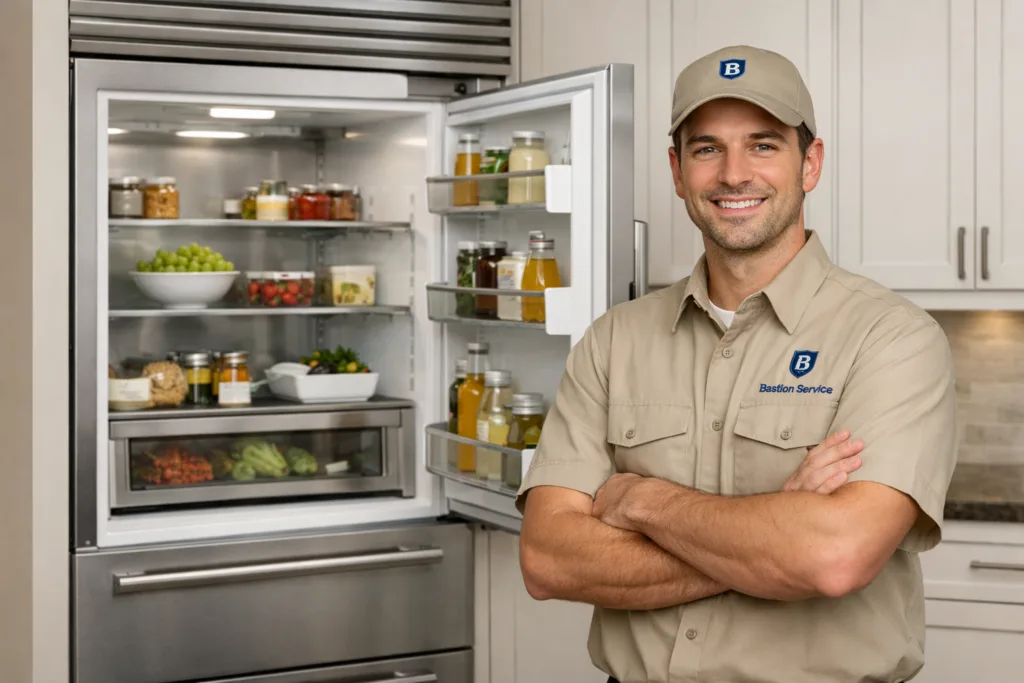




Temperature drift, new noises, frost where it should not be, or puddling under a built-in unit usually point to a specific system problem rather than a random glitch. With Sub-Zero appliances, the same “not cooling” complaint can come from airflow trouble, a failed fan, sensor error, defrost issues, gasket wear, or a sealed-system fault. Looking at the symptom pattern first helps narrow the repair path and reduces the chances of replacing parts that are not actually causing the problem.
For specific Sub-Zero appliance paths in Inglewood, review Sub-Zero Refrigerator Repair in Inglewood, Sub-Zero Freezer Repair in Inglewood, and Sub-Zero Wine Cooler Repair in Inglewood.
How Sub-Zero problems usually show up
Most household issues start with one of a few warning signs: food warming sooner than expected, frost building up in a freezer, a wine cooler missing its set temperature, or a unit that seems to run much longer than normal. In some homes, the first clue is more subtle, such as uneven temperatures from shelf to shelf, condensation around the door, or a change in the way the appliance sounds during normal operation.
Because Sub-Zero refrigeration relies on coordinated controls, fans, sensors, and cooling components, one failed part can affect overall performance in ways that are easy to misread. A warm refrigerator section does not always mean the appliance has stopped cooling completely. In some cases, the freezer is still cold while airflow into the fresh-food section is restricted. In others, heavy frost interferes with circulation and creates warm spots.
Refrigerator symptoms that deserve attention
Fresh food warming or inconsistent temperatures
If milk spoils early, produce wilts too fast, or items near the back freeze while other shelves feel warm, there may be a circulation or control issue. Common causes include evaporator fan problems, thermistor faults, blocked vents, defrost trouble, or door sealing problems that let warm air enter. These symptoms are especially important when they keep returning after settings are adjusted.
Water inside the refrigerator or under drawers
Interior moisture can point to drainage problems, defrost-related issues, or excess humidity entering through a worn gasket or a door that is not sealing tightly. Water under drawers is easy to dismiss at first, but recurring moisture often means the refrigerator is not managing condensation as it should.
Constant running or short cycling
A refrigerator that rarely seems to shut off may be struggling to maintain its target temperature. That can happen when airflow is restricted, coils or internal cooling components are under strain, or a sensor is sending incorrect information. On the other hand, rapid on-and-off cycling may suggest electrical or control-related trouble.
Freezer problems and what they can mean
Heavy frost or ice buildup
A light frost pattern can be normal in the right place, but thick ice on walls, around shelves, or near the door usually is not. Repeated frost buildup often points to a defrost failure, a damaged door gasket, poor door alignment, or warm air entering the compartment. Once frost starts interfering with airflow, freezer performance can drop quickly.
Soft food or partial thawing
If ice cream softens, frozen meals feel less solid, or food refreezes after thawing slightly, the freezer may be losing temperature intermittently. Possible causes include fan failure, airflow blockage, control issues, or a cooling system problem. Partial thawing is a good reason to stop assuming the issue will correct itself.
Unusual freezer noise
Buzzing, clicking, rattling, or a fan sound that has become louder can help identify where the problem is developing. Noise by itself does not always mean a major failure, but noise combined with frost, warming, or long run times usually means the appliance needs closer evaluation.
Wine cooler issues homeowners often notice first
Wine coolers tend to reveal trouble through gradual temperature changes rather than a complete shutdown. Bottles may feel warmer than expected, the display may not match actual cabinet conditions, or the unit may run more often than it used to. Since wine storage depends on stability, even small swings can matter.
Possible causes include faulty sensors, control board issues, weak cooling performance, airflow restrictions, or door-seal wear. If the cabinet struggles to hold a set temperature or seems to cycle in an irregular pattern, it is usually worth addressing before the problem affects long-term storage conditions.
Signs the problem may be getting worse
- Cooling performance declines over several days instead of failing all at once.
- Frost returns soon after being cleared.
- The unit feels warm around the frame or seems to run nearly nonstop.
- Interior temperatures vary widely from one area to another.
- Leaks, condensation, and noise appear together instead of as a single symptom.
When multiple warning signs show up at once, the issue is less likely to be a simple setting problem. That is often the point where continued use risks food spoilage or puts additional strain on key components.
What to check before scheduling a repair visit
Homeowners in Inglewood can make a service call more productive by noting a few details before the appointment. Check whether the issue affects only the refrigerator, only the freezer, or the wine cooler alone. Pay attention to whether the problem is constant or intermittent, and whether it began after a power interruption, a door left ajar, or a period of heavy use.
- Are the controls and interior lights responding normally?
- Are the doors closing fully without resistance?
- Is frost visible near vents, panels, or door edges?
- Is there standing water inside or on the floor nearby?
- Has the sound of the appliance changed recently?
These observations do not replace diagnosis, but they can help connect the symptom to the most likely repair path more quickly.
Repair or replacement depends on the actual fault
Many Sub-Zero problems are repairable, but the right decision depends on what failed and how the appliance has been performing overall. An isolated fan, sensor, gasket, or drainage issue is different from repeated breakdowns, major sealed-system concerns, or several aging components failing close together. The useful question is not simply whether the unit still turns on, but whether a repair is likely to restore stable performance in a sensible way.
For homeowners in Inglewood, that usually means weighing the scope of the repair, the condition of the appliance as a whole, and whether the current problem is part of a larger pattern. If cooling has been unreliable across multiple sections, or if the appliance has had recurring issues over time, replacement may deserve consideration. If the fault is limited and the rest of the unit is in good condition, repair is often the better next step.
When service makes sense sooner rather than later
It is smart to schedule service when food preservation is no longer reliable, frost keeps returning, temperatures will not stabilize, or the appliance is clearly overworking. The same applies when resetting controls changes nothing, when leaks keep appearing, or when a wine cooler can no longer hold its selected range.
Early attention can prevent a manageable problem from becoming a more expensive one. A freezer that ices up repeatedly can lose airflow and cooling efficiency. A refrigerator that runs nonstop can place extra strain on major components. A wine cooler that drifts warmer over time may no longer protect what it is storing as intended. In each case, the most useful next step is a clear diagnosis followed by repair guidance based on what the appliance is actually doing.


