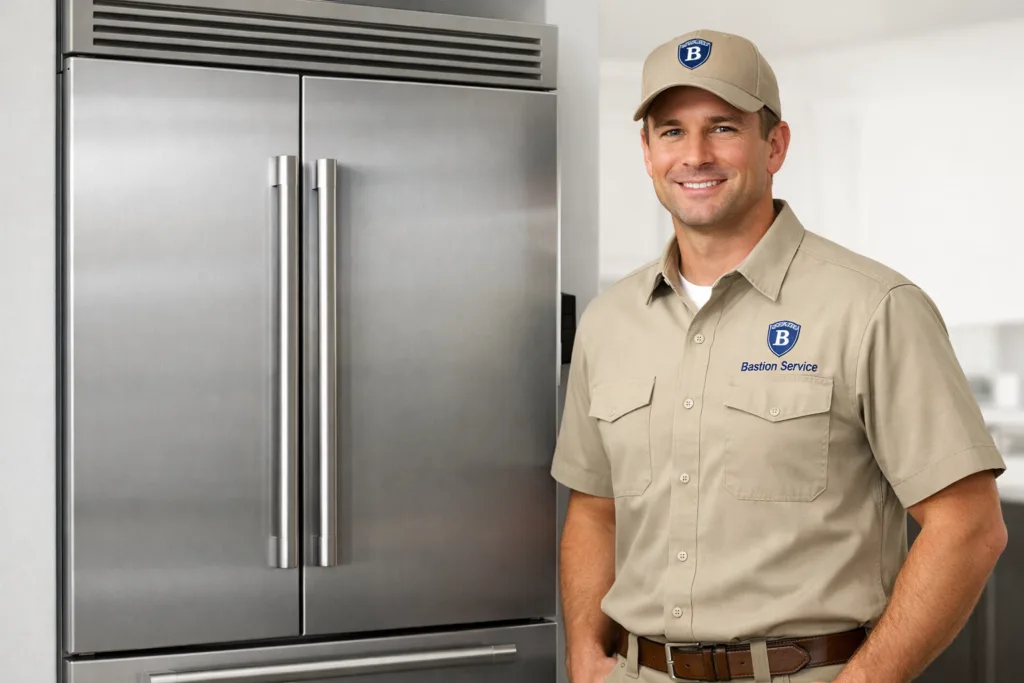
Sub-Zero refrigerators are built for precise temperature control, but small changes in airflow, sealing, drainage, or component performance can quickly affect how the unit behaves. When cooling drops, frost spreads, or the refrigerator seems to run without stopping, the most helpful approach is to match the repair plan to the exact symptom pattern instead of assuming every warm or noisy unit has the same failure.
Common Sub-Zero refrigerator problems homeowners notice
Refrigerator section not staying cold
If food in the fresh food section feels warmer than usual, spoils early, or temperatures seem inconsistent, the cause may be related to restricted airflow, an evaporator fan problem, frost buildup behind interior panels, sensor issues, or trouble with the control system. In some cases, the freezer may still seem relatively normal, which can make the problem easy to overlook until groceries start going bad.
Freezer seems fine but the refrigerator side is warm
This often points to an air circulation or defrost issue rather than a total loss of cooling. Cold air may not be moving properly from one section to the other, or ice may be interfering with vents and fan operation. On a Sub-Zero unit, this symptom needs attention early because continued use can lead to spoiled food while the appliance appears to be only partially affected.
Frost buildup on walls, drawers, or shelves
Frost can develop when warm air enters through a door that is not sealing correctly, when the defrost system is not doing its job, or when moisture is not draining away as intended. Homeowners may notice hard-to-open drawers, visible ice on interior surfaces, or reduced space around stored food. As frost spreads, airflow drops and cooling performance often gets worse.
Water leaking inside or onto the floor
Water under a refrigerator is commonly linked to a blocked drain path, frozen drainage, excess condensation, or melting ice that is not being directed away correctly. Even a slow leak matters because repeated moisture can affect flooring, nearby cabinetry, and the area around the appliance. Interior puddling can also be a sign that frost or airflow problems are already developing.
Constant running or unusual noise
A refrigerator that hums loudly, rattles, clicks more than usual, or seems to run nearly all day may be overworking to maintain temperature. That can happen because of fan wear, poor heat dissipation, frost restricting airflow, gasket problems, or a cooling issue deeper in the system. A change in sound is often one of the first warnings that the appliance is under strain.
What different symptom patterns can mean
Symptoms that look similar from the outside can come from very different causes. A warm refrigerator compartment, for example, might result from a weak fan motor, a sensor reading incorrectly, blocked vents, a defrost problem, dirty condenser areas, or a more serious sealed system issue. The difference matters because each path leads to a different repair approach, cost range, and outlook.
Frost and leaks can overlap as well. A drain blockage may produce water, but persistent frost can also create meltwater once temperatures shift. Likewise, a door that is not sealing tightly may cause both moisture buildup and nonstop running. Looking at the full pattern helps determine whether the problem is isolated or part of a broader performance decline.
Signs the refrigerator should not be ignored
Some issues can wait a short time for scheduling, but others should be treated as urgent because they can lead to food loss or added component stress. Service is worth arranging promptly if you notice any of the following:
- Food in the refrigerator compartment no longer feels consistently cold
- Frozen items softening or partially thawing
- Heavy frost returning soon after it is cleared
- Water reappearing under drawers or around the base of the unit
- The compressor or fans running much longer than normal
- Interior temperatures changing noticeably from morning to night
- Condensation forming around doors, bins, or gaskets
- Controls behaving irregularly or not responding as expected
These signs usually mean the refrigerator is compensating for a problem rather than operating normally. Waiting too long can turn a localized repair into a larger one.
Why continued use can make the problem worse
When a refrigerator is struggling to hold temperature, normal household use adds more load every time the doors open. Warm air enters, moisture accumulates, and the unit has to run longer to recover. If airflow is already blocked by frost or a fan is weakening, that extra demand can cause temperatures to drift further and can accelerate wear on working components.
Leaks also tend to spread with time. A small drainage issue may become standing water, and moisture can lead to odors, warped materials, or damage around the appliance. If the refrigerator is warm inside, frost is spreading rapidly, or food temperatures are no longer reliable, reducing use until the problem is checked is often the safer choice.
How Sub-Zero refrigerator repair decisions are usually made
Repair versus replacement is rarely based on a single symptom alone. The better factors are the age of the unit, the condition of the cabinet and doors, past repair history, how many systems are affected, and whether the failure appears isolated or part of an ongoing decline. Many Sub-Zero refrigerators are still worth repairing when the issue is limited and the rest of the appliance remains in good condition.
Replacement becomes a more realistic conversation when the refrigerator has repeated major problems, multiple failing systems, or an overall repair outlook that no longer makes sense for the household. A proper evaluation helps separate a repairable cooling or airflow problem from a situation where long-term reliability is already fading.
What homeowners in Inglewood should pay attention to before service
Before an appointment, it helps to note which section is warm, whether frost is visible, how long the unit has been running differently, and whether leaking happens all the time or only at certain points in the day. It is also useful to pay attention to whether the freezer is affected, whether doors are closing evenly, and whether unusual sounds come from the top, rear, or inside compartments.
These details can make diagnosis faster and more accurate. In Inglewood homes, where refrigerators are often opened frequently throughout the day, small temperature changes or recurring moisture can be easy to dismiss at first. Tracking the pattern gives a clearer picture of whether the issue is airflow-related, defrost-related, drainage-related, or tied to a deeper cooling problem.
Focused residential service for Sub-Zero refrigeration
Residential Sub-Zero refrigeration problems are best handled by looking at the appliance as a system rather than chasing a single symptom. Temperature behavior, frost patterns, fan operation, controls, seals, and drainage all affect one another. A symptom-based evaluation helps determine whether the issue is straightforward, whether continued use risks more damage, and whether repair is the right next step for the home.
If your Sub-Zero refrigerator in Inglewood is warming up, leaking, frosting over, or running constantly, taking action early usually gives you more repair options and a better chance of preventing food loss and added wear on the appliance.