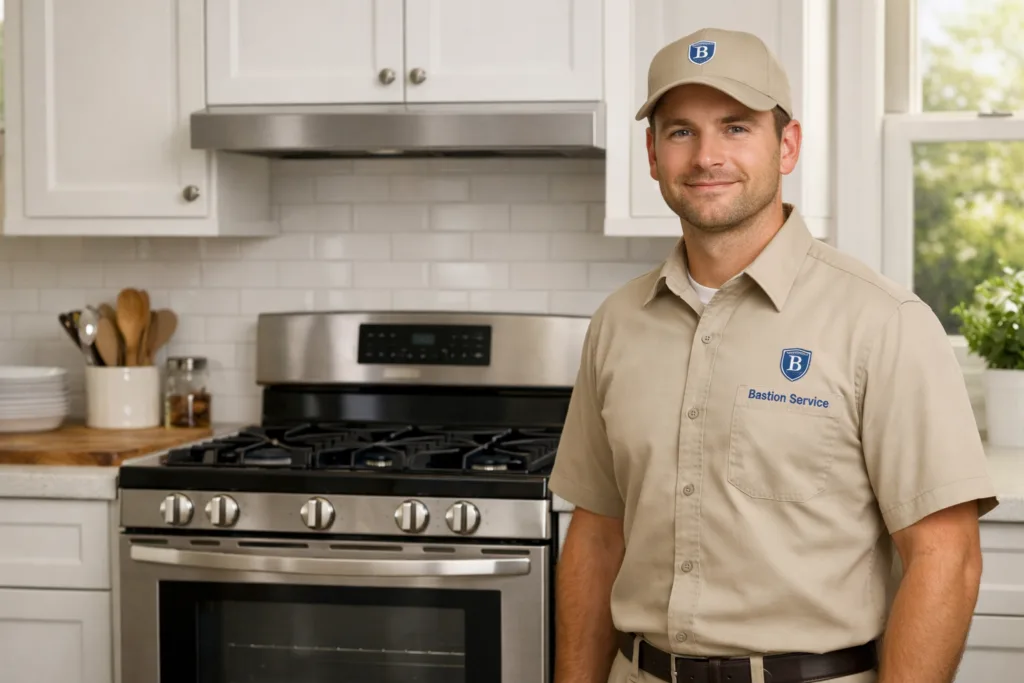
When a stove stops heating properly, clicks without igniting, or works only part of the time, it quickly turns everyday cooking into guesswork. For homeowners in Los Angeles, the most useful first step is not replacing parts at random but identifying whether the problem is tied to power supply, ignition, surface elements, switches, sensors, or wiring. Clear diagnosis helps avoid unnecessary expense and shows whether the stove is safe to keep using while a repair is planned.
Common stove problems homeowners notice first
Stove issues usually show up as a small set of repeat symptoms. A burner may not turn on at all, may heat unevenly, may stay too hot, or may take much longer than normal to reach cooking temperature. On gas models, you may hear repeated clicking, see delayed ignition, or notice one burner lights while another does not. On electric models, a surface element can appear to work intermittently or cycle incorrectly.
These symptoms can point to very different repair paths. A dead burner may come from a failed element, a bad switch, damaged wiring, or a connection problem. A burner that overheats can indicate a control issue rather than a heating issue. Repeated clicking on a gas stove may involve the igniter, moisture around the burner area, buildup affecting ignition, or a fault in the spark system. The symptom itself matters, but the pattern matters just as much.
What different symptom patterns can indicate
Burner does not heat
If one burner is not heating but the rest of the stove works, the fault is often isolated to that burner circuit. On an electric stove, the surface element, receptacle, or control switch may be involved. If multiple burners are affected, diagnosis may shift toward incoming power, terminal connections, or shared control components.
Burner heats unevenly or too slowly
Slow or inconsistent heating can come from a weakening element, poor electrical contact, or a control that is no longer cycling correctly. Homeowners sometimes first notice this as longer boil times, pans heating off-center, or recipes taking longer than expected. While the stove may still turn on, continued use can strain failing parts and make cooking results less predictable.
Burner stays too hot
A surface unit that will not lower its temperature should be taken seriously. This often points to a failed infinite switch or control problem, and it can create a safety concern if the burner does not respond normally to settings. If a burner keeps overheating, limiting use until the issue is diagnosed is the safer choice.
Gas burner clicks but does not light
Clicking without ignition can be caused by burner cap misalignment, clogged burner ports, moisture after cleaning, or ignition component issues. If the clicking continues after the burner area is dry and properly seated, the problem may need closer inspection. If you smell gas without proper ignition, stop using that burner and arrange service.
Intermittent operation
Intermittent stove problems are often the most frustrating because the appliance may seem fine one day and fail the next. This can happen with loose wiring, heat-sensitive components, worn switches, or ignition systems that are beginning to fail. Because these faults can worsen over time, documenting which burner fails, how often, and under what conditions can help narrow the repair path.
Why diagnosis matters before repair decisions
Stove repair in Los Angeles is most effective when the symptom is matched to the actual failed part instead of the most obvious guess. For example, replacing a burner element will not solve a bad switch, and cleaning a burner assembly will not correct an electrical fault in the ignition circuit. Good diagnosis prevents repeat visits, avoids buying unnecessary parts, and helps determine whether the appliance is worth repairing at all.
This is especially important when the stove has more than one issue. A homeowner may notice one burner not heating, another running too hot, and a control knob feeling loose. Those may be separate failures, or they may point to a broader wear pattern in an older appliance. Looking at the full condition of the stove gives a better basis for deciding on repair versus replacement.
When to schedule service instead of continuing to use it
Some stove problems are inconvenient but manageable for a short time, while others should not be ignored. Service should be scheduled promptly if a burner will not shut off correctly, sparks repeatedly without lighting, trips power, shows signs of melted wiring, produces inconsistent heat that affects safe cooking, or creates a gas odor. These symptoms can move beyond simple inconvenience and into safety or damage concerns.
Even when the stove still works partially, continued use may worsen the problem. A loose electrical connection can overheat. A failing switch can damage other components. Repeated ignition problems can lead to more wear on the spark system. Addressing the issue earlier often keeps the repair smaller than waiting until additional parts are affected.
Repair or replace?
Whether a stove should be repaired or replaced usually depends on age, overall condition, part availability, and how many functions are failing at once. If the issue is limited to a burner element, switch, igniter, or another isolated component, repair is often reasonable. If the stove has repeated electrical faults, major control failure, heavy wear across multiple burners, or visible damage affecting safe operation, replacement may become the more practical option.
Homeowners in Los Angeles often make the best decision when they look at the full picture: how reliably the stove has been working, whether cooking performance has been declining over time, and whether the current fault is a one-part repair or part of a larger pattern. A clear assessment helps avoid sinking money into an appliance that is nearing the end of its useful life.
Kitchen cooking appliances often work side by side, and households sometimes notice separate performance issues across more than one unit at the same time. In those situations, Oven Repair may also be relevant when another cooking appliance needs its own evaluation.
Kitchen cooking appliances often work side by side, and households sometimes notice separate performance issues across more than one unit at the same time. In those situations, Wall Oven Repair may also be relevant when another cooking appliance needs its own evaluation.
Kitchen cooking appliances often work side by side, and households sometimes notice separate performance issues across more than one unit at the same time. In those situations, Range Repair may also be relevant when another cooking appliance needs its own evaluation.
Kitchen cooking appliances often work side by side, and households sometimes notice separate performance issues across more than one unit at the same time. In those situations, Cooktop Repair may also be relevant when another cooking appliance needs its own evaluation.
What to expect from stove repair in Los Angeles
A practical service visit typically starts with confirming the exact symptom, checking how the affected burner or control behaves under normal settings, and narrowing the issue to the relevant heating, ignition, or control components. For homeowners, it helps to note whether the problem affects one burner or several, whether it happens every time or only occasionally, and whether any sounds, smells, or overheating have been noticed.
For many households, the main goal is simple: restore dependable cooking without guessing at the cause. That means understanding whether the stove can still be used carefully in the meantime, whether the issue should be handled quickly to prevent added damage, and whether the repair is a sensible long-term choice. A focused diagnosis keeps the process practical and makes the next step clearer.