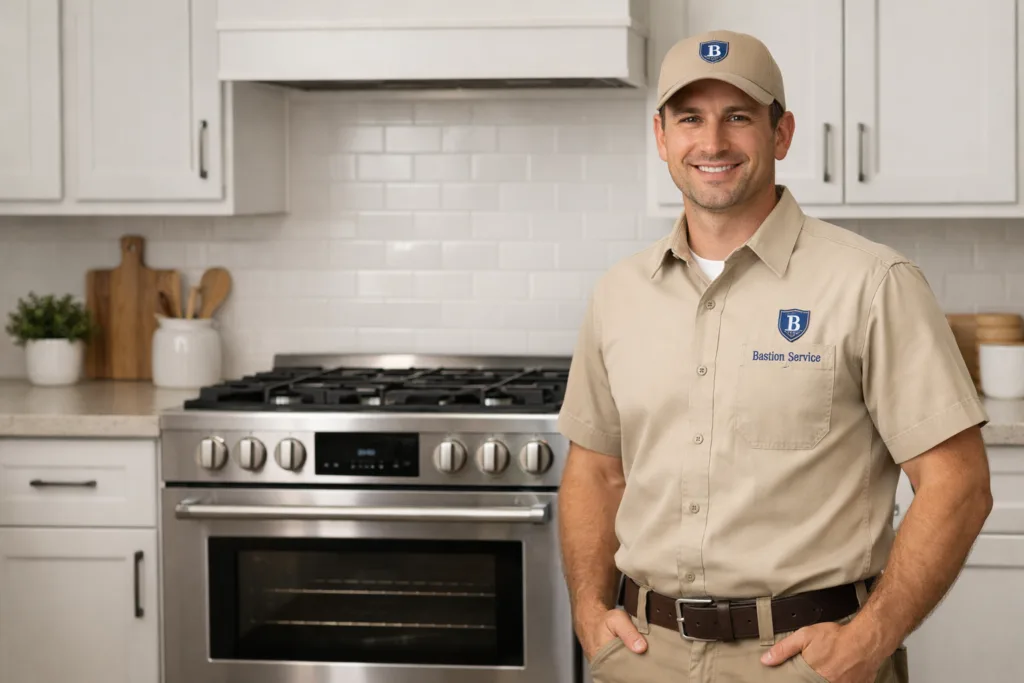
Oven problems tend to show up in ways that disrupt the whole kitchen routine: dinner takes twice as long, baked food comes out unevenly, or the appliance simply refuses to start. In Los Angeles homes, the most useful first step is identifying whether the issue involves heat production, temperature sensing, electrical supply, ignition, or the control system. Similar symptoms can come from very different failures, so an accurate diagnosis matters before any part is replaced.
Common oven problems homeowners notice first
Some failures are obvious, such as an oven that stays completely cold or a display that will not power on. Others are more subtle. You may notice that preheating is much slower than usual, cookies brown on one side but not the other, the oven shuts off mid-cycle, or the temperature inside does not match the setting on the panel. These early changes often point to parts that are weakening rather than fully failed.
Not heating or heating too slowly
If an electric oven does not heat, the cause may be a failed bake element, broil element, wiring problem, relay issue, or power supply fault. On gas models, a worn igniter is one of the most common reasons the oven will not light or takes too long to reach temperature. Slow preheat is easy to ignore at first, but it often signals a heating component that is no longer performing correctly. In kitchens where the problem involves only the surface burners and not the oven cavity, Cooktop Repair in Los Angeles may be more relevant.
Uneven baking and temperature swings
When one rack runs hot while another stays undercooked, the problem may involve a weak heating element, a failing sensor, poor heat circulation, or a door that is not sealing properly. Temperature swings can also come from calibration issues or a control board that is not regulating heat accurately. These symptoms usually become more noticeable with baking, roasting, and any recipe where steady temperature matters.
Ignition, controls, and shutdown issues
Gas ovens that click without lighting, controls that stop responding, or units that turn off during cooking may have faults in the igniter circuit, touchpad, electronic control, thermostat, or internal wiring. If the oven is part of a combined cooking appliance and burner issues are happening at the same time, Range Repair in Los Angeles may fit the situation better than a stand-alone oven service call.
Why accurate diagnosis matters
Oven symptoms overlap more than most homeowners expect. A unit that seems to have a bad temperature sensor may actually have a weak igniter. An oven that appears dead may have a power supply issue rather than a failed control. Replacing parts based only on symptoms can lead to wasted time and repeat problems, especially when more than one component has been affected.
A proper inspection usually includes confirming incoming power, checking whether heating components are drawing and producing heat correctly, testing sensors and thermostatic response, and evaluating the control system for errors or communication faults. That process helps determine whether the appliance needs a straightforward repair or whether the issue is part of a larger age-related decline.
Symptoms that should not be ignored
- Preheat takes much longer than normal
- The oven reaches temperature only intermittently
- Food burns on top while remaining undercooked inside
- The door does not close evenly or seal tightly
- The control panel flashes, beeps, or shows error codes
- The breaker trips during preheat or baking
- You notice burning smells, sparking, or gas odor
These issues can start as an inconvenience and develop into a safety concern or a more expensive repair. If the appliance is paired with burners and both the oven and top cooking area are acting up, Stove Repair in Los Angeles may be the better match for that combined symptom pattern.
Repair concerns by oven type
Electric ovens
Electric models often develop problems related to bake elements, broil elements, terminal connections, thermal fuses, sensors, or electronic controls. A partially failed element may still glow but not produce enough heat for normal cooking, which can make diagnosis less obvious without testing.
Gas ovens
Gas models commonly struggle with weak igniters, delayed ignition, safety valve issues, and flame regulation problems. A weak igniter may still glow, leading homeowners to assume it is working, even though it no longer draws enough current to open the gas valve properly.
Built-in wall ovens
Built-in units can present many of the same heat and control problems as standard ovens, but access, fit, and installation layout can change the repair process. If the appliance in question is a dedicated built-in unit rather than a freestanding model, Wall Oven Repair in Los Angeles may be the appropriate service path.
When to schedule service
It is smart to schedule service when the oven fails repeatedly, cooking results become unreliable, or the appliance shows signs of electrical or ignition trouble. Homeowners in Los Angeles often wait until a complete failure, but earlier service can help prevent secondary damage to controls, wiring, or surrounding components.
Prompt attention is especially important if you smell gas, see sparking, notice scorching near wiring, or find that the breaker trips when the oven runs. In those cases, stop using the appliance until it has been inspected.
Repair or replace?
Repair is often a sensible option when the problem is limited to a common service part and the rest of the oven is in solid condition. Replacement becomes more worth considering when the appliance has repeated electronic failures, multiple major faults, or wear that makes future breakdowns likely. The decision should be based on the oven’s overall condition, not just the first symptom that appeared.
For most households, the goal is straightforward: get back to consistent, safe cooking without unnecessary cost. A well-diagnosed oven repair visit should clarify what failed, whether more damage is likely if the issue is left alone, and whether restoring the appliance is the practical next step.