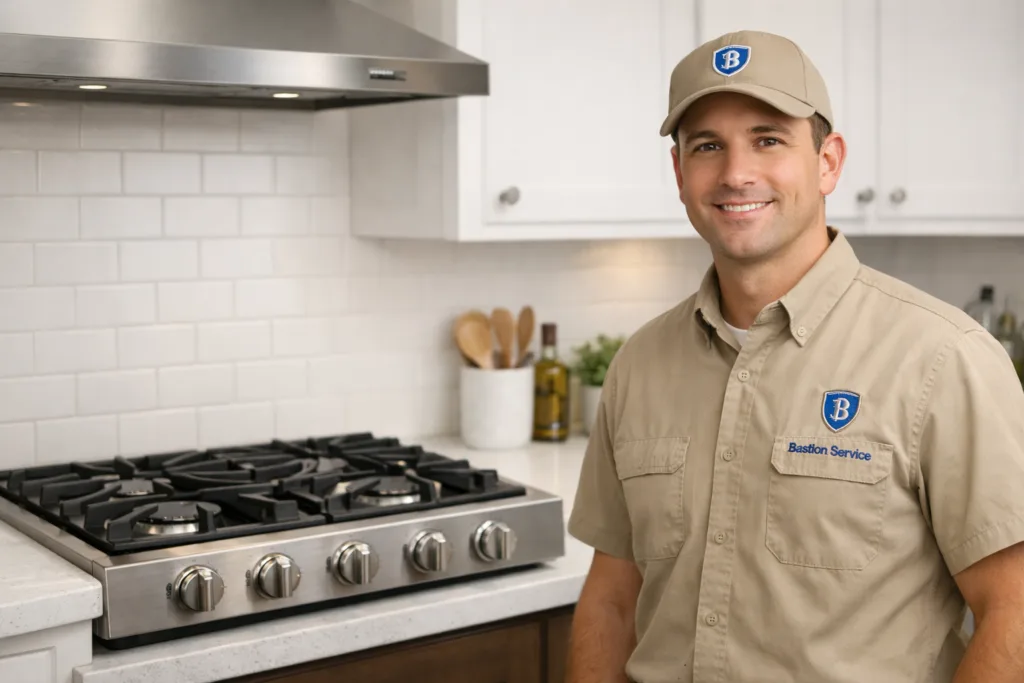
When a cooktop stops heating correctly, clicks nonstop, or trips the breaker in the middle of making dinner, the issue quickly becomes a household disruption. For cooktop repair in Los Angeles, the most useful starting point is a clear diagnosis, because similar symptoms can point to very different failures, and the right repair decision depends on what is actually causing the problem.
Common cooktop problems seen in Los Angeles homes
Cooktops usually fail in ways that show up as uneven heating, ignition trouble, electrical issues, or visible surface damage. Some problems are minor and isolated to one burner, while others suggest a control, wiring, or power supply fault that affects the whole unit. A careful diagnosis helps separate a replaceable component from a broader repair question.
Burners that will not heat or heat inconsistently
If an electric cooktop burner does not turn on, stays too low, or overheats no matter the setting, the problem may involve the heating element, switch, sensor, or control board. On radiant glass cooktops, a burner may appear to cycle strangely when a temperature limiter or control component is failing. If only one burner is affected, the repair may be fairly targeted. If multiple burners are acting up, the issue can be tied to the infinite switch system, wiring, or main control.
Gas burners that click, ignite slowly, or will not light
For gas cooktops, repeated clicking, delayed ignition, or burners that light unevenly often point to trouble with the spark ignition system, moisture around the igniter, clogged burner ports, or worn ignition components. Sometimes the burner will light but produce an uneven flame, which can mean the cap is misaligned, the ports are blocked, or gas flow is not reaching the burner correctly. If the clicking continues after the flame is lit, the switch or ignition circuit may need service.
Cooktops that trip power or shut off unexpectedly
A cooktop that trips a breaker, loses power during use, or behaves unpredictably should be checked promptly. Those symptoms can indicate wiring faults, failing elements, shorted components, or problems in the terminal connection area. Continued use in this condition can worsen electrical damage and may create a safety concern, especially if the problem becomes more frequent.
Cracked glass, damaged controls, or signs of overheating
Cracked glass surfaces, melted knobs, hot spots, or burning smells should not be ignored. A damaged glass top can become unsafe to use, and signs of overheating may point to a failing switch, sensor, or internal wiring issue. In these cases, diagnosis is not just about restoring performance but also about deciding whether the cooktop remains safe enough to repair.
What symptom patterns can indicate
The same complaint from a homeowner can have several causes, which is why symptom pattern matters. A burner that never heats is different from one that heats but cannot be controlled. A gas burner that clicks constantly is different from one that never sparks at all. Noting exactly when the problem happens helps narrow the repair path.
- One burner not working: often tied to a local component such as an element, igniter, burner switch, or burner head issue.
- Multiple burners acting up: may suggest a shared control, wiring, or power supply problem.
- Intermittent failure: can indicate heat-related electrical breakdown, loose connections, or moisture affecting ignition parts.
- Burning smell or breaker trips: should be treated as a higher-priority service issue.
- Weak or uneven flame: commonly points to burner blockage, cap alignment, or ignition-related problems.
When to stop using the cooktop
Some cooktop problems are inconvenient but limited. Others are signs that continued use may make repair more expensive or less safe. It is usually wise to stop using the cooktop and arrange service if you notice sparking where it should not occur, breaker trips, a gas smell, continuous clicking that does not stop, smoke, visible arcing, or a burner that cannot be controlled properly.
Even if the cooktop still works part of the time, ongoing use can damage switches, elements, ignition parts, or controls that might otherwise have been repairable at a lower level. A simple symptom can become a larger electrical or ignition failure if left unaddressed.
Repair versus replacement considerations
For many Los Angeles homeowners, the real question is not just whether the cooktop can be repaired, but whether it makes sense to repair it. That depends on the age of the unit, the condition of the surface and controls, the availability of parts, and whether the problem is isolated or system-wide.
Repair often makes sense when the fault is limited to a burner component, igniter, switch, or wiring issue and the rest of the cooktop is in solid condition. Replacement becomes more relevant when the glass is significantly damaged, multiple major components have failed, parts are no longer practical to source, or the unit has a long history of recurring issues.
Accurate diagnosis helps with that decision. Without identifying the failed component and checking the overall condition of the cooktop, it is easy to overestimate or underestimate the repair path.
What to expect from cooktop service
A useful service visit focuses on the exact complaint rather than guessing from the appliance type alone. That means confirming power or gas delivery, testing the affected burners and controls, checking ignition performance, inspecting visible wear, and narrowing the problem to the parts and conditions actually causing the failure.
For residential cooktop repair in Los Angeles, homeowners usually benefit most from practical guidance on three points: what failed, whether continued use is safe, and whether repair is likely to be worthwhile. That keeps the service process centered on the real household need instead of a vague recommendation.
Kitchen cooking appliances often work side by side, and households sometimes notice separate performance issues across more than one unit at the same time. In those situations, Oven Repair may also be relevant when another cooking appliance needs its own evaluation.
Kitchen cooking appliances often work side by side, and households sometimes notice separate performance issues across more than one unit at the same time. In those situations, Wall Oven Repair may also be relevant when another cooking appliance needs its own evaluation.
Kitchen cooking appliances often work side by side, and households sometimes notice separate performance issues across more than one unit at the same time. In those situations, Range Repair may also be relevant when another cooking appliance needs its own evaluation.
Kitchen cooking appliances often work side by side, and households sometimes notice separate performance issues across more than one unit at the same time. In those situations, Stove Repair may also be relevant when another cooking appliance needs its own evaluation.
Preparing for a diagnosis visit
If possible, note which burners are affected, whether the issue is constant or intermittent, and whether it started after cleaning, a power interruption, or visible overheating. For gas models, pay attention to whether the burner clicks, sparks, lights late, or produces an uneven flame. For electric models, note whether the burner stays cold, cycles strangely, or overheats at low settings. Small details like these can shorten the diagnosis and make the repair path clearer.
Cooktop problems rarely improve on their own. If the appliance is disrupting daily cooking, showing electrical or ignition symptoms, or becoming unreliable, a focused diagnosis is the best next step toward deciding on repair, safe use, or replacement.