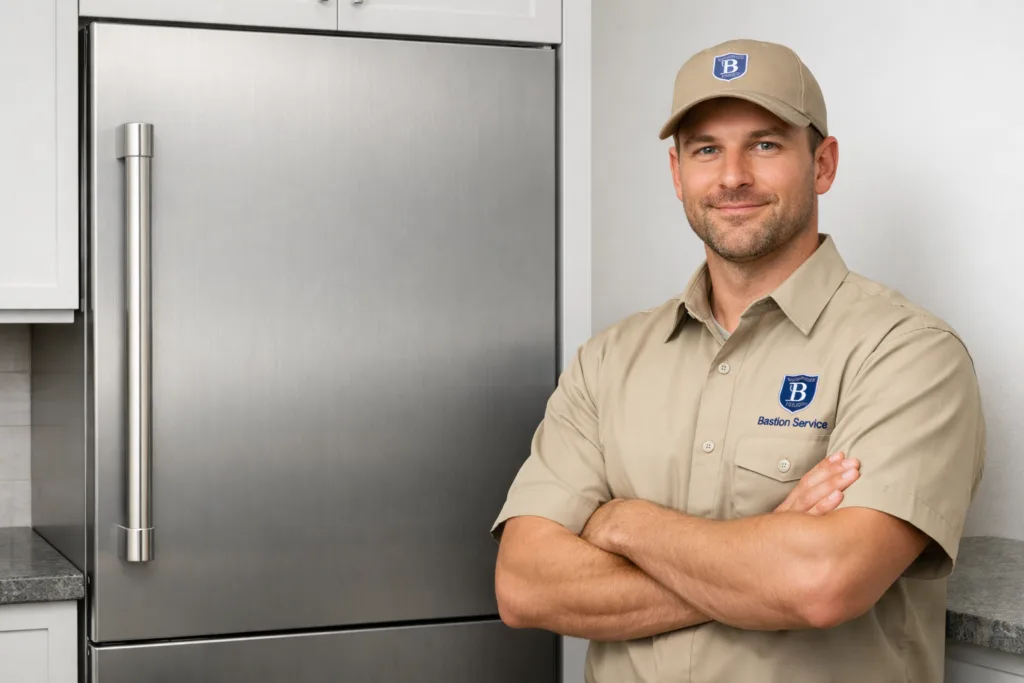
Freezer failures rarely look dramatic at first. More often, the first sign is subtle: ice cream softens, frost appears where it did not before, packages start sticking together, or the unit seems louder and busier than usual. With Monogram freezers, those symptoms can point to very different issues, so the most useful next step is to match the symptom pattern to the likely system involved.
Common Monogram freezer problems in Los Angeles homes
In day-to-day household use, freezer problems tend to show up in a few recognizable ways. The cabinet may be cold but not fully freezing, frost may collect around drawers or the back panel, water may appear under the unit, or the freezer may run for long stretches without recovering temperature. Built-in Monogram units can also show display, alarm, or sensor-related behavior that affects performance even when the problem is not obvious from the outside.
Food softening or temperatures rising
If food is no longer staying solid, the issue may involve airflow, evaporator fan operation, door sealing, defrost restriction, or a control problem that is causing the freezer to miss its target temperature. Sometimes the compressor is running, but cold air is not circulating through the compartment the way it should. In other cases, the freezer cools unevenly, so items near one section stay harder while food in another area starts to thaw.
When temperatures are drifting upward, timing matters. Even an intermittent cooling issue can turn into food loss if the problem worsens overnight or during a warm day in Los Angeles.
Frost buildup on walls, shelves, or packages
Heavy frost is one of the clearest signs that the freezer is not operating normally. Frost on the back interior panel may suggest a defrost system problem. Frost near the door opening can point to warm air entering through a worn gasket, a door that is not closing fully, or a drawer alignment issue. Frost on food packaging often means moisture is repeatedly entering the compartment and freezing in cycles.
Where the frost forms matters. A thin layer in one corner and a thick sheet across the rear panel usually lead to different repair paths, which is why symptom location is often as helpful as the symptom itself.
Water leaks or ice forming at the bottom
Water under the freezer or a layer of ice on the bottom floor of the compartment often traces back to a blocked defrost drain. During normal operation, moisture from defrosting should drain away cleanly. If that path freezes or clogs, water can refreeze in the cabinet or escape onto the floor.
What looks like a simple leak can also be connected to a larger defrost issue. If the drain is not the only problem, clearing water alone may not prevent it from returning.
Fan noise, clicking, buzzing, or constant running
Not every unusual sound means a major failure, but changes in sound often help narrow the diagnosis. A scraping or whirring noise may come from a fan contacting ice buildup. Repeated clicking can happen during start attempts. A freezer that seems to run all day may be struggling with airflow loss, dirty condenser conditions, seal problems, or reduced cooling efficiency.
If the noise appears together with warming, frost, or long run times, it is usually more than a minor nuisance. It becomes a clue that a cooling-related part of the system is under stress.
How symptom patterns help identify the likely cause
One reason Monogram freezer problems can be frustrating is that the same complaint can come from multiple sources. “Not freezing” might involve a fan motor, sensor, control board, defrost failure, door seal leak, or sealed system issue. That is why symptoms should be considered together rather than one at a time.
- Warming plus heavy rear-panel frost: often points toward defrost-related airflow restriction.
- Warming plus normal fan sound but poor overall recovery: may suggest a cooling system or control issue.
- Frost near the door and along drawer edges: more often associated with gasket leakage or door closure problems.
- Water on the floor plus sheet ice inside: commonly linked to a drain or defrost-water management problem.
- Loud fan noise after frost appears: can happen when ice buildup interferes with fan movement.
Reading the pattern correctly helps avoid replacing the wrong part and helps homeowners decide whether the freezer is likely facing a routine repair or something more involved.
Why exact diagnosis matters on Monogram freezer repair
High-end built-in refrigeration does not respond well to guesswork. A freezer can appear to have a simple cooling problem when the real issue is an airflow blockage caused by frost. A unit may seem to have a bad thermostat when the actual fault is a failing sensor or control communication problem. Swapping parts without confirming the source can add cost while leaving the original failure in place.
Careful diagnosis is also important for deciding urgency. Some issues mainly affect convenience, while others can lead to compressor strain, recurring icing, or spoiled food if the unit continues running in the same condition.
When it makes sense to schedule service
It is smart to schedule service when the freezer cannot hold a stable temperature, frost returns soon after being cleared, water appears around the appliance, or the unit begins making new sounds that do not match its normal operation. Alarms, erratic controls, or inconsistent freezing are also signs that the problem should be checked before it becomes more expensive or disruptive.
Households should pay especially close attention when:
- food is softening even though the freezer still feels cold
- the unit runs for unusually long periods
- frost keeps spreading instead of staying isolated
- the door does not seem to seal tightly every time
- water or ice keeps reappearing after cleanup
If groceries are already at risk, it is usually better to stop relying on the freezer until the cause is identified.
Repair or replacement: what usually drives the decision
For many Los Angeles homeowners, the repair-versus-replace question comes down to the type of failure more than the symptom alone. Problems involving fans, gaskets, drains, sensors, defrost parts, or certain controls are very different from major sealed system problems in both complexity and cost. The age of the unit, the condition of the cabinet and door assembly, and whether the freezer has had repeated cooling issues also matter.
Repair is often the better path when the freezer is otherwise in good condition and the fault is limited to a serviceable component. Replacement becomes more worth considering when the appliance has multiple failing systems, a long history of temperature trouble, or a major refrigeration-system problem on an older unit.
What to note before a service visit
A few observations from the household can make diagnosis faster and more accurate. Before service, it helps to note:
- whether the problem is constant or comes and goes
- where frost is visible and how fast it returns
- whether the freezer is still making normal fan and compressor sounds
- whether alarms or display issues appeared before the cooling problem
- whether the door has been hard to close or seems slightly misaligned
These details often help separate a door-seal issue from a defrost problem, or a circulation problem from a deeper cooling fault.
Residential Monogram freezer repair in Los Angeles
In a home setting, freezer problems are not just mechanical inconveniences. They affect food storage, daily routines, and confidence that the appliance will recover after being restocked. Bastion Service helps homeowners with Monogram freezer repair in Los Angeles by tracing the symptom to the likely failure, checking whether repair is sensible for the unit’s condition, and outlining the repair path based on what the freezer is actually doing.
If your freezer is warming, frosting over, leaking, or making unfamiliar noise, acting early usually gives you the best chance of limiting food loss and preventing a smaller issue from turning into a larger one.