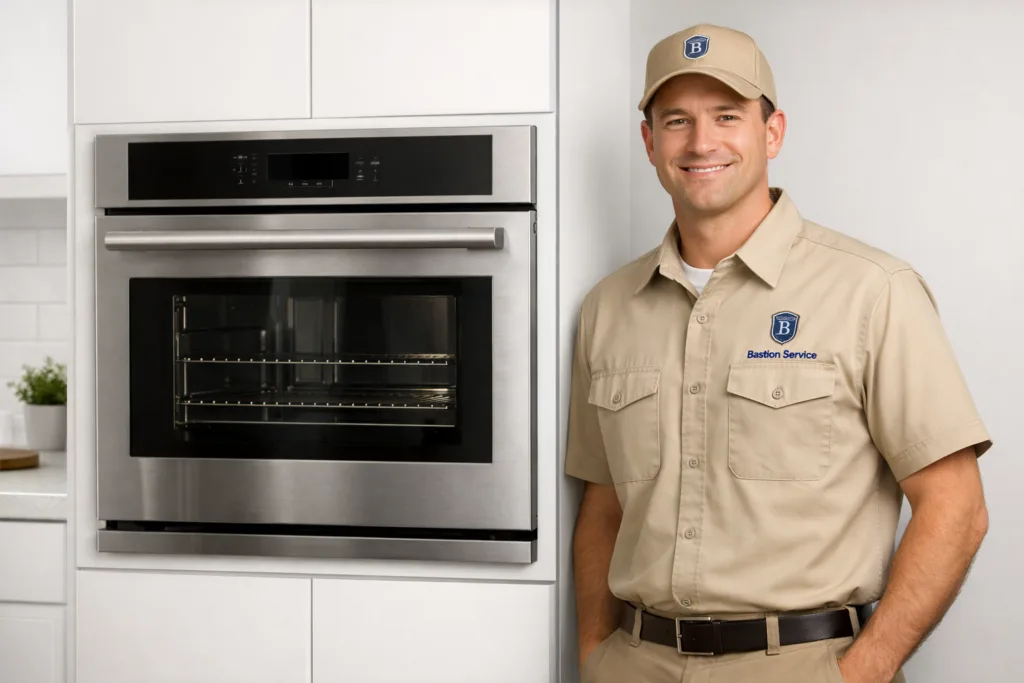
Cooking problems usually show up in the results first: cookies brown unevenly, casseroles need extra time, or the oven says it is preheated when food is still underdone. With JennAir ovens, those symptoms can point to different failures depending on whether the unit is electric or gas, built-in or slide-in, and using standard or convection cooking. Looking at how the oven heats, how long it takes to preheat, and whether the controls respond normally is the best way to narrow down the cause.
Common JennAir oven problems homeowners notice
Many Los Angeles households call for service after a pattern develops rather than after a total breakdown. The oven may still turn on, light up, and beep normally, yet cooking performance is clearly off. In other cases, one mode works while another does not, which often helps identify whether the problem is tied to a specific heating circuit, ignition component, or control function.
Oven not heating at all
If the oven stays cold, the failure may be obvious or intermittent. Electric JennAir ovens can stop heating because of a failed bake element, broil element, wiring issue, blown thermal protection component, or a control problem that prevents power from reaching the heating circuit. Gas models may have an igniter that glows but is too weak to open the gas valve fully, leading to little or no heat.
One important detail is whether the broiler still works. If broil operates but bake does not, that often points away from a complete power loss and toward a bake-specific component or relay issue.
Slow preheating
An oven that eventually reaches temperature but takes far too long often has a weak heating component rather than a total failure. On electric models, one element may be underperforming. On gas models, a weak igniter can delay ignition and reduce heat output during preheat. A drifting temperature sensor or control issue can also make the oven misread its own temperature and continue heating inefficiently.
Slow preheat is easy to tolerate for a while, but it often gets worse over time and can affect every meal, especially for households that cook frequently.
Uneven baking and temperature swings
When one rack browns faster than another or food comes out overcooked on the edges and raw in the center, the issue may involve more than simple calibration. Possible causes include a weak element, faulty sensor, convection fan problem, damaged door gasket, or a control board that is cycling heat incorrectly. If the oven temperature rises and falls more dramatically than normal, the problem may show up as inconsistent baking from one use to the next.
These issues are especially noticeable with baking, roasting, and longer cook times, where stable temperature matters most.
Broiler works but bake does not
This symptom is common and usually means the oven is not completely dead. Instead, the problem is often isolated to the bake system. Depending on the JennAir model, that may mean a failed bake element, an igniter issue, a bad relay on the control board, or damaged wiring in the bake circuit. Because another function still works, some homeowners delay service, but that can make diagnosis harder if the fault becomes intermittent.
Controls beeping, flashing, or showing error codes
If the display resets, the keypad stops responding, or the oven throws a fault code during use, the issue may involve the electronic control, sensor circuit, latch assembly, or communication failure between components. Fault codes matter, but so does the timing. A code that appears during preheat can suggest something different than one that appears during self-clean or after the oven has been running for an hour.
It helps to note the full code and what the oven was doing when it appeared, since that often shortens the diagnostic process.
Symptom-based clues that can point to the cause
Homeowners do not need to diagnose the oven themselves, but a few observations can make the repair path clearer.
- If the oven is completely dead but the clock is on, the issue may be isolated to the heating system rather than the entire appliance.
- If bake fails but broil works, the fault is often in the bake circuit.
- If a gas oven clicks or glows for a long time before heating, the igniter may be weakening.
- If temperatures are off by a small but consistent amount, calibration may be part of the issue.
- If performance changed after a self-clean cycle, heat stress on electronic parts is worth considering.
- If the oven trips a breaker, smells hot, or shuts down mid-cycle, continued use is not a good idea.
When to stop using the oven
Some oven problems are inconvenient. Others can lead to larger damage or create a safety concern. It is best to stop using the oven if you notice a burning electrical smell, visible sparking, breaker trips, overheating, repeated shutdowns, or a gas ignition problem that causes delayed lighting or inconsistent flame behavior.
If the appliance is merely running cool, taking too long to preheat, or baking unevenly, the situation may be less urgent, but it is still worth addressing before the problem spreads to other components. Continued use of an oven with a weak igniter, failing relay, or unstable temperature control can put additional strain on the system.
Repair vs. replacement for a JennAir oven
For many Los Angeles homeowners, repair makes sense when the issue is tied to a specific failed part and the rest of the oven is in good shape. That is often true for problems involving igniters, sensors, elements, door gaskets, or isolated control-related faults. Built-in JennAir ovens are also commonly worth repairing because replacement can involve cabinet fit, finish matching, and installation considerations beyond the appliance itself.
Replacement becomes more likely when the oven has multiple major issues at once, recurring electronic failures, or signs of long-term wear beyond the current symptom. Age matters, but the bigger question is whether the expected repair is likely to restore reliable daily use without turning into a cycle of repeated service calls.
What to have ready before service
A few details can make diagnosis faster and more accurate:
- The full model number, usually found on the frame or inside the door area
- Whether the issue affects bake, broil, convection, or all cooking modes
- Any error codes shown on the display
- Whether the problem started suddenly or got worse gradually
- Whether the issue appeared after a power outage or self-clean cycle
- How far off the cooking temperature seems, if known
Even rough observations are useful. For example, saying the oven takes twice as long to preheat or that the top browns while the center stays pale provides better direction than simply saying it is not working right.
JennAir oven repair in Los Angeles for everyday cooking problems
Most service calls are not about dramatic failure. They are about an oven that has become unreliable for normal household cooking. If dinner takes longer than it should, baking results are inconsistent, or the controls are acting unpredictably, the main goal is to identify the exact failed component and determine whether repair is still the practical choice. A diagnosis based on the actual symptom pattern usually leads to a better outcome than guessing at parts.
For homeowners in Los Angeles, that means focusing on how the JennAir oven behaves in real use, not just whether the display turns on. Reliable heating, accurate temperature control, and stable operation are what matter most when deciding the next step.