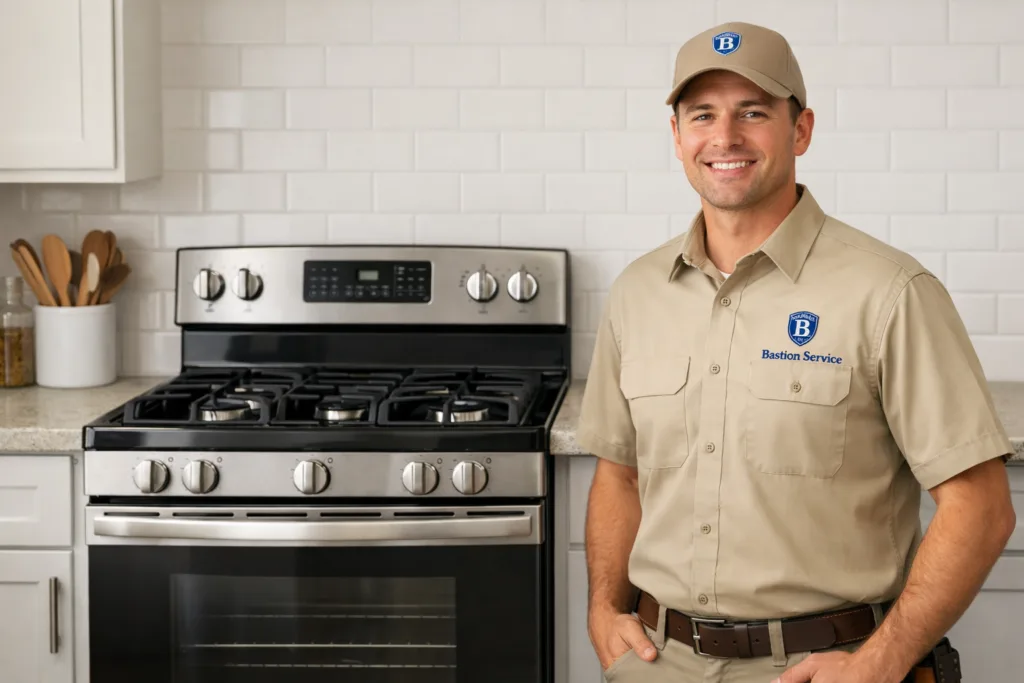
Small changes in performance are often the first sign that a GE range needs attention. A burner may start clicking longer than usual, the oven may take much more time to preheat, or baked dishes may come out uneven even when the recipe has not changed. Looking at the exact symptom pattern helps narrow down whether the problem is tied to ignition, heat production, sensing, controls, or a combination of issues.
Common GE range symptoms homeowners notice
Most range problems do not begin with a complete shutdown. They usually show up as intermittent behavior first, which is why the details matter. If one burner misfires only when damp, or the oven temperature is off by a small but consistent amount, those clues can point toward a different repair path than a range that fails all at once.
Burners that click but do not ignite
On gas models, repeated clicking without ignition can come from misaligned burner caps, clogged burner ports, moisture around the igniter, a worn spark switch, or an ignition component that is no longer firing consistently. If the burner lights only after several tries, the issue may still be developing even if it has not fully failed yet.
When clicking continues after the flame is already on, that usually suggests the ignition system is not sensing normal operation the way it should. Food spills and cleaning residue can also contribute, but if the problem returns after routine cleaning, the range likely needs service.
Weak flame or uneven heat on the cooktop
A weak flame, incomplete flame ring, or uneven heating across a burner can make everyday cooking frustrating. On gas units, blocked ports or internal gas-flow issues may be involved. On electric ranges, a surface element that cycles poorly or does not reach full heat can point to a failing element, switch, or control problem.
If one burner works normally while another struggles, that often suggests a localized part failure rather than a whole-unit power issue. If several burners behave unpredictably, the diagnosis may need to include broader control or supply-related causes.
Oven not heating properly
When the oven will not heat, heats very slowly, or stops short of the selected temperature, the cause may differ by model type. Gas ovens often raise concern around the igniter, while electric ovens may have a bake element or relay problem. Temperature sensor faults and electronic control issues can affect both gas and electric configurations.
Some households notice the problem as undercooked food, while others notice long preheat times or a display that says the oven is ready when it clearly is not. Those details help identify whether the issue is with heat generation, temperature sensing, or command control.
Uneven baking or roasting
If the top rack browns too fast while the lower rack lags behind, or if dishes need much longer than usual to finish, the range may not be distributing heat correctly. This can happen when a heating component is weak, the sensor is reading inaccurately, or the control system is not cycling heat as intended.
Uneven results are easy to dismiss at first, but repeated inconsistency usually means the oven is no longer operating within a normal temperature range. That is especially noticeable in homes that cook frequently and rely on predictable bake times.
Display, keypad, or control issues
Modern GE ranges often depend on electronic controls for oven functions, timers, and temperature settings. If the display flashes errors, the keypad stops responding, or settings change unexpectedly, the problem may involve the control board, touch interface, wiring, or power supply inside the unit.
These issues can be occasional at first. A clock reset, random beeping, or delayed response may seem minor, but intermittent control failures often become more disruptive over time.
How symptom-based diagnosis helps
The same complaint can have different causes depending on the model and how the range is failing. For example, “oven not heating” may sound straightforward, but the repair path changes depending on whether the oven is completely cold, partly heating, slow to preheat, or overheating. “Burner not lighting” can also mean very different things if the burner sparks normally, never sparks at all, or lights only after several attempts.
That is why symptom-based diagnosis matters before parts are replaced. It helps avoid unnecessary guesswork and makes it easier to decide whether the problem is isolated to one repairable component or part of a larger wear pattern affecting the appliance.
Signs the problem is getting worse
Some range issues can be lived with briefly, but they rarely improve on their own. Watch for patterns like these:
- Ignition that takes longer each week
- Burners that only work after being adjusted several times
- Oven temperature drifting further from the set point
- Preheat cycles becoming noticeably slower
- Fault codes that appear and clear repeatedly
- Controls that respond inconsistently to the same input
When a symptom is becoming more frequent or more severe, the repair may be simpler to address before additional components are affected.
When to stop using the range and schedule service
Service is a good idea when the range is no longer heating reliably, when burners are not igniting consistently, or when the oven cannot be trusted for normal cooking. Repeated clicking, temperature inaccuracy, and recurring electronic faults are all signs that the appliance needs more than routine cleaning or a reset.
Safety concerns should always take priority. If there is a strong or persistent gas smell, stop using the range and follow appropriate gas-safety steps before arranging appliance service. If there is no gas odor but ignition is delayed, burners misfire, or the flame looks abnormal, the unit should still be checked before regular use continues.
Repair or replacement: what usually makes sense
Many GE range problems are worth repairing when the issue is limited to a specific component such as an igniter, surface element, sensor, switch, or control-related part. In a household appliance that is otherwise in solid condition, that kind of repair is often the more economical option.
Replacement becomes a more serious consideration when the range has multiple unrelated failures, repeated electronic issues, heavy overall wear, or a repair cost that approaches the value of the appliance. Age alone does not decide the issue. Condition, reliability history, and the number of systems involved usually matter more.
What El Segundo homeowners can expect from a focused repair visit
In most homes, range trouble affects daily routines immediately, so the main goal is to identify the failure clearly and determine whether the repair path makes sense. That includes matching the reported symptoms to the appliance behavior, checking the components most likely involved, and separating a single-part problem from a broader equipment issue.
For homeowners in El Segundo, that approach is especially helpful when the range still partly works. A unit with one good burner or a broil function that still runs can seem usable, but partial operation often hides a problem that is already progressing. Knowing what is failing and why helps you make a better decision about the next step.
Practical steps before service
Before scheduling repair, it helps to note exactly what the range is doing. Useful details include whether the issue affects the cooktop, the oven, or both; whether the problem is constant or intermittent; whether any error codes appear; and whether the symptom started after a spill, cleaning, power interruption, or recent move.
Those observations can make troubleshooting more efficient and help determine whether your GE range in El Segundo is dealing with a straightforward repair or a more involved control or heating problem.