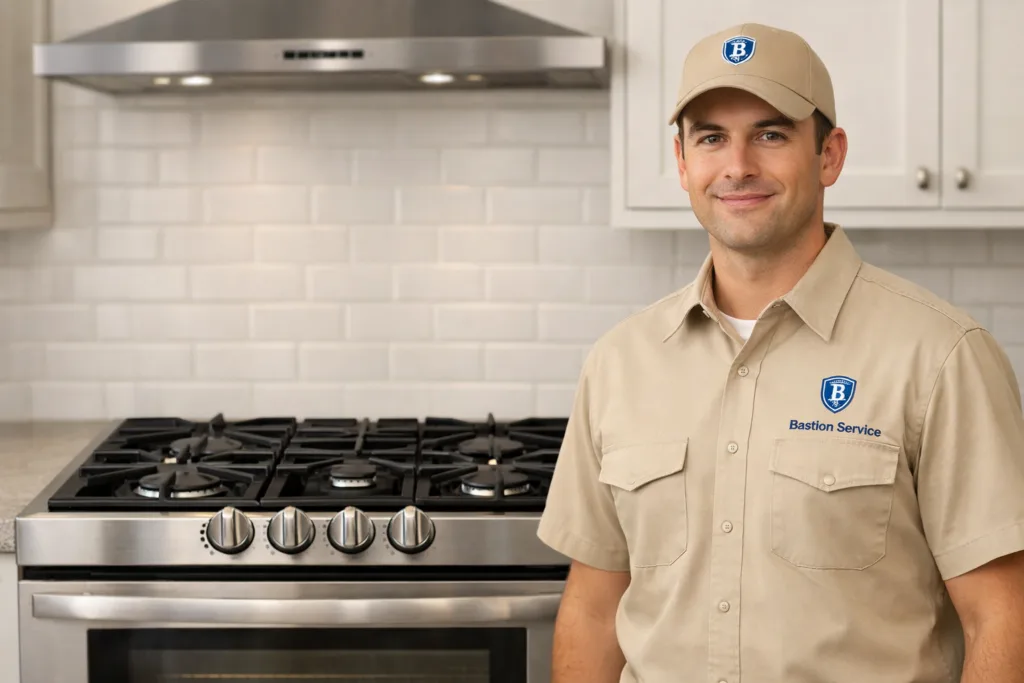
Cooktop problems tend to show up in ways that seem simple at first: one burner stops responding, ignition becomes erratic, or heat control no longer matches the setting on the knob. On GE cooktops, those symptoms can come from very different failures, so the most useful approach is to match the repair to the exact pattern instead of guessing based on appearance alone.
Start with what the cooktop is actually doing
A good diagnosis usually begins with a few basic questions. Is the issue limited to one burner or several? Does it happen every time, or only once the surface is hot? Is the problem related to lighting, heating, temperature control, or electrical response? Those details often point toward whether the fault is isolated to a burner area or connected to a shared component.
For homeowners in El Segundo, even a short symptom history can make the repair path more efficient. A burner that never lights suggests a different issue than one that lights slowly, clicks continuously, or works only after repeated attempts.
Gas burners that click but do not light
On a gas GE cooktop, clicking without ignition often means the spark system is working but the burner is not lighting as it should. Common reasons include a misaligned burner cap, residue blocking flame ports, moisture around the igniter, or a problem in the ignition circuit. If the clicking continues after the burner is lit, the switch or spark module may need attention.
This is one of the more common service calls because the symptom can look dramatic while the cause ranges from minor alignment trouble to a failed ignition component. If the clicking becomes constant across multiple burners, that usually deserves prompt inspection.
Electric burners that do not heat correctly
On electric GE cooktops, a burner that stays cool, heats only partway, or cycles unevenly may have a failing element, a bad infinite switch, or a damaged connection below the surface. In some cases, the burner still gets hot but no longer responds accurately to low, medium, or high settings. That can make cooking frustrating and can also point to control wear rather than a problem with the element itself.
If one burner works normally while another struggles, the issue is often localized. If several burners behave oddly at the same time, the diagnosis may need to include shared wiring or control problems.
Burners heating unevenly
Uneven heat can show up as hot spots, weak flame, delayed response, or cookware that no longer cooks consistently from burner to burner. On gas models, buildup in burner ports or burner head wear can affect flame distribution. On electric models, internal element failure or a weakening switch can cause temperature inconsistency that becomes more noticeable during everyday cooking.
Because uneven heating is easy to dismiss as cookware trouble, it often goes on longer than it should. If the same burner repeatedly underperforms with different pans, the cooktop itself is usually the better place to look.
Control problems are not always just a bad knob
When a GE cooktop knob feels loose, slips, turns without changing output, or only works on certain settings, the visible knob may not be the full problem. The stem, switch, or control behind it may be worn or cracked. On electric units, that can lead to poor cycling or a burner that runs hotter than expected. On gas models, it may affect flame adjustment or ignition response.
If the cooktop no longer gives predictable heat, it is worth addressing early. Control issues can make everyday use more frustrating and may also place extra stress on nearby components.
Cracked glass and surface damage need careful evaluation
If the cooktop has a cracked glass surface, chipped edge, or visible damage around a burner area, continued use may not be a good idea. The severity matters. Some cosmetic wear is only cosmetic, but structural damage to a glass top can affect safety, stability, and the long-term reliability of the unit.
A cracked surface often changes the repair discussion. If the cooktop is otherwise in good condition and replacement parts are practical, repair may still make sense. If the unit also has burner issues, aging controls, or repeated electrical faults, replacement can become the more sensible option.
When to stop using the cooktop
Some symptoms are inconvenient but manageable for a short time. Others are signs to stop using the affected burner or the entire appliance until it has been checked.
- Repeated clicking that does not stop normally
- A burner that will not regulate heat
- Sparking, arcing, or visible overheating
- An electric burner that trips power
- A gas burner with delayed ignition
- Damage to the cooking surface near an active burner
If there is a strong or persistent gas smell, do not continue testing the appliance. Leave the area if needed and contact the gas utility or emergency service first. Appliance repair comes after the immediate safety issue is addressed.
Repair or replacement depends on the overall condition
Many GE cooktop issues are repairable when the failure is limited to a burner assembly, igniter, switch, radiant element, or accessible wiring problem. In those cases, repair is often the practical choice if the rest of the cooktop is operating normally and the surface is in good condition.
Replacement becomes more likely when there are several problems at once, such as multiple weak burners, failing controls, major glass damage, or recurring electrical issues. Age matters, but overall condition matters more. A newer unit with one failed burner is very different from an older unit showing a broader pattern of wear.
What to note before scheduling service
A few observations can help narrow the cause quickly:
- Whether the problem affects one burner or multiple burners
- Whether it started suddenly or became worse over time
- Whether a recent spill or deep cleaning happened before the issue
- Whether the symptom changes once the cooktop cools down
- For gas models, whether the igniter clicks and whether the flame looks even
- For electric models, whether there has been intermittent power loss or a tripped breaker
Those details help separate a simple burner-area fault from a switch, ignition, or control issue affecting a wider part of the appliance.
What a focused GE cooktop repair visit should accomplish
A useful service visit should do more than confirm that a burner is not working. It should identify the failed part, check whether related components have been affected, and determine whether the repair is likely to restore normal operation without chasing repeat problems. That matters when the symptom seems small but could involve hidden wear below the surface.
For households in El Segundo, the goal is straightforward: get from an unreliable cooktop to a repair decision that makes sense for the unit’s condition, the symptom involved, and the likelihood of stable performance after the fix.