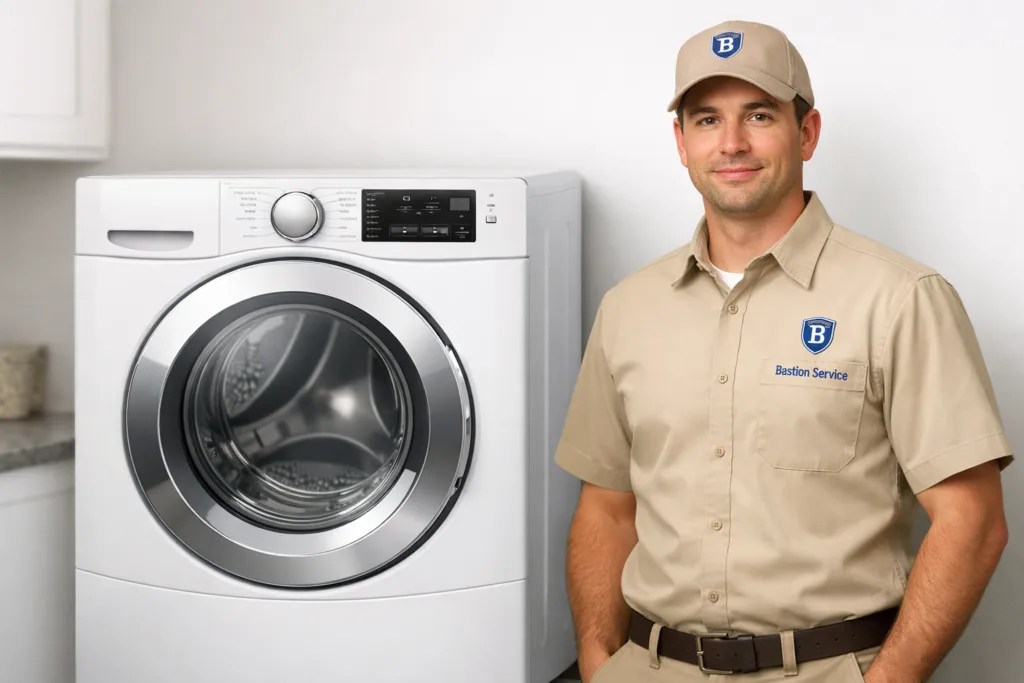
Common GE dryer symptoms and what they often mean

GE dryers tend to fail in recognizable ways, but the underlying cause is not always obvious from the symptom alone. A dryer that seems to have one simple problem may actually have an airflow issue, a worn mechanical part, or an electrical fault behind it. Looking at how the machine behaves through a full cycle usually gives the best clue about where the problem starts.
Drum turns but there is no heat
If the dryer runs and tumbles normally but clothes stay wet, the fault may involve the heating element, thermal fuse, high-limit thermostat, igniter on gas models, or incoming power. On some GE units, partial power issues can let the drum turn while heat never comes on. Vent restriction can also trigger overheating protection and create a no-heat complaint that looks like a failed part.
This symptom is worth addressing quickly because repeated attempts to dry the same load add wear without solving the actual problem.
Dry times keep getting longer
When loads eventually dry but take two or three cycles, airflow is often part of the issue. Lint buildup, a kinked vent, poor exhaust movement, or a moisture-sensing problem can all stretch out cycle times. Weak heat can produce the same result, so it helps to evaluate both temperature and air movement instead of assuming the dryer just needs a new element.
Homeowners in El Segundo often notice this problem gradually. At first the dryer seems a little slower, then towels and heavier fabrics stop finishing in one cycle.
Dryer will not start at all
A GE dryer that does nothing when Start is pressed may have a failed door switch, start switch, thermal fuse, belt switch, control issue, or power supply problem. Sometimes the display lights up but the motor never engages. That difference matters, because it can point away from a complete power loss and more toward the start circuit or motor system.
Noise, squealing, scraping, or thumping
Unusual dryer noise usually comes from wear in the support system. Drum rollers, glides, belts, and idler pulleys are common sources. A thump at the beginning of a cycle can come from a worn drum support or an object caught where it should not be. A scraping or grinding sound should not be ignored, since continued use can damage the drum, housing, or motor components.
Dryer stops in the middle of a cycle
If the machine starts normally and then shuts off, overheating protection, motor failure, restricted airflow, or a control problem may be involved. Some dryers restart after cooling down, which can make the issue seem inconsistent. In practice, that pattern often points to a condition that is getting worse rather than resolving on its own.
Why airflow problems are so often missed
Airflow issues can imitate several different dryer failures. A blocked or poorly venting system can cause long dry times, overheating, weak heat, repeated thermal fuse failure, and mid-cycle shutdowns. Because the symptoms overlap with heating-part failures, replacing parts too early can leave the main problem untouched.
For that reason, GE Dryer Repair in El Segundo should include attention to how the machine moves hot air, not just whether a component tests bad. If clothes come out hot but still damp, or if the cabinet feels unusually warm during operation, airflow deserves a close look.
Signs the problem may be getting more serious
Some dryer issues are inconvenient but contained. Others can escalate if the appliance keeps running in its current condition. It is smart to stop using the dryer and arrange service if you notice any of the following:
- A burning smell during or after a cycle
- The top or front of the dryer becoming unusually hot
- Breaker trips associated with dryer use
- Metal scraping, grinding, or sharp squealing sounds
- The dryer shutting off repeatedly before the load is done
- Clothes remaining damp even after multiple cycles
These symptoms can point to overheating, electrical stress, or mechanical wear that may lead to a more expensive repair if ignored.
Repair or replace: what usually makes sense
Many GE dryer repairs are worthwhile when the appliance is otherwise in decent condition and the failure is limited to a serviceable part. Rollers, belts, idler pulleys, fuses, thermostats, igniters, and heating elements are often repairable issues when the rest of the machine is sound.
Replacement becomes more reasonable when the dryer has multiple failing systems at once, a history of repeated breakdowns, or a major control or motor problem combined with age-related wear. The key is to compare the scope of the current fault with the overall condition of the appliance rather than deciding based on frustration alone.
What to check before scheduling service
A few simple observations can make troubleshooting more accurate. Before service, it helps to note:
- Whether the drum turns
- Whether the dryer produces any heat
- How long the cycle runs before stopping
- What kind of noise occurs and when it starts
- Whether clothes feel hot, warm, or cool at the end of the cycle
- Whether drying performance changed gradually or all at once
You can also check that the lint filter is clean and that the dryer is not being overloaded. Those quick steps will not fix most part failures, but they can help separate a simple operating issue from a true appliance problem.
What homeowners in El Segundo can expect from symptom-based GE dryer service
The most useful service visit focuses on the exact complaint pattern instead of jumping straight to part replacement. A dryer that runs without heat requires a different path than one that overheats, squeals, or refuses to start. Matching the diagnosis to the symptom history helps determine whether the issue is isolated, whether airflow is contributing, and whether the repair is likely to be cost-effective.
For households in El Segundo, that approach helps restore the laundry routine faster and reduces the chance of spending money on the wrong fix. If your GE dryer is no longer drying normally, making unusual sounds, or shutting down mid-cycle, timely repair is usually the best way to prevent a smaller problem from turning into a larger one.