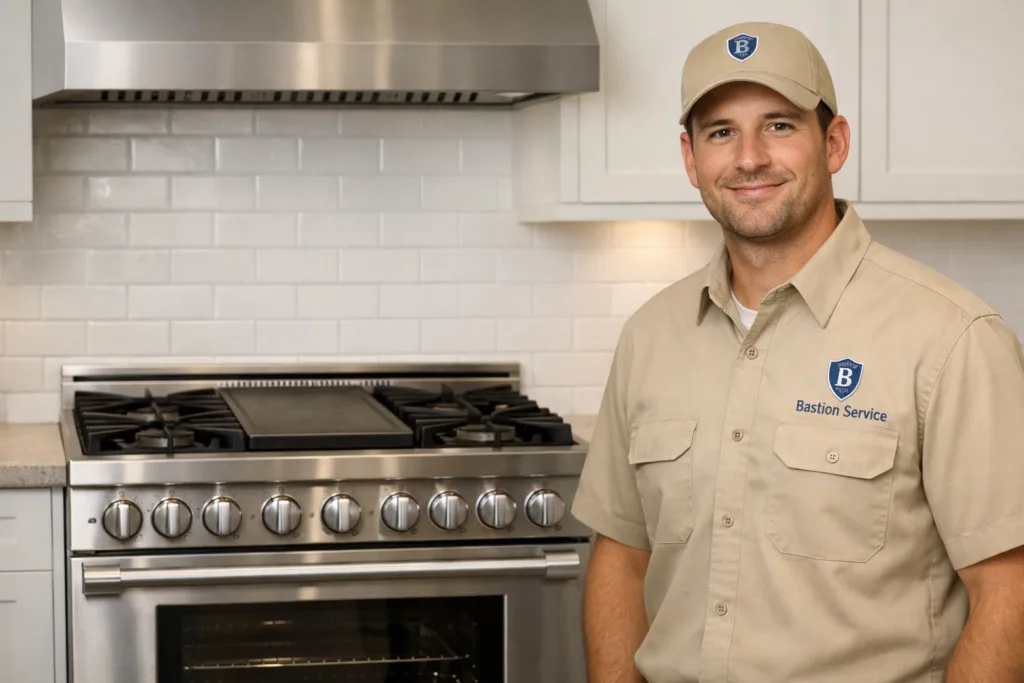
Cooking problems tend to show up first as small annoyances: a burner that needs two or three tries to light, an oven that seems slower than usual, or a control panel that responds intermittently. With a Thermador range, those symptoms often point to specific systems, and sorting them out early can prevent more frustrating performance during everyday meal prep.
Start with the exact symptom pattern
A range is really several appliances working together. Surface burners, ignition components, oven heating parts, temperature sensing, convection systems, and electronic controls can each fail in different ways. Two homes can report that the “oven isn’t working right” and have completely different underlying causes.
That is why the most useful first step is to pay attention to what the range does consistently, what it does only sometimes, and what changed recently. Details such as whether the issue affects bake only, one burner only, or every cooking function can narrow the repair path quickly.
Common Thermador range issues in El Segundo homes
Burner will not ignite
If a gas burner clicks but does not light, the issue may be as simple as burner cap misalignment or debris in the burner ports. It can also involve the igniter, spark module, or switch that triggers the ignition sequence. When only one burner is affected, the problem is often localized. When several burners act up at once, diagnosis usually shifts toward shared ignition components.
If a burner lights after a delay, that is also worth attention. Delayed ignition is not just inconvenient; it can mean the burner is not operating as intended and should be checked before normal use continues.
Constant clicking after the burner is lit
Persistent clicking often points to moisture, residue around the igniter area, a misseated cap, or a fault in the ignition switch system. This symptom sometimes appears after a boil-over or cleaning session, but if it keeps returning, there may be an underlying component issue rather than a temporary condition.
Oven not reaching the set temperature
When the oven preheats slowly, never seems hot enough, or leaves food undercooked, common suspects include the igniter, temperature sensor, heating circuit, or electronic control. In some cases, the oven may reach a lower temperature and then stall there, which can create inconsistent baking results from one meal to the next.
This is especially noticeable with foods that rely on steady heat, such as casseroles, cookies, and roasted dishes. If cooking times keep getting longer without another explanation, the range may not be regulating temperature properly.
Oven overheating or burning food unexpectedly
An oven that runs hotter than the setting can point to a sensor problem, relay issue, control failure, or calibration drift. Some homeowners first notice it as scorched bottoms, overbrowned tops, or recipes finishing much earlier than expected. If the pattern repeats across different dishes, the appliance is usually the more likely cause.
Uneven baking or poor convection performance
If one side of the oven cooks faster, or convection no longer seems to circulate heat evenly, the problem may involve the fan motor, airflow path, sensor feedback, or a heating component that is not cycling correctly. Uneven results are easy to dismiss at first, but they often become more obvious over time.
Broil works but bake does not, or the reverse
When one oven mode still works and another does not, that usually helps narrow the diagnosis. A failure isolated to bake, broil, or convection often means the issue is tied to a particular circuit, control output, or heating component rather than the entire appliance losing power.
Display or controls acting erratically
A blank display, unresponsive keypad, resetting clock, or inconsistent command response can indicate problems in the control interface, power supply path, or main control board. Electronic issues may start intermittently before becoming constant, so it helps to note whether the problem appears after preheating, during longer cooking cycles, or at random.
Signs the problem is getting worse
Some range issues stay stable for a while. Others tend to escalate. It is smart to arrange service when you notice any of the following:
- A burner that used to light eventually now does not light at all
- Clicking that becomes more frequent or spreads to other burners
- Longer preheat times than before
- Temperature swings that make cooking unreliable
- Control problems that go from occasional to routine
- Features such as broil or convection dropping out after once working normally
Changes like these often mean a component is wearing further or a control issue is affecting more than one function.
When to stop using the range
Not every problem requires immediate shutdown, but some symptoms should not be ignored. Repeated failed ignition, strong gas odor, breaker trips, visible sparking, or controls that behave unpredictably are all reasons to pause use until the appliance is evaluated. Continued operation in those conditions can increase wear, complicate diagnosis, or create avoidable safety concerns.
Even when the range still partly works, partial operation can be misleading. A homeowner may rely on the one burner that still lights or continue using bake while other functions fail, but that does not always mean the rest of the system is unaffected.
Repair or replace?
Many Thermador range problems are repairable when the appliance is otherwise in solid condition. Ignition failures, sensor faults, isolated heating issues, and many control-related problems can often be addressed without replacing the entire unit. Repair usually makes the most sense when the fault is limited and the rest of the range has been performing well.
Replacement becomes a more serious conversation when there are multiple major failures at once, recurring electronic problems, or signs of broad wear across several systems. Age alone does not make replacement the right answer; the more important factors are the condition of the appliance, the failed components involved, and whether one repair is likely to restore reliable daily use.
Helpful details to notice before service
If you are scheduling Thermador range repair in El Segundo, a few observations can make the issue easier to identify:
- Does the problem affect one burner or several?
- Does the oven fail during preheat or after reaching temperature?
- Is the issue constant, or does it come and go?
- Did it start after a spill, cleaning, or power interruption?
- Do bake, broil, and convection all respond the same way?
- Are there unusual sounds, delays, smells, or error displays?
Those details help separate a simple burner-area issue from a broader ignition, heating, or control problem.
What homeowners in El Segundo usually want from the visit
Most homeowners are not looking for guesswork. They want to know why the range is misbehaving, whether the repair is sensible, and what to expect next. A practical repair approach focuses on the failed function, the parts involved, and whether the appliance is likely to return to dependable cooking once the issue is corrected.
If your Thermador range is clicking, heating unevenly, failing to ignite, or showing control problems, the right next step is to have the symptom tied to the actual cause rather than replacing parts based on assumption.