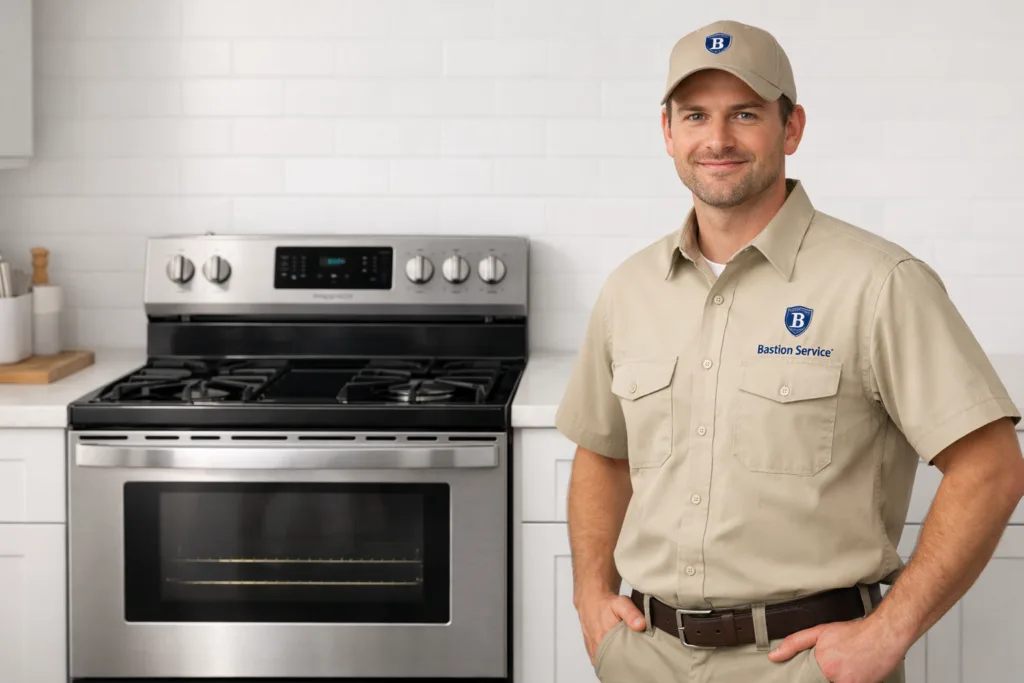
Range problems tend to show up at the worst time: a burner that will not respond when dinner is already started, an oven that preheats forever, or a control panel that suddenly stops cooperating. With Frigidaire units, the visible symptom does not always reveal the actual failure. A burner issue can come from the element, switch, ignition path, or wiring, while an oven temperature complaint may trace back to the sensor, igniter, relay, or control.
That is why the most useful first step is to match the repair approach to the exact behavior of the appliance. Small details matter, including whether the problem happens every time, only after the range has been on for a while, or only in one cooking mode.
Start with the way the range is failing
Many homeowners describe the appliance as “not heating,” but that can mean very different things in practice. One range may still heat, but far too slowly. Another may reach temperature once and then struggle to maintain it. A gas burner may click repeatedly before lighting, while an electric burner may work only on one setting.
These patterns help narrow down the source of the problem. If a single surface burner is affected, the repair may stay limited to that burner circuit or ignition path. If the oven and cooktop are both acting up, the issue may involve a shared control, power problem, or damaged wiring. Looking at the full pattern usually saves time and avoids replacing parts that are not actually causing the failure.
Common Frigidaire range issues in El Segundo homes
Surface burner will not heat
On electric models, a dead burner can be caused by a failed radiant element, a damaged receptacle, a bad infinite switch, or wiring deterioration at the connection point. Sometimes the burner cuts in and out because the contact is heat-damaged rather than fully broken.
On gas models, a burner that does not light may have a blocked burner head, a weak spark, moisture around ignition components, or a fault in the switch or spark module. If one burner is slow to ignite while the others work normally, that often points to a localized burner or ignition issue rather than a whole-range failure.
Burner heats unevenly or runs too hot
Uneven surface cooking may show up as hot spots in a pan, low heat even on higher settings, or a burner that seems stuck on one level. Electric models can develop control switch problems that make the burner cycle incorrectly. Gas burners may produce a weak or uneven flame if ports are blocked or the flame is not distributing properly around the burner.
If cookware has suddenly started taking much longer to heat, or one side of the pan cooks much faster than the other, that is a strong sign the burner is no longer operating the way it should.
Oven not reaching the set temperature
This is one of the most common complaints with ranges. A Frigidaire oven that takes too long to preheat or leaves food undercooked may have a weak bake element, a failing igniter on a gas model, a temperature sensor problem, or a control issue that is not delivering heat consistently.
It also helps to note whether the oven is always cold or only becomes inaccurate during longer bake cycles. An oven that misses the target temperature from the start often points to a different repair path than one that preheats normally and then drifts.
Oven overheats or burns food
When meals come out scorched despite normal settings, the oven may be reading temperature incorrectly or continuing to heat longer than it should. A faulty sensor, stuck relay, or failed electronic control can all create overheating. This kind of problem is more than an inconvenience, since prolonged overheating can put extra strain on internal components.
Clicking, delayed ignition, or no flame
Persistent clicking usually means the ignition system is trying to light the burner but not completing the process correctly. Delayed ignition should not be ignored, especially if it is becoming more frequent. On gas units, the issue may involve the igniter, burner alignment, clogged ports, or related ignition components.
If there is a strong gas odor or you suspect gas is collecting instead of igniting properly, stop using the appliance and handle the safety concern first before scheduling appliance service.
Display, keypad, or control panel problems
Electronic issues can affect everything from temperature selection to bake and broil operation. A blank display, partial keypad response, random beeping, or repeating error codes may point to a failed user interface, control board problem, or intermittent power supply issue.
When the oven and timer functions fail together, the problem is often not a simple heating component. It is usually worth checking the control system more closely before assuming the issue is limited to the oven cavity.
Symptoms that should not be ignored
Some range problems are annoying but manageable for a short time. Others are signs that continued use may create more damage or raise safety concerns. It is smart to stop and schedule service when you notice symptoms like these:
- Burners that spark, click, or fail to light consistently
- An oven that is much hotter or cooler than the selected setting
- Preheat times that have become unusually long
- Intermittent shutdowns during cooking
- Error codes that return after resetting power
- Burning smells, visible scorching, or signs of melted wiring
- A breaker that trips when the range is used
Waiting for total failure can turn a relatively contained repair into a larger one. Heat-related electrical problems, in particular, tend to worsen with continued operation.
How to tell whether the issue is in the cooktop or the oven system
Because a range combines multiple functions in one appliance, it helps to separate the symptom by section. If the cooktop works normally but the oven does not, the failure is often in the oven heating circuit, igniter, sensor, or control. If the oven performs well but one or more surface burners do not, the problem is more likely isolated to the affected burner system.
When both sections are unreliable, broader causes become more likely. That may include incoming power issues, shared control failures, or wiring problems inside the unit. Distinguishing between isolated and shared symptoms is often the key to an efficient repair.
Repair or replacement depends on the failure pattern
Many Frigidaire range problems are worth repairing, especially when the fault is limited to a burner element, igniter, sensor, switch, receptacle, or similar serviceable part. A single failed component on an otherwise solid range is often a straightforward repair decision.
Replacement becomes more likely when the appliance has multiple major issues at once, when control damage is extensive, or when wear is showing up across several systems instead of one. For example, a range with a failing oven control, unstable burner operation, and obvious wiring damage may be a very different decision from one with a single bad igniter.
For most households in El Segundo, the question is simple: will this repair restore normal daily cooking without leading to repeated follow-up problems? The answer depends less on the brand name alone and more on the exact failed part and the overall condition of the range.
What makes a service visit more productive
Before scheduling repair, it helps to note a few specifics:
- Which burner or oven function is affected
- Whether the problem happens every time or only occasionally
- Any error codes shown on the display
- Whether the issue began suddenly or gradually
- Any unusual smells, noises, or visible sparking
These details can make diagnosis faster and help separate a heating issue from an ignition, control, or wiring problem. Even simple observations like “broil works but bake does not” or “the front right burner heats only on high” can be very useful.
Focused help for household cooking problems
Most homeowners are not looking for a technical deep dive. They want to know what failed, whether the range is safe to use, and whether the repair makes sense. Good range service should answer those questions plainly and tie the recommendation to the actual symptom, not a guess.
For Frigidaire ranges in El Segundo, the best results usually come from evaluating the specific cooking complaint, confirming the failed component, and choosing the next step based on the condition of the appliance as a whole.