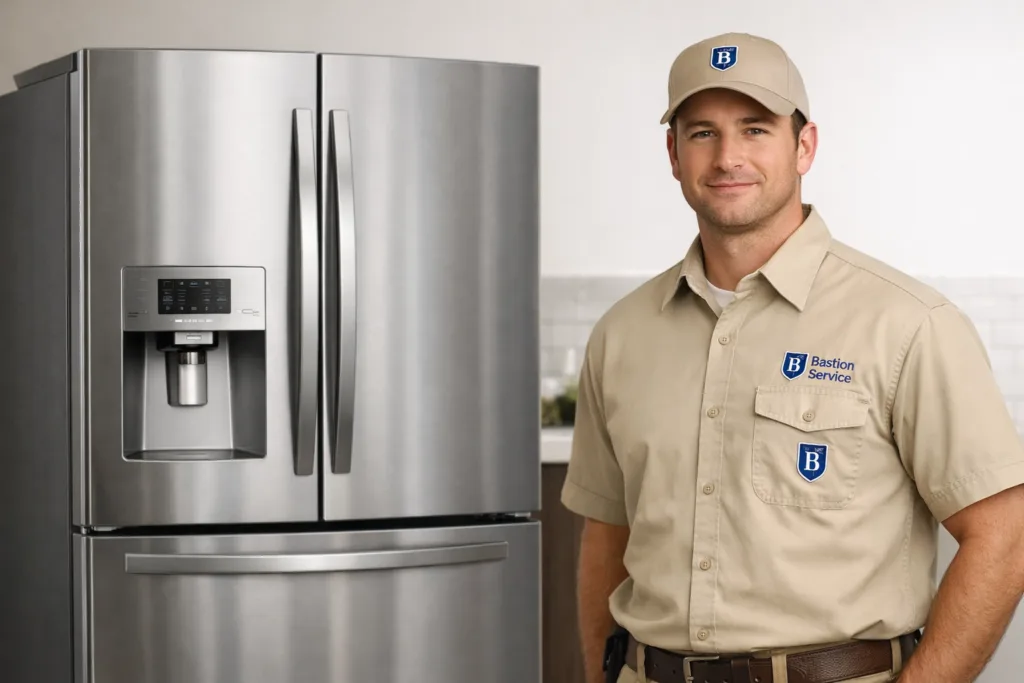
Refrigerator failures rarely start with a complete shutdown. More often, a GE unit begins showing smaller warning signs first: milk is not as cold, produce spoils sooner, condensation appears where it did not before, or the freezer seems slower to recover after the door opens. Paying attention to those patterns can help narrow down the real cause before the problem spreads to both compartments.
What common GE refrigerator symptoms usually mean
Fresh food section is warm but the freezer still seems cold
This often points to an airflow problem rather than a total cooling failure. In many GE refrigerators, cold air is produced around the freezer side and then moved where it is needed by fans and dampers. If that airflow is restricted by frost, a failing evaporator fan, a stuck damper, or a control issue, the refrigerator section may warm up first while the freezer appears only slightly off.
Homeowners may notice drinks not staying cold, soft items in deli drawers, or temperatures that improve briefly after a reset and then drift again. That symptom pattern usually calls for checking circulation, defrost function, and sensor behavior together.
Freezer is not freezing properly
When frozen food becomes soft, ice cream turns slushy, or ice production slows down, the issue may involve weak cooling performance, poor condenser airflow, a compressor start problem, or a temperature-reading fault. If both the freezer and fresh food compartment are warming, the refrigerator should be evaluated quickly because food loss can happen fast once the unit cannot recover normal temperatures.
In some cases, the refrigerator may seem to run constantly without getting cold enough. That can mean the machine is working harder than it should while still failing to remove heat effectively.
Water leaking inside the refrigerator or onto the floor
Leaks are often caused by a blocked defrost drain, a water supply problem, an ice maker fill issue, or excess condensation from warm air entering through a poor door seal. Water under crisper drawers or a recurring puddle in front of the unit should not be ignored. Even a small leak can damage flooring, surrounding trim, or nearby cabinetry over time.
If leaking appears along with frost or temperature swings, the moisture problem may be part of a larger airflow or sealing issue rather than a separate plumbing problem.
Frost buildup in the freezer or around vents
Visible frost usually means moisture is entering the cabinet or the refrigerator is not completing defrost cycles as it should. A torn gasket, a door that is not closing fully, frequent warm-air intrusion, or a failed defrost component can all create heavy ice buildup. When frost forms on the back wall or around interior vents, it can block cold air movement and lead to warming in the fresh food section.
Many homeowners understandably focus on the ice they can see, but the more important question is why the frost formed in the first place. Removing the ice without addressing the cause usually leads to the same problem returning.
Unusual noises, clicking, buzzing, or louder fan sounds
Not every sound is a sign of failure. Refrigerators make normal operating noises as fans run, refrigerant moves, and parts expand or contract during cooling cycles. The concern is when a noise is new, persistent, noticeably louder, or appears at the same time as poor cooling, leaking, or long run times.
Clicking may relate to a start issue, rattling can come from loose panels or vibration, and strong fan noise may indicate ice interference or a motor beginning to fail. Noise becomes especially important when it matches a change in temperature performance.
Why symptom patterns matter on GE refrigerators
GE refrigerators can show the same visible problem for very different reasons. A warm compartment may come from a fan issue, a sensor problem, frost-blocked airflow, or a control fault. An ice maker complaint may actually begin with unstable freezer temperatures. Water under the drawers may be a drain issue, but it can also be connected to excess frost and poor sealing.
That is why the most efficient repair path starts with the full symptom pattern, not just the most obvious complaint. Looking at temperature behavior, airflow, moisture, cycling, and noise together helps separate a relatively contained repair from a larger cooling-system problem.
Signs the refrigerator should be serviced soon
- Food is spoiling earlier than expected.
- The refrigerator runs for long periods with little temperature improvement.
- Frost keeps returning after being cleared.
- Water leaks happen more than once.
- The freezer no longer keeps food fully frozen.
- The display, controls, or interior response seem inconsistent.
- The ice maker or dispenser problems appear along with cooling changes.
Waiting can make the repair decision harder. A refrigerator that is still cooling somewhat may seem usable, but unstable temperatures can stress components and increase the chance of food loss. Early service is often the best way to limit the scope of the problem.
Simple checks homeowners can make before service
There are a few basic things worth checking before assuming a major failure. Make sure the doors are closing fully, especially if bins or food packages are blocking them. Look for visible gasket damage or gaps. Confirm the temperature settings have not been changed accidentally. Check whether the condenser area is dusty if the model allows safe access. Also note whether the problem began after a power interruption, recent loading with warm groceries, or a period when the door was left open.
These checks do not replace diagnosis, but they can help identify whether the issue is related to use conditions, sealing, airflow, or a deeper component problem.
Repair or replace?
For many households in El Segundo, the real question is not only whether a GE refrigerator can be repaired, but whether it is worth repairing. Many problems are reasonable to fix when they involve parts such as fan motors, sensors, defrost components, door seals, valves, drains, or control-related faults and the refrigerator is otherwise in solid condition.
Replacement becomes more likely when the unit has major sealed system trouble, repeated expensive failures, advanced wear, or overall condition that no longer supports a sensible repair investment. Age matters, but so do maintenance history, cabinet condition, and how the refrigerator has been performing leading up to the current issue.
What a household-focused service visit should help answer
A useful visit should do more than identify a bad part. It should help explain what symptom pattern points to, whether food temperatures have been compromised, whether the issue is isolated or part of a larger system problem, and what repair path makes sense for the appliance as it stands today.
For homeowners in El Segundo, that means getting a straightforward explanation of what the refrigerator is doing now, what is most likely causing it, and whether repair is practical based on the unit’s condition. When an essential kitchen appliance is involved, clarity matters almost as much as the repair itself.