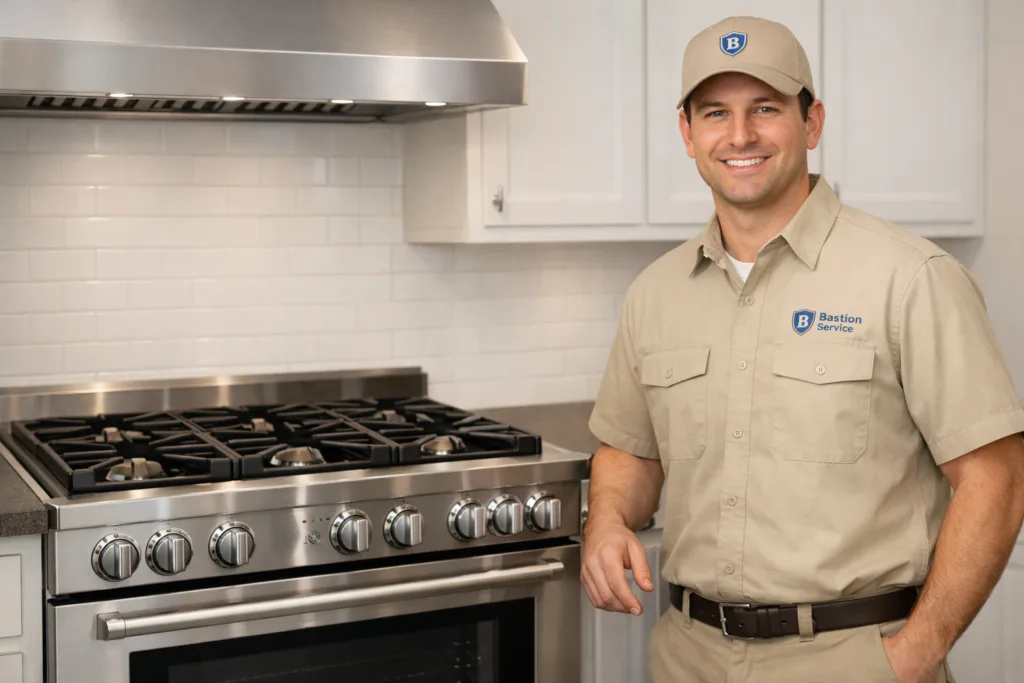
Dacor ranges can develop problems in more than one cooking system at once, so the symptom you notice first is not always the source of the failure. A burner that clicks nonstop, an oven that preheats slowly, or a display that works one day and not the next can each involve ignition parts, sensors, wiring, relays, or control components. For homeowners in El Segundo, the most useful service approach is to match the repair plan to the exact behavior of the appliance rather than replacing parts by guesswork.
Common Dacor range symptoms and what they often mean
Burner will not light
If a surface burner does not ignite at all, common causes include a blocked burner head, misaligned cap, failed spark ignition component, or a switch problem that is not sending the proper signal. In some cases, the burner may spark but still not light correctly, which can point to poor flame crossover or gas flow issues inside the burner assembly.
Burner keeps clicking after ignition
Clicking that continues after the flame is already lit usually suggests an ignition system problem rather than a gas supply problem. Moisture, food spill residue, a worn switch, or a failing spark module can all trigger repeated clicking. If the clicking becomes frequent, it is best not to ignore it, since ongoing strain on the ignition system can lead to broader burner performance issues.
Oven not heating properly
When the oven does not heat, heats too slowly, or never reaches the set temperature, the problem may involve the bake circuit, broil circuit, igniter, temperature sensor, control board, or related wiring. Gas and electric models can fail differently, but the result is the same for the homeowner: long preheat times, uneven cooking, and unreliable meal results.
Food cooks unevenly
Uneven baking often shows up before a complete failure. You might notice one side browning faster, the center staying underdone, or recipes needing far more time than usual. This can happen when temperature sensing becomes inaccurate, one heating function is weak, or the control is not regulating heat consistently.
Display or touch controls act erratically
A blank display, buttons that do not respond, random error codes, or cooking modes that cancel unexpectedly can all point to electronic control trouble. Sometimes the issue is isolated to the interface. In other cases, the control is reacting to a secondary fault elsewhere in the range. That is why symptom-based testing matters before committing to a major part replacement.
Signs the problem is getting worse
Some range issues start as annoyances and then progress into more disruptive failures. It is usually time to schedule service when you notice:
- Ignition working only after several tries
- Burners clicking even when dry and properly assembled
- Oven temperatures drifting higher or lower than the setting
- Cooking times becoming inconsistent from one use to the next
- Controls freezing, resetting, or failing intermittently
- The appliance shutting off mid-cycle
Intermittent problems are especially important to check early. A range that still works part of the time can be harder to evaluate later if additional components are affected by continued use.
When to stop using the range until it is checked
Some symptoms are more than a convenience issue. You should pause normal use if a burner will not shut off correctly, the oven overheats, the appliance trips power repeatedly, or ignition behavior changes suddenly and dramatically. The same goes for control failures that make it difficult to select or confirm cooking settings. In those situations, continued operation can increase wear or create avoidable safety concerns in the kitchen.
Repair questions homeowners in El Segundo often consider
Is a single failed part worth repairing?
Often, yes. If the issue is limited to a specific ignition component, sensor, interface part, or other targeted failure, repair is commonly the more sensible option. Premium ranges are built with multiple systems, and one failed component does not automatically mean the whole appliance is near the end of its service life.
When does replacement become more likely?
Replacement becomes a more serious consideration when the range has several major faults at the same time, has a pattern of recurring problems, or needs extensive repair relative to its overall condition. The age of the appliance matters, but so do maintenance history, cooking performance before the failure, and whether the problem is isolated or widespread.
Why diagnosis matters before deciding
Symptoms can overlap. For example, what appears to be an oven heating problem may actually begin with sensing or control issues. A burner complaint may trace back to ignition switching rather than the burner itself. Identifying the exact failed component helps clarify whether the repair is focused and worthwhile or whether the range has broader system problems.
What a service visit should help you understand
A worthwhile appointment should clarify what failed, which symptoms are connected to that failure, whether the appliance should be used before repair, and what result to expect once the repair is completed. That information is especially helpful when the range is central to daily cooking and the problem affects both surface burners and oven performance.
For households in El Segundo, a Dacor range that is partially working can still be a strong repair candidate when the fault is identified early. Whether the issue involves burner ignition, oven temperature control, or an electronic interface problem, the next step should be based on how the appliance is actually behaving in your kitchen.