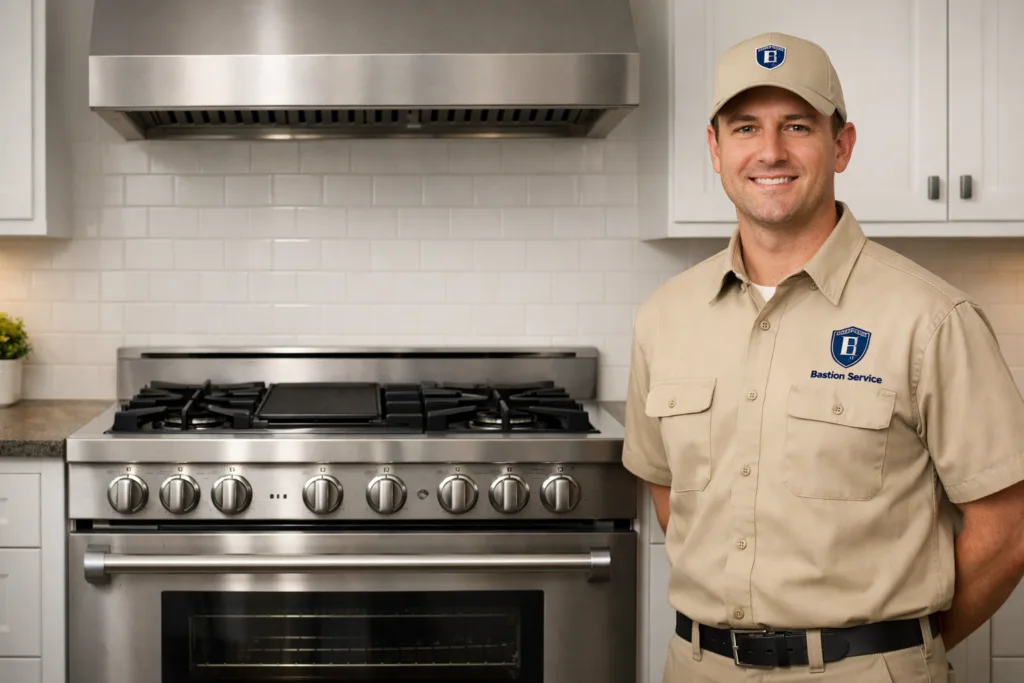
Common Wolf range problems in El Segundo homes

Wolf ranges tend to show trouble in ways homeowners notice quickly during normal cooking. A surface burner may click without lighting, ignite after a delay, burn unevenly, or stop responding normally to the knob setting. Oven problems often appear as slow preheating, poor temperature control, uneven baking, weak broiling, or food finishing much earlier or later than expected.
On many models, similar symptoms can come from very different causes. A burner ignition issue may trace back to burner cap alignment, buildup around the burner, a failing igniter, a spark module problem, or a switch issue. Oven heating complaints may involve an igniter, bake or broil component, temperature sensor, control fault, or door-seal problem. That is why symptom-based testing matters before parts are replaced.
Symptoms that usually mean service is needed
Burners that will not light or keep clicking
If a burner clicks repeatedly, lights only sometimes, or sparks after the flame is already on, the problem should not be ignored. In some cases, moisture or residue around the burner is part of the issue. In others, the cause is electrical or ignition-related. When the same burner keeps misbehaving, repair is usually the better move than continuing to relight it and hoping the problem settles down.
If you notice a persistent gas odor, stop using the range and address safety first. If there is no gas smell but ignition is unreliable, the range still deserves prompt attention because repeated failed ignition attempts can create unnecessary wear and make daily cooking frustrating.
Oven not preheating, overheating, or cooking unevenly
An oven that takes too long to heat, struggles to maintain temperature, or browns one side of a dish more than the other usually has more going on than simple calibration. Homeowners often notice the pattern through undercooked centers, scorched bottoms, or recipes that suddenly need extra time. When those results become repeatable, there is likely a heating, sensor, airflow, or control issue that should be inspected.
Performance drift matters too. If preheat times keep getting longer over several weeks or the oven seems less predictable with every use, waiting rarely improves the situation. A problem that starts as uneven baking can eventually turn into a no-heat complaint or broader control trouble.
Weak flame, uneven heat, or poor burner response
A Wolf range should respond consistently when a burner is turned up or down. If the flame looks irregular, heat output feels weak, or a burner does not match the selected setting, there may be an issue with gas flow, burner assembly condition, ignition performance, or control response. These symptoms can make everyday cooking harder because pans do not heat the way they should and simmer settings become unreliable.
Display errors and control failures
Electronic problems often start small. A display may become hard to read, a setting may not register on the first attempt, or a cooking mode may cancel unexpectedly. Over time, those issues can develop into a range that will not start properly, does not hold the chosen mode, or loses response altogether. When controls are inconsistent, diagnosis should happen sooner rather than later because intermittent faults can become complete operational failures.
Why accurate diagnosis matters on a Wolf range
Premium cooking appliances are built with model-specific components, and symptom overlap is common. Uneven baking might be caused by a sensor problem, a heating fault, airflow disruption, or heat loss at the door. Repeated clicking may be tied to contamination around the burner, but it can also signal a failing component in the ignition system. Swapping parts based on guesswork is expensive and often does not solve the root issue.
For households in El Segundo, that matters in practical terms. A range that partly works can disrupt dinner routines just as much as one that stops completely. Identifying the actual failure point helps determine whether the issue is isolated, whether continued use risks additional wear, and whether repair is likely to restore normal cooking performance.
When repair makes sense and when replacement deserves discussion
Many range problems are still repairable when they are tied to a specific ignition, heating, sensor, or control component and the appliance is otherwise in solid condition. That is often the case when the range has been performing well until one clear symptom appeared. A targeted repair can be more practical than replacing a high-end appliance over a single fault.
Replacement becomes a more serious consideration when several systems are failing at once, reliability has been declining for a while, or repair costs begin stacking up across multiple issues. The key question is whether the current problem looks like one repairable failure or part of a broader wear pattern. A good service evaluation gives homeowners a realistic basis for that decision.
Signs you should stop putting off service
- A burner repeatedly fails to ignite or clicks nonstop
- The oven will not hold temperature or takes much longer to preheat
- Cooking results have become inconsistent across multiple meals
- The display, controls, or mode selection work intermittently
- A burner flame looks uneven or does not adjust normally
- The range has started showing more than one symptom at the same time
Cosmetic wear can wait. Heating, ignition, and control issues usually should not. Even if the range is still usable, unstable performance tends to become more disruptive over time.
What homeowners can do before a service visit
It helps to note which burner or oven mode is affected, whether the problem happens every time or only occasionally, and whether it began suddenly or developed gradually. If the oven temperature seems off, pay attention to what you are seeing in actual cooking results rather than relying only on one dish. If a burner is clicking, notice whether it happens only when first igniting or continues after the flame appears.
Simple observations like these can make diagnosis faster and more accurate. They also help separate a one-off issue from a repeatable failure pattern.
A focused approach to Wolf range service in El Segundo
The most useful repair visit starts with the appliance behavior in real household use: which function is failing, how often it happens, and whether the issue affects safe operation. From there, testing can narrow the cause and determine whether the problem is limited to one component or reflects broader wear. That gives homeowners a practical repair plan based on the actual condition of the range rather than assumptions.
For El Segundo homeowners, the goal is not only getting the appliance running again. It is restoring predictable burner performance, stable oven heat, and controls that respond the way they should so the range works reliably in day-to-day cooking.